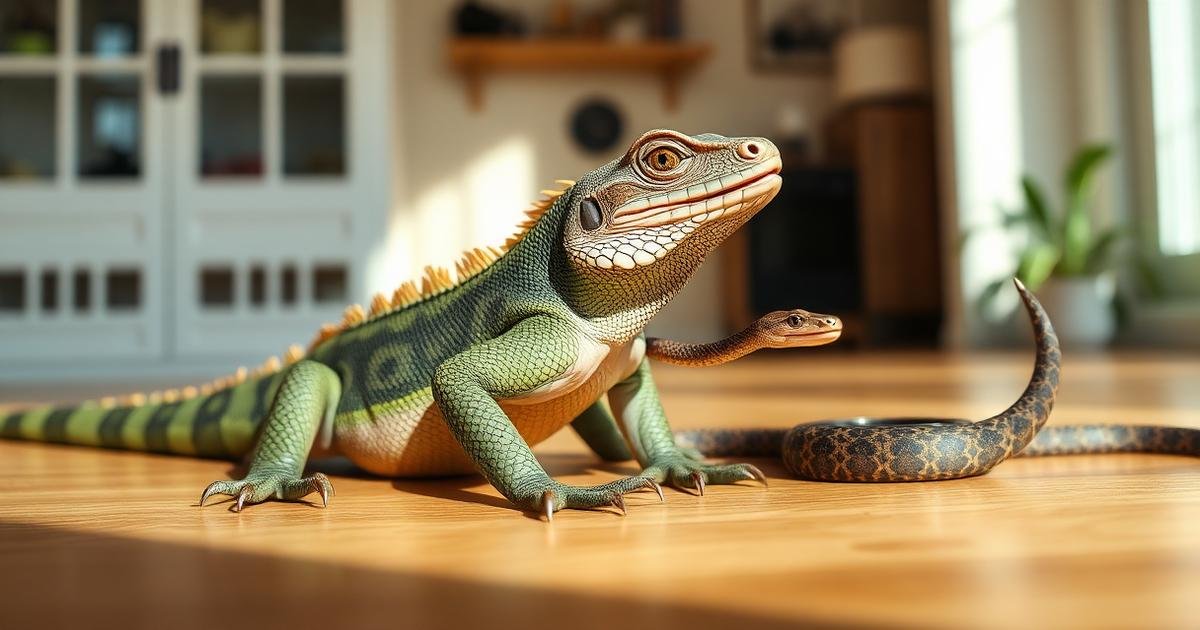
Choosing between a lizard and a snake as a pet comes down to your lifestyle, handling preferences, and how much time you can dedicate to care. If you want an animal you can handle frequently and watch explore its environment, a lizard is likely your better match. If you prefer a lower maintenance pet that doesn't need daily interaction and thrives on a simple feeding schedule, a snake is probably the right choice. lizard vs snake as pet is one of the most important decision points for long term daily fit.
Lizard vs snake as pet: Choose a lizard if you want a pet you can handle daily, watch interact with its enclosure, and are willing to provide UVB lighting and a varied diet. Choose a snake if you prefer a low-interaction pet, a simple feeding routine, and less daily maintenance. Snakes generally require less daily work but
Quick Answer: Should I get a lizard or a snake as a pet?
Choose a lizard if you want a pet you can handle daily, watch interact with its enclosure, and are willing to provide UVB lighting and a varied diet. Choose a snake if you prefer a low interaction pet, a simple feeding routine, and less daily maintenance. Snakes generally require less daily work but have longer term space needs. For a complete guide on this topic, see the Reptile Care Guide.
How much daily interaction do you want with your reptile?
This is the single biggest difference between lizards and snakes. Most lizards are diurnal, meaning they're active during the day and will watch you move around the room. Many species, like bearded dragons and leopard geckos, tolerate and even seem to enjoy gentle handling for 10–20 minutes at a time.
This lizard vs snake as pet decision works best when the owner compares daily fit, tolerance, and practical consistency together.
Snakes, on the other hand, are typically crepuscular or nocturnal. They spend most of their day hiding or resting. Handling is possible but should be limited to 1–2 times per week to avoid stressing the animal. A snake won't "play" or explore your hand the way a lizard will.
For many homes, the right lizard vs snake as pet choice is the one that stays reliable under ordinary daily conditions.
If you want a reptile that feels like an interactive pet, a lizard wins hands down. If you're fine with a pet you mostly observe and handle occasionally, a snake fits better.
Pro Tip: If you have young children who want a "pet they can hold," start with a bearded dragon. They're famously tolerant of gentle handling and rarely bite. Snakes can startle easily and may musk (release a foul smell) or strike defensively when grabbed suddenly.
What are the space and enclosure requirements for each?
Lizard enclosure needs
Lizards need more complex enclosures than snakes. Most require UVB lighting to synthesize vitamin D3, a basking spot with a temperature gradient, and humidity control. A single adult bearded dragon needs a 120-gallon (4x2x2 feet) enclosure minimum. Smaller species like leopard geckos can thrive in a 20-gallon long tank.
You'll also need substrate (bedding), climbing branches, hiding spots, and a water dish. Setting up a proper lizard enclosure costs $300–$600 for the initial setup, not including the animal itself.
Snake enclosure needs
Snakes need simpler setups. They don't require UVB lighting (though some keepers use it for circadian rhythm benefits). They need a temperature gradient with a warm side (85–90°F) and cool side (70–75°F), plus a humid hide for shedding. A corn snake can live comfortably in a 40-gallon breeder tank as an adult.
Snake enclosures are easier to clean because you can use paper towels or reptile carpet as substrate. Initial setup costs run $200–$400 for most beginner species.
Pro Tip: Always buy the adult sized enclosure from the start. Buying a smaller "starter" tank for a baby reptile means you'll spend another $200–$400 upgrading within 12 months. Go straight to the full size enclosure and save money long-term.
What do lizards and snakes eat?
Lizard diet variety
Lizards generally need a more varied diet. Bearded dragons eat insects (crickets, dubia roaches, mealworms) plus fresh vegetables and occasional fruit. Leopard geckos eat only live insects. Crested geckos eat a powdered diet mixed with water plus occasional insects. You'll need to feed most lizards daily or every other day.
This variety means more trips to the pet store and more prep work. You'll also need to gut load feeder insects (feed them nutritious food before offering them to your lizard) and dust them with calcium and vitamin D3 powder.
Snake diet simplicity
Snakes eat whole prey — typically frozen thawed rodents. A corn snake eats one appropriately sized mouse every 7–14 days. A ball python eats one rat every 10–14 days. No supplements, no gut-loading, no vegetable prep.
You can buy frozen rodents in bulk and store them in your freezer for months. Feeding takes 5 minutes: thaw the rodent, offer it with tongs, and your snake does the rest. This simplicity is a major reason many first time reptile owners choose snakes.
Which is easier to handle and less likely to bite?
This depends more on the individual species and temperament than the category. Among lizards, bearded dragons and leopard geckos are notoriously gentle and rarely bite. Green iguanas and chameleons, on the other hand, can be defensive and may bite or whip their tails.
Among snakes, corn snakes and ball pythons are famous for their docile temperaments. They rarely bite and are easy to handle once they're comfortable. Larger constrictors like boas and pythons require more experience and strength to handle safely.
The key difference: a lizard bite is usually a quick nip that breaks skin but isn't serious. A snake bite can involve teeth gripping and holding, which is more startling. However, neither is dangerous from beginner species. The ASPCA's pet care resources emphasize that proper handling technique prevents most bites from either animal.
Pro Tip: Always wash your hands before and after handling any reptile. Reptiles can carry Salmonella bacteria, and the scent of food on your hands can trigger a feeding response — especially in snakes. Soap and warm water for 20 seconds is all it takes.

How do lifespan and long term commitment compare?
Both lizards and snakes are long term commitments. Bearded dragons live 8–12 years. Leopard geckos live 15–20 years. Crested geckos live 15–20 years. Ball pythons live 20–30 years. Corn snakes live 15–20 years.
A reptile is not a 2–3 year pet. When you choose a lizard vs snake as pet, you're signing up for a decade or more of care. This includes feeding, cleaning, vet visits, and potential emergency care. Many owners don't realize that reptile veterinary care is more expensive than dog or cat care because fewer vets specialize in reptiles.
Before buying, ask yourself: Can I commit to daily care for 10–20 years? What happens if I move, go to college, or my living situation changes? Reptiles are not easy to rehome, and many end up surrendered to rescues.
Lizard vs Snake Comparison Table
| Daily interaction | High — active during day, can handle daily | Low — active at night, handle 1–2x/week |
| Enclosure complexity | High — UVB, basking lamp, humidity control | Moderate — heat mat, hides, simple substrate |
| Diet variety | Varied — insects, vegetables, supplements | Simple — frozen thawed rodents only |
| Feeding frequency | Daily or every other day | Every 7–14 days |
| Initial setup cost | $300–$600 | $200–$400 |
| 8–20 years depending on species | 15–30 years depending on species | |
| Best for beginners | Bearded dragon, leopard gecko | Corn snake, ball python |
Which species are best for first time owners?
Best beginner lizards
Bearded dragon: The gold standard for beginner reptile owners. They're docile, tolerate handling, eat a varied diet, and their care requirements are well-documented. The downside: they need a large enclosure (120 gallons) and UVB lighting.
Leopard gecko: Smaller and easier to house than a bearded dragon. They need a 20-gallon long tank, heat mat, and live insects. They're nocturnal, so they're less active during the day. Lifespan is 15–20 years.
Crested gecko: No UVB needed, no live insects required (powdered diet works), and they thrive in a 20-gallon tall enclosure. They're arboreal, so they need vertical space with branches. Lifespan is 15–20 years.
Best beginner snakes
Corn snake: The most recommended beginner snake. They're docile, eat frozen thawed mice readily, and tolerate handling well. They stay manageable at 4–5 feet long. A 40-gallon breeder tank is sufficient for life.
Ball python: Famous for their calm temperament and "balling up" behavior when scared. They need higher humidity (55–research suggests 65%) than corn snakes, which can be tricky for beginners. They can be picky eaters, sometimes refusing food for weeks. Lifespan is 20–30 years.
Kenyan sand boa: A smaller option that stays under 2 feet. They're burrowing snakes that need a deep sand substrate. They're extremely docile and rarely refuse food. A 20-gallon long tank works for life.
What are the hidden costs of owning each?
Many first time owners budget for the enclosure and the animal but forget ongoing costs. For lizards, you'll spend $30–$50 monthly on live insects, $15–$30 on vegetables, and $10–$20 on supplements. Bulbs for UVB and basking lights need replacement every 6–12 months at $20–$40 each.
For snakes, monthly costs are lower: $10–$20 for frozen rodents (bought in bulk), $5–$10 for substrate, and minimal electricity for the heat mat. However, snakes need occasional vet visits for respiratory infections or scale rot, which can cost $100–$300 per visit.
Both types need an exotic vet who sees reptiles. Regular cat and dog vets generally won't treat reptiles. The AVMA's pet owner resources recommend locating a reptile specialist vet before you bring your pet home, not after an emergency.
How do temperature and humidity needs differ between lizards and snakes?
Temperature and humidity requirements vary significantly between the two groups, and getting these wrong is the number one cause of illness in captive reptiles. Lizards are ectothermic and rely on external heat sources to regulate their body temperature. Most need a distinct basking spot reaching 95–105°F, with a cool side around 75–80°F. Without this gradient, your lizard cannot digest food properly or maintain a healthy immune system.
Snakes also need a temperature gradient, but their requirements are generally less extreme. A warm side of 85–90°F and a cool side of 70–75°F works for most beginner species. Snakes are more forgiving of minor temperature fluctuations than lizards are, which makes them slightly easier for beginners who are still learning to dial in their husbandry.
Humidity is another major difference. Many lizards, especially desert dwelling species like bearded dragons, need low humidity (30–research suggests 40%). Too much moisture can cause respiratory infections. Snakes, particularly tropical species like ball pythons, need higher humidity (55–research suggests 65%) for proper shedding. A snake that can't shed completely may develop retained eye caps or constricted blood flow in its tail. The PetMD condition guides note that improper humidity is a leading cause of dysecdysis (shedding problems) in snakes.
Pro Tip: Invest in a digital thermometer with a probe for each end of the enclosure, plus a hygrometer to measure humidity. Analog stick on gauges are notoriously inaccurate — off by 5–10 degrees in many cases. A $15 digital setup will save you hundreds in vet bills.
What are the most common health problems for each?
Lizards and snakes face different health challenges, and knowing these before you choose can save you heartache and money. Lizards commonly develop metabolic bone disease (MBD) from insufficient UVB exposure or calcium deficiency. Symptoms include lethargy, tremors, and soft or deformed bones. MBD is preventable with proper lighting and supplementation, but it's difficult and expensive to reverse once it sets in.
Respiratory infections are also common in lizards kept at incorrect temperatures or humidity levels. You'll notice wheezing, bubbles around the nose or mouth, and lethargy. Treatment requires a vet visit for antibiotics and often takes 2–4 weeks of daily medication.
Snakes face different issues. Respiratory infections occur too, often from humidity that's too high or too low. Scale rot is another common problem — it appears as discolored, mushy scales on the belly, usually from sitting on wet substrate for too long. Snakes also commonly develop mouth rot (infectious stomatitis), which shows up as swelling, redness, or discharge around the mouth.
Both types can suffer from parasites, both internal and external. Mites are a particular nuisance for snakes and can spread quickly through a collection. Regular fecal exams at your vet, done once or twice yearly, can catch internal parasites before they cause serious harm. The AKC's expert advice on preventive care applies to reptiles too — regular checkups catch problems early.
Pro Tip: Quarantine any new reptile for at least 30–45 days in a separate room before introducing it to your existing collection. This prevents the spread of mites, parasites, and respiratory infections. Use separate feeding tongs and cleaning tools for the quarantine enclosure.
How do activity patterns affect your daily routine?
Your daily schedule matters more than you might think when choosing a lizard vs snake as pet. Lizards are diurnal, meaning they're awake and active when you are. You'll see them basking, exploring, and interacting with their environment throughout the day. This makes them more entertaining to watch and easier to bond with.
If you work a 9-to-5 job, your lizard will be awake when you leave and still active when you return home. You can feed them in the morning or early evening, handle them after work, and watch them explore before lights-out. This visibility is a major reason families with children often prefer lizards.
Snakes, being crepuscular or nocturnal, are most active at dawn, dusk, and during the night. During the day, they'll be curled up in their hide, often completely invisible. If you want a pet you can watch and interact with during your waking hours, a snake may disappoint you. Many snake owners go days or even weeks without seeing their pet move around the enclosure.
This doesn't make snakes "boring" — their nighttime activity can be fascinating if you set up a red light or infrared camera. But it does mean the daily interaction you get from a lizard simply isn't there with a snake. Be honest with yourself about whether you'll be satisfied with a pet that's mostly hidden during your active hours.
Frequently Asked Questions
Which is cheaper to set up, a lizard or a snake?
Snakes are generally cheaper to set up. A beginner snake setup costs $200–$400, while a proper lizard setup runs $300–$600. The difference comes from the UVB lighting and more complex enclosure requirements lizards need.
Do lizards or snakes smell more?
Neither has a strong odor if their enclosure is cleaned regularly. The smell comes from waste, not the animal itself. Snakes produce less waste (they eat less frequently), but their urine can be more pungent. Lizards need more frequent spot-cleaning.
Can lizards and snakes live together in the same enclosure?
No. Never house different species together. They have different temperature, humidity, and dietary needs. One will stress the other, and in some cases, a larger snake will eat a smaller lizard. Each reptile needs its own enclosure.
Which reptile is better for someone with allergies?
Neither produces dander like cats or dogs, so allergies are rarely an issue with either. The bigger concern is the feeder insects. If you're allergic to crickets or roaches, a snake (which eats frozen rodents) may be the better choice.
How often do you need to clean each enclosure?
Lizards need spot cleaning daily (remove waste and uneaten food) and a full substrate change every 2–4 weeks. Snakes need spot cleaning after each feeding (every 7–14 days) and a full clean every 4–6 weeks. Snakes are lower maintenance for cleaning.
Which reptile is more likely to escape its enclosure?
Snakes are notorious escape artists. They can squeeze through gaps as small as their thickest body part. Lizards are less likely to escape but can climb out of open topped enclosures. Secure, locking lids are essential for both.
How do I know if a lizard or snake is healthy when buying one?
Look for clear eyes, smooth skin or scales without lesions, a healthy body weight (not too thin or obese), and alert behavior. For lizards, check that they're active and using all four legs normally. For snakes, watch for a clean vent area and a tongue that flicks regularly. Avoid any animal with discharge from the eyes, nose, or mouth.
Can I leave my lizard or snake alone for a weekend trip?
Lizards need daily feeding and fresh water, so leaving one alone for a weekend is risky unless you have an automatic feeder and water system. Snakes can easily go 7–14 days without food and several days without attention, making them much easier to leave for a short trip. Always have a backup person who can check on your reptile in an emergency.
Ready to set up your first reptile enclosure? We've curated the best starter kits for both lizards and snakes.
Browse Reptile Options →