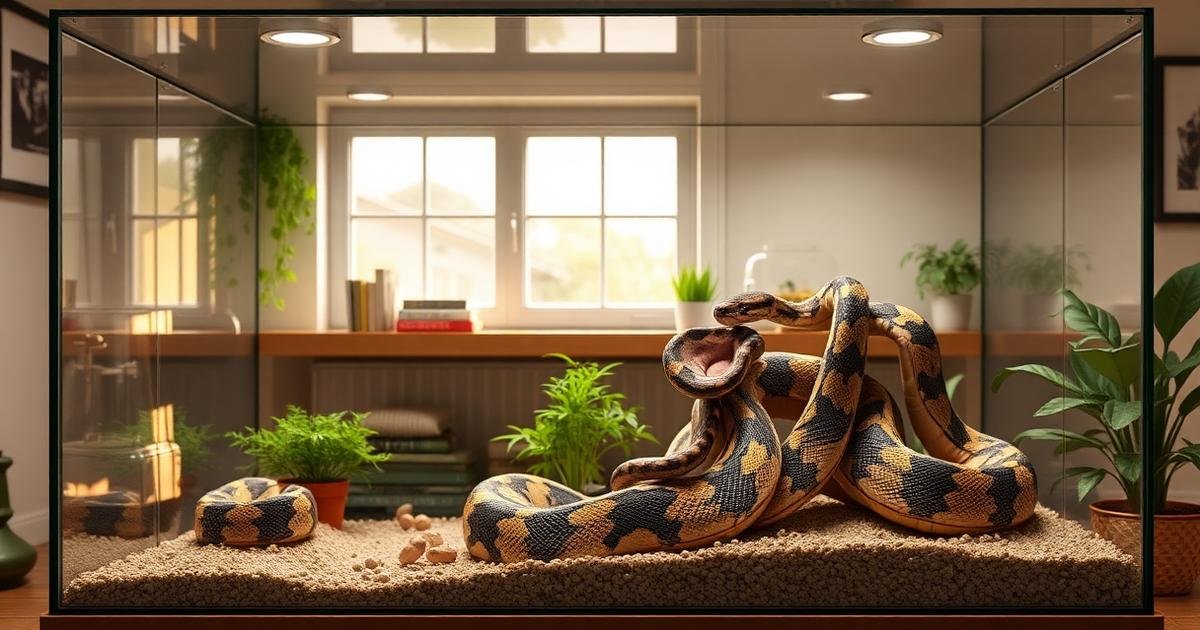
Finding the best ball python enclosure means choosing a setup that prioritizes security, stable humidity, and proper temperature gradients. For most adult ball pythons, a 4x2x2 foot PVC or glass enclosure with front opening doors, a radiant heat panel, and a reliable thermostat provides the ideal environment for health and longevity. A well planned habitat prevents respiratory infections, stuck sheds, and feeding refusals — the three most common problems keepers face.
Best ball python enclosure: The best ball python enclosure for a beginner is a 36x18x12 inch (40-gallon breeder) front-opening PVC or glass terrarium with a locking lid, a ceramic heat emitter on a thermostat, and a digital hygrometer. This size supports healthy growth for juveniles and provides the high humidity (55-65%) ball
Quick Answer: What is the best ball python enclosure for a beginner?
The best ball python enclosure for a beginner is a 36x18x12 inch (40-gallon breeder) front opening PVC or glass terrarium with a locking lid, a ceramic heat emitter on a thermostat, and a digital hygrometer. This size supports healthy growth for juveniles and provides the high humidity (55-65%) ball pythons need for proper shedding.
For a complete guide on this topic, see the reptile-care-guide/">Reptile Care Guide.
What size enclosure does a ball python actually need?
Size is the single most important factor when selecting the best ball python enclosure. Hatchlings can start in a 10-gallon tank, but they outgrow it within 6-8 months. You'll need to upgrade to at least a 20-gallon long by their first birthday.
Adult ball pythons (3+ years old) require a minimum of a 4x2x2 foot enclosure — roughly 120 gallons. This footprint gives them room to thermoregulate between a warm side at 88-92°F and a cool side at 78-80°F, which is essential for digestion and immune function.
Research from the AVMA pet owner resources confirms that undersized enclosures contribute to stress, obesity, and respiratory infections in captive ball pythons.
If you keep a snake in a tank that's too small, you'll notice pacing behavior, refusal to eat, and repeated attempts to escape. These are stress signals. A properly sized enclosure eliminates these issues within 2-3 weeks of setup.
Pro Tip: Skip the tall tanks. Ball pythons are terrestrial snakes — they need floor space, not height. A 4x2x2 foot enclosure with 12-18 inches of height is ideal. Anything taller makes heating and humidity harder to manage.
What enclosure material works best for ball pythons?
PVC enclosures: the gold standard
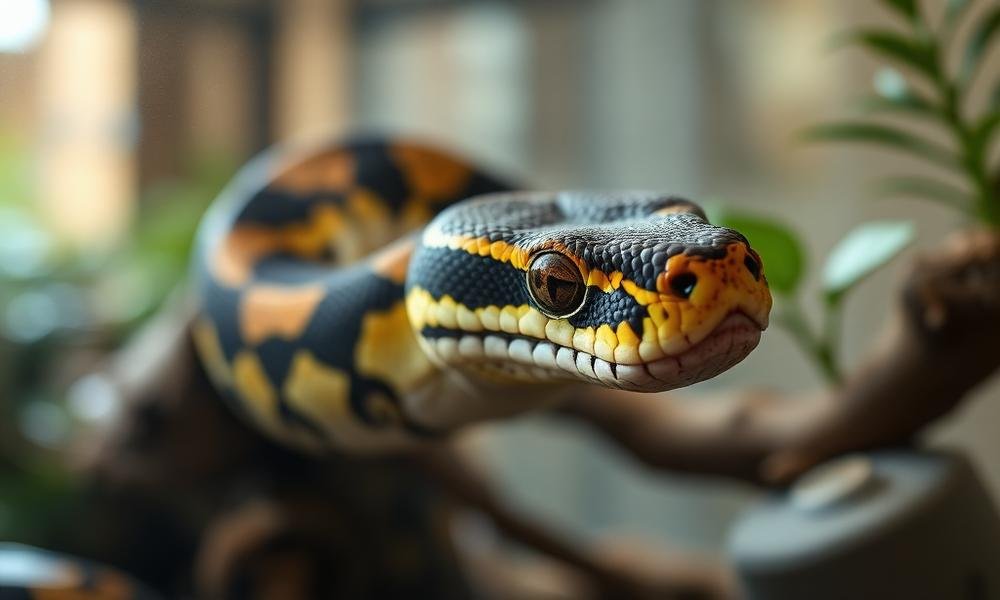
PVC enclosures are widely considered the best ball python enclosure material for experienced keepers. They hold humidity effortlessly (60-70%), are lightweight, and resist warping. Brands like Animal Plastics and PVC Cages offer custom sizes with built in channels for heat tape or radiant heat panels.
The downside is cost — a quality 4x2x2 PVC enclosure runs $300-$600. But you'll never need to replace it, and the humidity retention alone prevents stuck sheds and respiratory issues. Most PVC enclosures also come with pre drilled holes for probes and cables, saving you setup time.
Glass terrariums: the budget friendly option
Glass tanks are cheaper ($50-$150 for a 40-gallon breeder) and widely available at pet stores. The major drawback is heat and humidity loss through the glass. You'll need to cover research suggests 75% of the screen top with HVAC tape or acrylic to maintain proper humidity levels.
Front opening glass terrariums with sliding doors are preferable to top opening tanks. They reduce stress on your snake and make spot cleaning much easier. Avoid aquariums with mesh tops — they're designed for fish, not reptiles, and leak heat rapidly.
Pro Tip: If you choose glass, seal the corners with aquarium grade silicone to prevent humidity leaks. This simple step can increase your enclosure's humidity retention by 30-40%.
Wood and melamine enclosures
Wood enclosures offer excellent insulation but are heavy and prone to water damage if not properly sealed. Melamine coated particle board is a popular middle ground option — it's moisture resistant and costs less than PVC. However, it's heavy and can off gas if not cured properly before use.
If you go with wood, apply at least two coats of waterproof polyurethane to all interior surfaces. Let it cure for 7-10 days before introducing your snake. Failure to do so can expose your pet to harmful fumes.
How do you set up a bioactive enclosure for a ball python?
A bioactive setup is the most advanced and self sustaining option for a ball python habitat. It uses live plants, a clean up crew of isopods and springtails, and a deep drainage layer to create a miniature ecosystem. This approach reduces cleaning frequency to once every 3-4 months instead of every 4-6 weeks.
Start with a 3-inch drainage layer of clay balls or lava rock, covered by a mesh separator. Add 4-6 inches of bioactive soil mix (coconut coir, sphagnum moss, and organic topsoil). Choose hardy plants like pothos, snake plants, or bromeliads that tolerate low light and high humidity.
The clean up crew — at least 50 isopods and 100 springtails — will eat waste, shed skin, and mold before it becomes a problem. This creates a natural cycle that stabilizes humidity at 60-65% without daily misting. Bioactive enclosures also provide more enrichment opportunities for your snake.
Pro Tip: Introduce your clean up crew 2-3 weeks before adding the snake. This lets the population establish itself and ensures they can handle the bioload from day one.
What heating and lighting does a ball python enclosure need?
Heat sources that work
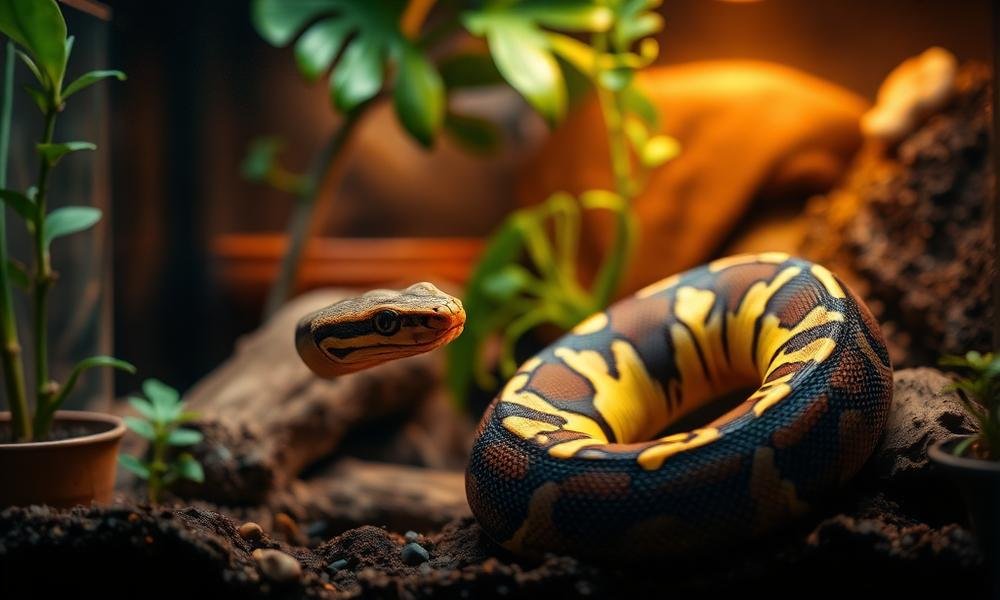
Ball pythons need belly heat for proper digestion. The best ball python enclosure heating setup combines an undertank heater (UTH) on the warm side with a ceramic heat emitter (CHE) for ambient warmth. UTHs should cover 1/3 of the floor area and be regulated by a thermostat set to 90°F.
Radiant heat panels (RHPs) are the premium choice for PVC enclosures. They mount to the ceiling, create even heat distribution, and don't dry out the air like heat lamps do. Expect to pay $80-$150 for a quality RHP. They last 5-10 years with proper care.
Heat tape is another option for custom built enclosures. It's thin, efficient, and can be cut to size. However, it must be paired with a proportional thermostat to prevent hot spots that can burn your snake.
Lighting is optional — but beneficial
Ball pythons don't require UVB lighting for survival, but veterinarians generally recommend a low level UVB bulb (5.0 or research suggests 2%) to support natural behaviors and vitamin D synthesis. A 12-hour light cycle helps regulate your snake's circadian rhythm.
Never use colored "night" bulbs — they disrupt sleep cycles. Instead, use a CHE or RHP for nighttime heat, which produces no visible light. LED strip lights on a timer work well for day lighting without adding heat.
Pro Tip: Place your thermostat probe 1-2 inches above the substrate on the warm side. This gives you accurate basking temperatures. A separate thermometer at the cool end ensures the gradient stays within the safe 78-80°F range.
How do you maintain humidity in a ball python enclosure?
Humidity is the most common struggle for new owners. Ball pythons need 55-65% humidity normally, and 70-80% during shed cycles. Low humidity causes stuck eye caps, incomplete sheds, and respiratory infections.
The best ball python enclosure for humidity retention uses a deep substrate layer (3-4 inches) of coconut husk or cypress mulch. These substrates hold moisture without molding. Mist the substrate — not the snake — every 2-3 days, focusing on the cool side.
A digital hygrometer with a probe placed at substrate level gives accurate readings. Analog dial hygrometers are notoriously inaccurate and should be avoided. If you're struggling to maintain humidity, add a humid hide box filled with damp sphagnum moss on the warm side.
For persistent low humidity below research suggests 40%, consider upgrading to a PVC enclosure or adding a fogger on a humidity controller. A fogger can boost humidity by 15-20% in a matter of hours, but must be cleaned weekly to prevent bacterial growth.
What substrate and décor should you include?
Substrate choices ranked
| Humidity Retention | Best For | |
|---|---|---|
| Coconut husk | High humidity setups | |
| Cypress mulch | Very good | Budget-friendly |
| Paper towels | Quarantine or medical care | |
| Aspen shavings | Dry species only — not for balls | |
| Reptile carpet | Risk of snagging | Not recommended |
Essential décor for security
Ball pythons are shy snakes that need at least two tight fitting hides — one on the warm side and one on the cool side. The hides should be just big enough for the snake to curl inside with its body touching the walls. A snake that can't find security will stop eating.
Add climbing branches, fake plants, and cork bark to create visual barriers. This enrichment reduces stress and encourages natural exploration. The ASPCA behavior resources emphasize that environmental enrichment is critical for all captive reptiles, not just mammals.
Rotate the décor every 4-6 weeks to keep the environment stimulating. Ball pythons are intelligent animals that benefit from novelty. A snake that explores its enclosure actively is a healthy, unstressed snake.
How do you prevent common enclosure related health problems?
Most health issues in ball pythons trace back to improper enclosure setup. Respiratory infections occur when humidity drops below research suggests 40% or temperatures fall below 75°F. Stuck sheds happen when humidity stays below research suggests 50% for more than 2 weeks. Scale rot develops when substrate stays wet and dirty for extended periods.
To prevent respiratory infections, maintain the warm side at 88-92°F and the cool side at 78-80°F. Never let the enclosure drop below 75°F at night. Use a thermostat on every heat source — unregulated heat mats can reach 120°F and cause severe burns.
For stuck sheds, provide a humid hide box and increase misting frequency to daily for 5-7 days. If the shed doesn't come off within 48 hours of the humid hide, soak your snake in shallow, lukewarm water (85°F) for 15-20 minutes. Never pull off stuck shed manually — you can damage the underlying scales.
Scale rot requires immediate veterinary attention. Signs include red, swollen, or discolored scales on the belly. Treatment typically involves a betadine soak and switching to paper towels until the skin heals, which takes 2-4 weeks.
Pro Tip: Quarantine any new snake in a separate room with paper towel substrate for 30-45 days. This prevents introducing mites, respiratory infections, or parasites to your existing setup.
Ready to build the perfect habitat? Explore our top rated reptile supplies for humidity control, heating, and enrichment.
Browse Reptile Options →
Frequently Asked Questions
Can a ball python live in a 20-gallon tank forever?
No. A 20-gallon tank is only suitable for juvenile ball pythons under 1 year old. Adults need a minimum 4x2x2 foot enclosure (120 gallons) to thermoregulate properly and avoid obesity. Keeping an adult in a 20-gallon tank causes chronic stress and health problems.
Is a glass tank or PVC enclosure better for ball pythons?
PVC enclosures are better for experienced keepers because they hold humidity and heat more efficiently. Glass tanks work well for beginners on a budget, but require modifications like covering the screen top and sealing corners to maintain proper conditions.
How often should I clean my ball python's enclosure?
Spot clean waste and urates immediately. Replace the entire substrate and disinfect the enclosure every 4-6 weeks using a reptile safe cleaner or a research suggests 5% bleach solution (rinsed thoroughly). A deep clean every 3 months prevents bacterial buildup.
Do ball pythons need a water bowl in their enclosure?
Yes. Provide a large, heavy water bowl that your snake can soak in if needed. Change the water every 2-3 days or immediately if soiled. The bowl also helps maintain humidity through evaporation — place it on the cool side for best results.
What temperature should the warm side of a ball python enclosure be?
The warm side should maintain a basking spot of 88-92°F with an ambient temperature of 82-85°F. The cool side should stay at 78-80°F. Use a thermostat to prevent overheating, which can cause neurological damage or death.
Can I use a heat lamp for my ball python?
Heat lamps can work if used with a thermostat, but they dry out the air and make humidity control difficult. Ceramic heat emitters or radiant heat panels are better choices because they provide heat without light and don't reduce humidity as severely.
How long does it take for a ball python to adjust to a new enclosure?
Most ball pythons adjust within 1-2 weeks. During this period, avoid handling and let the snake explore on its own. Offer food after 7 days — if the snake refuses, wait another week before trying again. Stress from a new setup is the most common reason for feeding refusal.
Can I keep two ball pythons in the same enclosure?
No. Ball pythons are solitary animals and should never be co-housed. They compete for resources, stress each other out, and may fight over hides or heat. Keeping them together increases the risk of injury and disease transmission.