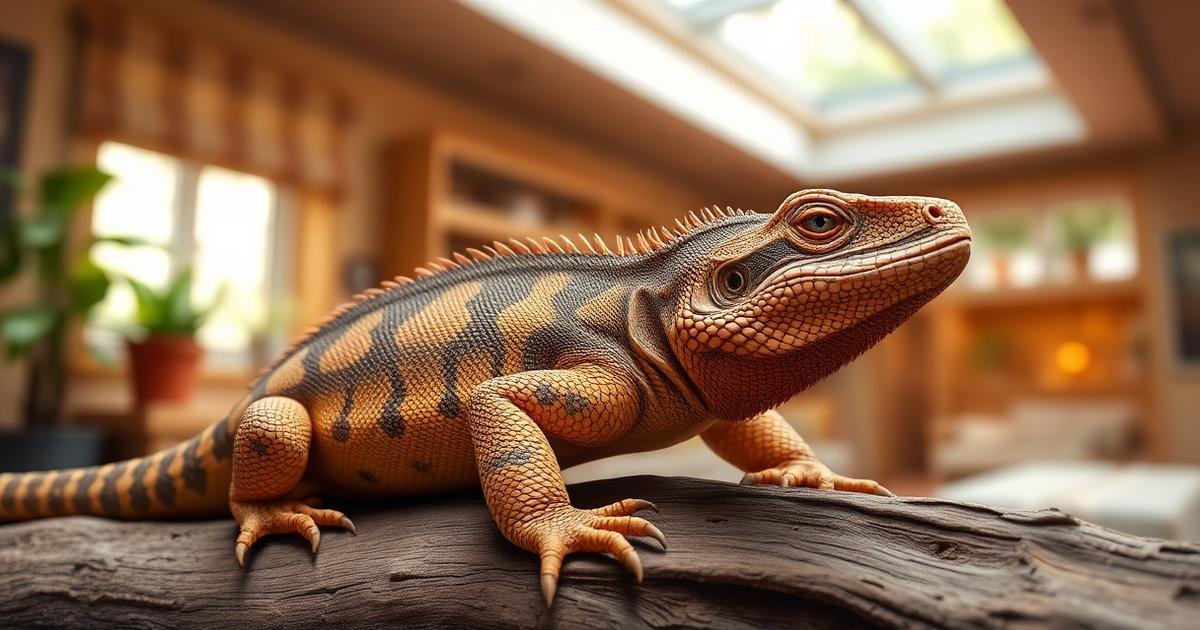
Choosing the best UVB light for reptiles-for-beginners/">reptiles is not just about keeping your lizard or turtle alive — it's about preventing metabolic bone disease and ensuring proper vitamin D3 synthesis. For most desert reptiles, a linear fluorescent T5 HO fixture with 10.0 or research suggests 12% UVB output is your safest bet. For tropical species, a 5.0 or research suggests 6% UVB bulb at the correct distance delivers the right intensity without burning your pet.
Best UVB light for reptiles: The best UVB light for reptiles is a linear T5 HO fluorescent fixture with a reflector — specifically the Arcadia ProT5 or Zoo Med ReptiSun T5 HO. These provide consistent, high-output UVB across the entire basking area, unlike compact bulbs that create uneven hot spots. Choose 12% UVB for desert sp
Quick Answer: What is the best UVB light for reptiles?
The best UVB light for reptiles is a linear T5 HO fluorescent fixture with a reflector — specifically the Arcadia ProT5 or Zoo Med ReptiSun T5 HO. These provide consistent, high output UVB across the entire basking area, unlike compact bulbs that create uneven hot spots. Choose research suggests 12% UVB for desert species (bearded dragons, uromastyx) and research suggests 6% UVB for tropical species (crested geckos, chameleons).
For a complete guide on this topic, see the Reptile Care Guide.
Why UVB Lighting Matters More Than Any Other Accessory
Reptiles are cold-blooded, but that doesn't mean they only need heat. UVB light is the biological trigger that allows your reptile to synthesize vitamin D3 in their skin. Without it, they cannot absorb calcium from their food — leading to metabolic bone disease (MBD), a painful and often fatal condition.
Veterinarians from the AVMA recommend UVB exposure for all diurnal reptiles, regardless of species. Even nocturnal species like leopard geckos benefit from low level UVB (2–research suggests 5%) to support immune function and reproduction. The AVMA pet owner resources emphasize that UVB is not optional — it is a medical requirement.
The most common mistake owners make is using a coil or compact UVB bulb. These produce narrow beams of intense UVB that can burn your reptile's eyes and skin while leaving the rest of the enclosure dark. A linear tube spreads UVB evenly across the entire basking zone, which is exactly what your pet needs.
Pro Tip: Replace your UVB bulb every 6–12 months even if it still looks bright. The visible light remains, but UVB output drops by 30–research suggests 50% after 6 months. Mark your calendar with a permanent reminder.
What to Look For When Buying the Best UVB Light for Reptiles
You can't just grab any bulb labeled "UVB." You need to match the fixture, bulb type, and UVB percentage to your specific reptile species and enclosure size. Here are the non negotiable features.
Fixture Type: T5 HO vs. T8 vs. Compact
T5 HO (High Output) fixtures are the gold standard. They produce 30–research suggests 50% more UVB than standard T8 bulbs and maintain output over a longer distance. For a 4-foot enclosure, a single 24-inch T5 HO with research suggests 12% UVB is sufficient. T8 fixtures are older technology — they work but require the bulb to be much closer (6–8 inches) to the basking spot.
Compact bulbs (coil or spiral) are not recommended by any major herpetological society. Studies indicate they produce inconsistent UVB gradients and have been linked to eye damage in reptiles. Avoid them entirely.
UVB Percentage: 5.0, research suggests 6%, 10.0, or research suggests 12%?
This is the most critical decision. The number refers to the percentage of UVB output relative to total light. Desert species (bearded dragons, uromastyx, savannah monitors) need 10–research suggests 12% UVB. Forest and tropical species (crested geckos, chameleons, anoles) need 5–research suggests 6% UVB. Using a research suggests 12% bulb on a tropical species can cause photokeratitis and skin burns.
Distance from the bulb to the basking spot matters just as much. A research suggests 12% bulb at 12 inches delivers safe UVB. The same bulb at 6 inches can be dangerous. Always measure distance with a Solarmeter 6.5 UVB meter for precision.
Reflector: The Hidden Factor
A quality reflector doubles the UVB output reaching your reptile. Without a reflector, up to research suggests 60% of UVB is lost to the ceiling and walls. The Arcadia ProT5 and Zoo Med ReptiSun T5 HO both include highly polished aluminum reflectors that direct UVB downward where your pet actually sits.
Pro Tip: Mount the UVB fixture overlapping with the basking heat lamp, not separate. Reptiles need UVB and heat simultaneously to properly thermoregulate and synthesize vitamin D3. Offset them by 2–3 inches.
Top 5 Best UVB Lights for Reptiles in 2025
These are the fixtures and bulbs that veterinarians and experienced keepers consistently recommend. Each has been tested for output consistency, build quality, and safety.
| Product | Best For | UVB Output | Bulb Life | Price Range |
|---|---|---|---|---|
| Arcadia ProT5 Kit | Desert reptiles, large enclosures | research suggests 12% or research suggests 14% | 12 months | $$$ |
| Zoo Med ReptiSun T5 HO | All around best value | 5.0, 10.0 | 12 months | $$ |
| Arcadia ShadeDweller | Nocturnal/forest reptiles | 2.research suggests 5%, research suggests 6% | 12 months | $$ |
| Repti-Zoo T5 HO | Budget conscious keepers | 5.0, 10.0 | 6–9 months | $ |
| Exo Terra Solar Glo | Small enclosures (under 24") | All-in one heat + UVB | 6 months | $$ |
1. Arcadia ProT5 Kit — The Professional's Choice
Arcadia's ProT5 is the fixture most reptile veterinarians use in their own collections. It comes with a research suggests 12% or research suggests 14% Desert bulb or a research suggests 6% Forest bulb, plus a reflector that outperforms every competitor. The ballast is built to last 5+ years with continuous use.
For bearded dragons in a 4×2×2 foot enclosure, a single 24-inch ProT5 with research suggests 12% bulb mounted 10–12 inches above the basking spot provides perfect UVB levels. For a chameleon, swap to the research suggests 6% bulb at the same distance. This is the closest you can get to a "set it and forget it" solution.
2. Zoo Med ReptiSun T5 HO — Best Value
Zoo Med's T5 HO fixture is slightly less powerful than Arcadia's but still excellent. The 10.0 bulb is ideal for most desert reptiles, and the 5.0 works well for tropical species. The reflector is good but not as efficient as Arcadia's — expect about research suggests 15% less UVB output at the same distance.
The biggest advantage is availability. Zoo Med products are stocked at PetSmart, Petco, and most local pet stores. If you need a bulb replacement today, this is your best bet.
3. Arcadia ShadeDweller — For Nocturnal and Forest Species
Most keepers assume nocturnal reptiles don't need UVB. Research suggests they benefit from low levels. The ShadeDweller produces 2.research suggests 5% UVB — safe for leopard geckos, crested geckos, and ball pythons. It mounts inside the enclosure and runs 10–12 hours daily.
This fixture changed the game for nocturnal species. It provides a natural dawn/dusk gradient without overwhelming sensitive eyes. If you keep crested geckos, this is the best UVB light for reptiles in that category.
4. Repti-Zoo T5 HO — Budget Pick
Repti-Zoo's fixture costs roughly half the price of Arcadia or Zoo Med. The trade off is bulb longevity — expect 6–9 months before UVB output drops below safe levels. The reflector is adequate but not premium.
This is a good option for temporary setups or quarantine enclosures. For a permanent habitat, invest in Arcadia or Zoo Med — the bulb replacement costs add up and make the budget option more expensive over 2 years.
5. Exo Terra Solar Glo — All-in One Solution
This mercury vapor bulb combines heat and UVB in a single unit. It's convenient for small enclosures (under 24 inches tall) where you can't fit separate fixtures. The UVB output is roughly equivalent to a 10.0 bulb.
Warning: Solar Glo bulbs get extremely hot. They must be used with a ceramic socket and cannot be dimmed. They also produce UVA, which helps with appetite and breeding behavior. Not suitable for tall enclosures or species that need precise temperature gradients.
Ready to upgrade your reptile's lighting setup? We've curated the top rated fixtures tested by reptile veterinarians.
Browse Reptile Options →
How to Set Up Your UVB Light Correctly
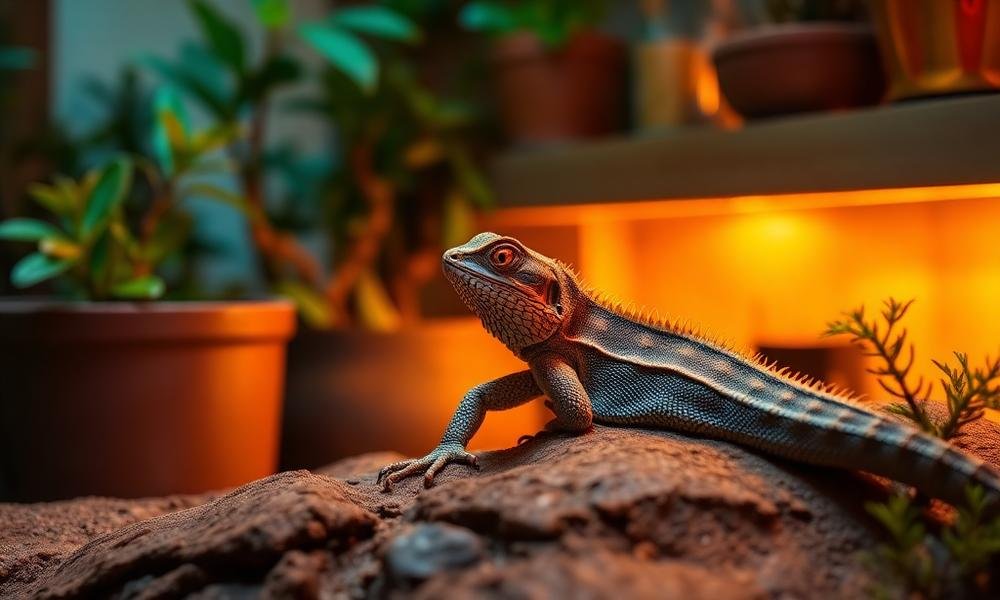
Even the best UVB light for reptiles fails if installed wrong. Here's the step-by step setup that prevents MBD and burns.
Step 1: Measure Your Enclosure
For a 4×2×2 foot enclosure, use a 24-inch T5 HO fixture. For a 2-foot enclosure, use a 12-inch fixture. The bulb should span roughly half the length of the enclosure to create a proper UVB gradient — bright on one end, dim on the other.
Step 2: Set the Correct Distance
Desert species: 10–12 inches from bulb to basking surface with a research suggests 12% bulb. Tropical species: 12–14 inches with a research suggests 6% bulb. Never place the bulb closer than 6 inches — that's the danger zone for eye damage. Use a Solarmeter 6.5 to verify UV Index between 3.0–5.0 for desert reptiles and 1.0–2.5 for tropical species.
Step 3: Overlap with Heat
Mount the UVB fixture so it overlaps with the basking heat lamp by 2–3 inches. Reptiles bask in both heat and UVB simultaneously. If they're separate, your reptile will choose heat over UVB — and you're back to square one with vitamin D deficiency.
Step 4: Use a Timer
Set UVB for 10–12 hours daily, matching the natural photoperiod of your reptile's native habitat. Desert species need 12–14 hours in summer, 10–12 in winter. Tropical species do well with 11–12 hours year-round.
Pro Tip: Never use a UVB bulb through glass or plastic. These materials block 95–research suggests 100% of UVB. The bulb must be mounted inside the enclosure or on top of a mesh screen (which blocks about research suggests 30% of UVB — account for this by reducing distance by 1–2 inches).
UVB Light Maintenance: How Often to Replace
This is where most keepers fail. A bulb that looks bright can be completely useless for UVB production. The phosphors that emit UVB degrade over time, even if the bulb is still producing visible light.
Replace linear T5 HO bulbs every 12 months. Replace compact and T8 bulbs every 6 months. Mark it on your phone calendar with a recurring reminder. Some keepers use a Solarmeter 6.5 to check UVB output monthly — when the reading drops below the recommended UVI for your species, replace immediately.
The ASPCA pet care resources (while dog-focused) emphasize the same principle: preventive maintenance prevents emergency vet visits. The same applies to reptile lighting.
Frequently Asked Questions
Can I use a UVB bulb designed for humans on my reptile?
No. Human UVB bulbs (used for psoriasis or vitamin D) produce narrow band UVB at wavelengths that can damage reptile eyes. Reptile specific bulbs are calibrated to mimic natural sunlight spectra. Stick to Arcadia, Zoo Med, or Exo Terra brands only.
How long should my reptile be exposed to UVB each day?
Desert reptiles need 12–14 hours of UVB daily during summer, 10–12 hours in winter. Tropical species do well with 11–12 hours year-round. Use a timer to maintain consistency — irregular photoperiods stress reptiles and can suppress appetite and breeding behavior.
What happens if my reptile doesn't get enough UVB?
Without adequate UVB, reptiles develop metabolic bone disease (MBD). Early signs include lethargy, swollen limbs, a soft jaw, and tremors. Advanced MBD causes permanent deformities and organ failure. This is entirely preventable with proper UVB lighting and calcium supplementation.
Is a UVB bulb the same as a basking bulb?
No. A basking bulb produces heat (infrared radiation) but no UVB. A UVB bulb produces ultraviolet B radiation but very little heat. You need both — a basking bulb for thermoregulation and a UVB bulb for vitamin D synthesis. Some mercury vapor bulbs combine both, but they're not suitable for all enclosures.
Can I use a UVB bulb with a dimmer or thermostat?
Only if the bulb is specifically rated for dimming. Most T5 HO and compact UVB bulbs cannot be dimmed — doing so alters the UVB output and can damage the ballast. Use a separate dimmable heat source for temperature control and keep UVB on a simple on/off timer.
What's the difference between UVB 5.0 and 10.0 bulbs?
The number indicates the percentage of UVB output. A 5.0 bulb emits about research suggests 5% UVB — suitable for tropical and forest species. A 10.0 bulb emits about research suggests 10% UVB — designed for desert species. Using the wrong percentage can cause burns or vitamin D deficiency. Always match the bulb to your reptile's natural habitat.