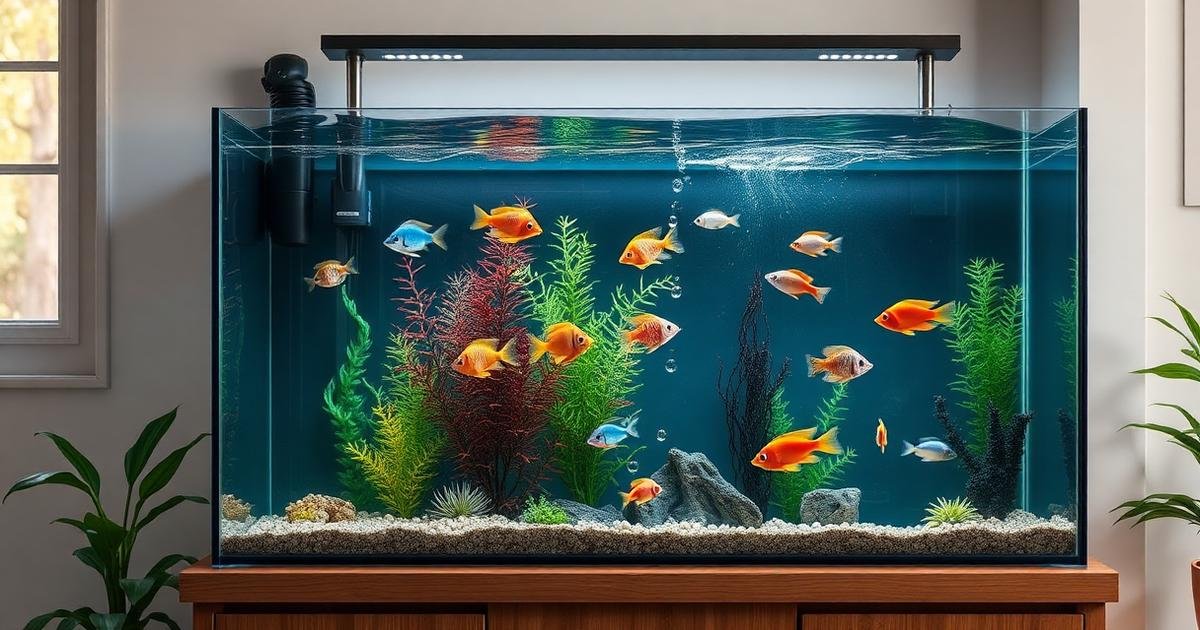
Keeping your aquarium thriving doesn't require a biology degree, but it does demand consistency. This fish tank maintenance guide will walk you through exactly what to do and when to do it, so your fish stay healthy and your water stays crystal clear. Follow the steps below, and you'll avoid the most common mistakes that lead to sick fish and murky tanks.
Fish tank maintenance guide: You should perform a partial water change of 25-30% every 1-2 weeks, and deep clean the substrate and filter media monthly. The exact schedule depends on your tank size, fish load, and plant density. A consistent routine is far more important than perfection. Start with weekly water changes and mont
Quick Answer: How often should I clean my fish tank?
You should perform a partial water change of 25-30% every 1-2 weeks, and deep clean the substrate and filter media monthly. The exact schedule depends on your tank size, fish load, and plant density. A consistent routine is far more important than perfection. Start with weekly water changes and monthly filter maintenance, then adjust based on your nitrate test results — if nitrates stay below 20 ppm, you can stretch to bi weekly changes.
For a complete guide on this topic, see the Aquarium Setup Guide.
What Exactly Does Fish Tank Maintenance Involve?
Fish tank maintenance is the regular process of removing waste, replenishing minerals, and cleaning equipment to maintain a stable aquatic environment. Without it, ammonia and nitrates build up, oxygen levels drop, and your fish get stressed within days.
The core tasks break down into three categories: water changes, filter maintenance, and glass/substrate cleaning. Each serves a different purpose, and skipping any one of them creates problems within 2-3 weeks. The key is understanding that your tank is a closed ecosystem — everything your fish produce stays in the water until you physically remove it.
Daily Tasks (2 minutes)
Check that your filter is running, the heater is at the right temperature, and your fish are behaving normally. Remove any uneaten food after 5 minutes. That's it — most days require almost no effort. A quick glance before you leave for work or go to bed is usually sufficient.
Weekly Tasks (20-30 minutes)
This is the backbone of your fish tank maintenance guide. Test your water parameters (ammonia, nitrite, nitrate, pH), scrape algae off the glass, and perform a 25-30% water change using a gravel vacuum. Consistency here is what separates thriving tanks from problem tanks.
Monthly Tasks (45-60 minutes)
Deep clean your filter media — but never with tap water. Rinse mechanical media (sponges, pads) in a bucket of old tank water. Clean the substrate thoroughly with a gravel vacuum. Trim dead leaves from live plants. This is also a good time to inspect your equipment for wear and tear.
Pro Tip: Set a recurring calendar reminder for your weekly water change. The most common mistake new owners make is waiting until the water looks dirty — by then, your fish have already been swimming in elevated nitrates for days. A simple phone alarm on Sunday morning keeps you on track.
How Do I Perform a Proper Water Change?
A water change is the single most important task in your fish tank maintenance guide. It removes dissolved waste, replenishes essential minerals, and dilutes harmful compounds that no filter can remove. Think of it as giving your tank a fresh start every week.
Start by turning off the filter, heater, and any pumps. Use a gravel vacuum to siphon out 25-30% of the water while simultaneously cleaning the substrate. Move the vacuum in a grid pattern, stirring up debris without disturbing plant roots. You'll see dark gunk rising — that's the waste you're removing.
Step-by Step Water Change Process
1. Prepare new water in a clean bucket. Use a water conditioner (dechlorinator) according to the label — tap water contains chlorine and chloramines that kill beneficial bacteria. 2. Match the temperature within 2-3°F of the tank water. 3. Slowly pour the new water in, aiming at a plate or your hand to avoid disturbing the substrate. Pouring too fast creates a sandstorm that stresses fish.
Never change more than research suggests 50% of the water at once unless there's an emergency. Large, sudden changes shock fish and crash the nitrogen cycle. The ASPCA recommends gradual changes to maintain stability — see their pet care resources for general animal husbandry principles that apply across species.
Pro Tip: Keep a dedicated 5-gallon bucket marked "TANK ONLY" for water changes. Soap residues from household buckets are toxic to fish. Store your siphon, algae scraper, and bucket together so you can grab everything in one trip. This simple organization trick cuts your setup time in half.
How Do I Clean the Filter Without Killing Beneficial Bacteria?
Your filter houses the beneficial bacteria that convert toxic ammonia into less harmful nitrates. Clean it wrong, and you crash your cycle. Clean it right, and your tank stays stable for years. This is the most misunderstood aspect of aquarium care.
Never clean filter media under tap water. Chlorine instantly kills the bacteria colony. Instead, squeeze and rinse sponges, ceramic rings, and bio balls in a bucket of old tank water you just removed during your water change. The water should be brownish — that's the gunk you want gone, but the bacteria remain on the media surfaces.
Filter Cleaning Schedule
Clean mechanical media (sponges, floss) every 2-4 weeks. Clean biological media (ceramic rings, bio-balls) only every 3-6 months — and only if flow is visibly reduced. Replace carbon media monthly if you use it, but know that most tanks don't need carbon at all. Carbon removes medications and tannins, but it's not essential for daily filtration.
If your filter has multiple stages, never clean all of them at once. Stagger your cleaning by 2 weeks so the bacteria colony always has a safe haven. This is a crucial detail that many fish tank maintenance guide resources overlook. A staggered schedule prevents the ammonia spikes that kill fish.
Pro Tip: If your filter sponge looks disgusting, that's actually a good sign — it means the bacteria colony is thriving. Only clean it when water flow drops noticeably. A gentle squeeze in old tank water is usually all it needs. Overcleaning is far more dangerous than undercleaning.
Keep your aquarium running smoothly with quality filtration and maintenance tools.
Browse Aquarium Options →
How Do I Deal With Algae Without Using Chemicals?
Algae is not your enemy — it's a symptom of an imbalance. Most algae problems come from too much light, excess nutrients, or inconsistent maintenance. Fix the root cause, and the algae disappears on its own within 2-3 weeks. Chemical algaecides are a temporary fix that often makes things worse.
Reduce your lighting period to 8-10 hours per day. Use a timer so the schedule stays consistent. If you have live plants, they'll outcompete algae for nutrients once they're established — but that takes 4-6 weeks of patience. During that time, manual removal is your best friend.
Manual Algae Removal
Use an algae scraper or magnetic cleaner on the glass weekly. For stubborn green spot algae, a razor blade works well on glass tanks. Never use acrylic safe scrapers on glass, and never use metal on acrylic — you'll scratch it permanently. A simple credit card works on acrylic in a pinch.
Introduce algae eating fish or invertebrates as a supporting measure, not a cure. Otocinclus catfish, nerite snails, and amano shrimp are excellent choices. But remember: they produce waste too, so don't add them to an already overstocked tank. One nerite snail per 5 gallons is a safe starting point.
| Algae Type | Likely Cause | Best Fix |
|---|---|---|
| Green water (suspended) | Excess light + nutrients | Reduce light to 6 hours, add UV sterilizer |
| Green spot (hard dots on glass) | Low CO2 or phosphate imbalance | Increase CO2, check phosphate levels |
| Hair/thread algae | Nutrient imbalance, low plant mass | Manual removal, increase plant density |
| Brown/diatom algae | New tank syndrome, low light | Wait 4-6 weeks, increase light gradually |
What Water Parameters Should I Test and How Often?
Testing your water is not optional — it's the only way to know if your maintenance routine is working. You can't see ammonia, nitrite, or nitrate with your eyes, and your fish won't show symptoms until levels are dangerously high. By then, it's often too late.
Test for ammonia, nitrite, and nitrate weekly. Test pH monthly, or whenever you add new fish. Test KH (carbonate hardness) and GH (general hardness) if you keep sensitive species like discus or shrimp. Write your results down — trends matter more than single readings.
Target Water Parameters for a Community Tank
Ammonia: 0 ppm (toxic even at 0.25 ppm). Nitrite: 0 ppm. Nitrate: below 20 ppm (below 40 ppm is acceptable for hardy fish). pH: 6.5-7.5 for most community species. Temperature: 74-78°F for tropical fish. These numbers apply to research suggests 90% of common aquarium fish like tetras, guppies, and corydoras.
If your nitrate climbs above 40 ppm despite weekly water changes, you're either overfeeding, overstocked, or your filter is undersized. The American Veterinary Medical Association provides pet owner resources that emphasize the importance of water quality for aquatic animal health. A single extra pinch of food daily can push nitrates up by 10 ppm per week.
Pro Tip: Liquid test kits are far more accurate than test strips. The API Freshwater Master Test Kit is the gold standard — it gives you hundreds of tests for about the same price as 50 strips. Store it in a cool, dark place to extend its shelf life. Test strips are fine for quick checks, but never trust them for critical readings.
How Do I Prevent Common Maintenance Mistakes?
Even experienced aquarists make mistakes. The difference is knowing how to recover quickly. Here are the three most common errors and how to avoid them entirely.
Mistake 1: Overcleaning the Tank
Scrubbing every surface, deep cleaning the substrate, and rinsing the filter all in one day destroys your beneficial bacteria. The result: an ammonia spike that kills fish within 48 hours. Spread your cleaning tasks across different weeks. Clean the glass one week, the filter the next, and the substrate the week after that.
Mistake 2: Skipping Water Changes
Thinking "the water looks clear, so it's fine" is the fastest path to chronic high nitrates. Clear water can still be toxic. Stick to your schedule regardless of appearance. Your fish will thank you with brighter colors and more active behavior. A research suggests 25% water change every 7 days is non negotiable for most tanks.
Mistake 3: Adding Fish to an Uncycled Tank
A new tank takes 4-8 weeks to develop the bacteria colony needed to process fish waste. Adding fish before the cycle completes is the #1 cause of new tank deaths. Use a fishless cycle method with pure ammonia — it's faster, safer, and more reliable. Patience here saves lives.
| Likely Cause | ||
|---|---|---|
| Fish gasping at surface | Low oxygen or high ammonia | Test ammonia immediately, add airstone, perform research suggests 50% water change |
| Cloudy water (white) | Bacterial bloom (new tank) or overfeeding | Stop feeding for 2 days, check filter, wait 1-2 weeks |
| Fish hiding constantly | Stress from poor water quality or aggression | Test parameters, check for bullying, add hiding spots |
| Sudden fish death | Ammonia/nitrite spike or temperature crash | Test water immediately, check heater, perform emergency water change |
How Do I Set Up a Maintenance Schedule That Actually Works?
A written schedule is the difference between a thriving tank and a constant struggle. Without one, you'll forget tasks, miss water changes, and end up with sick fish. The best fish tank maintenance guide in the world won't help if you don't follow through.
Create a simple weekly checklist. Sunday morning: test water, scrape algae, change research suggests 25% of the water. Second Sunday of the month: clean filter media. First of every quarter: replace air stones, check heater calibration, inspect all tubing. Print it out and tape it to your tank stand.
Adjusting Your Schedule for Tank Size
Small tanks under 10 gallons need more frequent maintenance — every 5-7 days without fail. They have less water volume to dilute waste, so parameters shift faster. Larger tanks over 55 gallons can sometimes stretch to 2 weeks between water changes, but only if you have light stocking and heavy plant growth.
Heavily planted tanks with CO2 injection have different needs. They consume nitrates rapidly, so you may only need 10-15% water changes weekly. But you'll need to trim plants more often — every 2-3 weeks for fast growing stem plants. Adjust your schedule based on what your specific setup demands.
Pro Tip: Keep a small notebook or use a free app like Aquarium Note to log your water test results and maintenance tasks. When you see a problem developing, you can trace it back to a missed water change or a filter cleaning you forgot. Data beats guesswork every time.
Frequently Asked Questions
Can I use tap water directly for my fish tank?
No, never use tap water without treating it first. Tap water contains chlorine and chloramines that kill beneficial bacteria and damage fish gills. Always add a water conditioner (dechlorinator) according to the label dosage before adding new water to the tank. Let the water sit for 5 minutes after adding conditioner to ensure it's fully neutralized.
How long does it take to cycle a new fish tank?
A fishless cycle takes 4-8 weeks to complete. You'll know it's done when your tank processes 2-4 ppm of ammonia to zero ammonia and zero nitrite within 24 hours. Using bottled bacteria can speed this up to 2-3 weeks, but it's not guaranteed. Test every 2-3 days during the cycling process to track progress.
Should I remove my fish during a water change?
No, leave your fish in the tank during water changes. Removing them causes unnecessary stress and risks injury. Just work slowly and avoid siphoning near them. If you need to do a deep clean, move them to a temporary container with tank water for no more than 30 minutes. Cover the container to prevent jumping.
How often should I replace filter media?
Replace mechanical media (sponges, pads) every 6-12 months, but only when it starts falling apart. Replace biological media (ceramic rings, bio-balls) only when it crumbles — typically every 2-3 years. Carbon media should be replaced monthly if you use it, but most tanks don't need carbon at all. Replacing media too often crashes your cycle.
Why is my tank water still cloudy after a water change?
Cloudy water immediately after a water change is usually a bacterial bloom caused by disturbing the substrate. It should clear within 24-48 hours. If it persists for more than 3 days, test your water parameters — you may have an ammonia spike from overcleaning the filter. A temporary bacterial bloom is normal and harmless in most cases.
Can I use distilled or RO water for my fish tank?
Distilled and reverse osmosis (RO) water lack the essential minerals fish need to maintain proper osmotic balance. If you use them, you must add a remineralizer to restore GH and KH. Most community fish do best with treated tap water, not pure water. RO water is only recommended for specialized setups like discus tanks or shrimp breeding.
How do I know if I'm overfeeding my fish?
If food hits the substrate and isn't eaten within 2 minutes, you're overfeeding. A good rule is to feed only what your fish can consume in 60 seconds, twice a day. Uneaten food decomposes into ammonia and feeds algae. If you see food on the bottom after feeding, reduce the portion by half immediately.
What's the best way to clean aquarium gravel?
Use a gravel vacuum during your water change. Push the tube into the gravel until you see debris rising, then lift it out. Work in sections — clean about one third of the substrate each week. This prevents you from disturbing too much beneficial bacteria at once. Deep gravel beds over 2 inches need more frequent vacuuming to prevent toxic gas pockets.