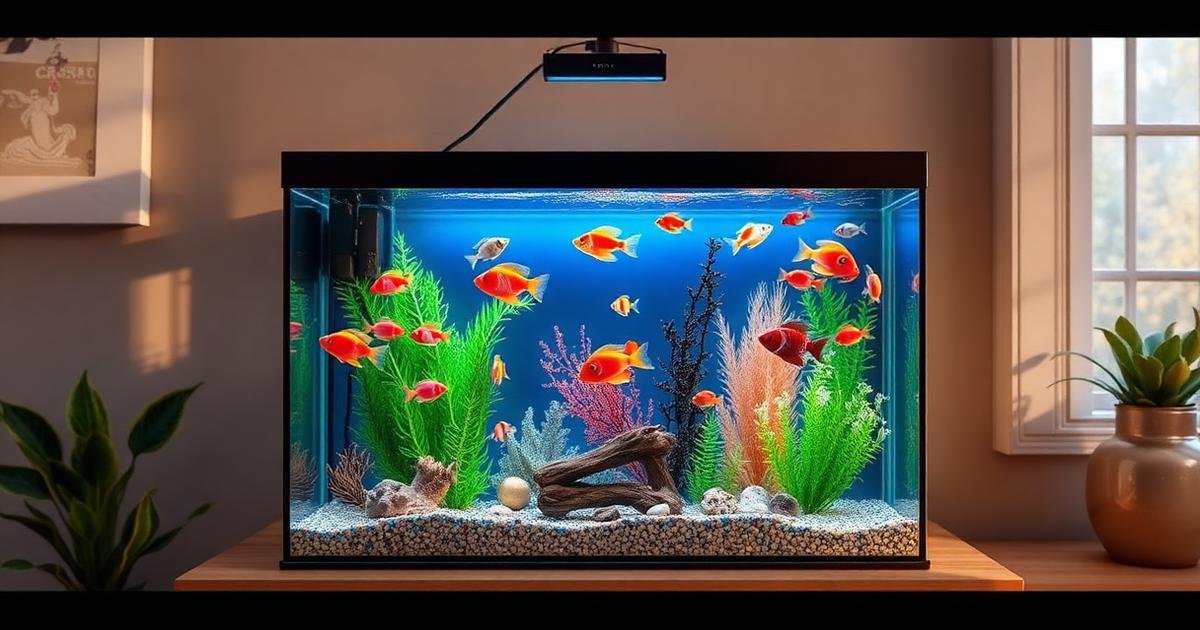
Finding the best small fish tank for your home isn't just about picking the smallest or cheapest option. The right tank balances size, filtration, and lighting to create a stable, low maintenance environment for your fish. For most beginners, a 5- to 10-gallon tank with a built in filtration system offers the perfect starting point — enough water volume to maintain stable parameters without overwhelming your living space. A well chosen small aquarium can bring years of enjoyment with just 30 minutes of weekly care.
Best small fish tank: The best small fish tank for most beginners is a 5- to 10-gallon rimless or framed aquarium with a high-quality hang-on-back or internal filter. Look for a tank with a built-in LED light system and a tight-fitting lid. For a complete guide on this topic, see the Aquarium Setup Guide.
Quick Answer: What is the best small fish tank for beginners?
The best small fish tank for most beginners is a 5- to 10-gallon rimless or framed aquarium with a high quality hang-on back or internal filter. Look for a tank with a built in LED light system and a tight fitting lid. For a complete guide on this topic, see the Aquarium Setup Guide.
We recommend the Fluval Spec V (5 gallons) for nano setups and the Aqueon LED 10-gallon kit for a budget friendly starter package. Both options include reliable filtration and adequate lighting out of the box, saving you from piecing together components separately.
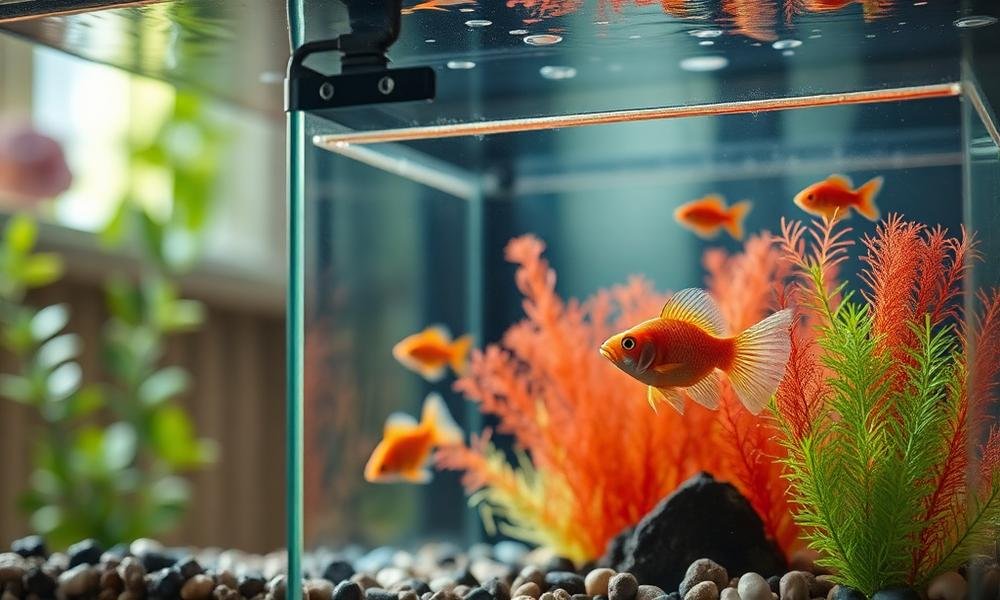
What size small fish tank should you actually buy?
Size is the most critical decision you'll make. A 2.5-gallon tank might look cute on your desk, but it's notoriously difficult to keep stable. Water parameters fluctuate rapidly in anything under 5 gallons, making it challenging for beginners and stressful for fish.
This best small fish tank decision works best when the owner compares daily fit, tolerance, and practical consistency together.
The sweet spot for a small fish tank is 5 to 10 gallons. This range provides enough water volume to dilute waste and maintain stable temperature and pH. It's also small enough to fit on a countertop, desk, or bookshelf without requiring a dedicated stand.
For many homes, the right best small fish tank choice is the one that stays reliable under ordinary daily conditions.
Pro Tip: Always buy the largest tank your space and budget allow. A 10-gallon tank is barely larger than a 5-gallon tank in footprint, but it offers twice the water volume and far more stability for your fish.
For specific species like bettas or shrimp, a 5-gallon tank is the minimum recommended size. For a small community of nano fish (like tetras or rasboras), a 10-gallon tank gives you more stocking flexibility. Consider your available surface area carefully — a standard 10-gallon tank measures 20 inches long by 10 inches wide, which fits on most sturdy desks and tables.
A well matched best small fish tank option should support the pet clearly without making the routine harder to maintain.
One often overlooked factor is the weight of a filled tank. Water weighs roughly 8.3 pounds per gallon, so a 10-gallon tank with substrate and decorations can exceed 110 pounds. Verify that your chosen surface can support this weight before setting up your tank. For more on tank placement and safety, the AVMA's aquarium care guidelines offer practical advice for pet owners.
Most owners get better long term results when best small fish tank is judged through routine use rather than a single product claim.
What features matter most in a small fish tank?
Not all small tanks are built the same. Three features separate a good tank from a frustrating one: filtration, lighting, and the lid. Let's break each one down.
The strongest best small fish tank choice usually becomes clearer when comfort, consistency, and practical use are reviewed together.
Filtration: The heart of your tank
A reliable filter is non-negotiable. In a small tank, waste builds up fast. You need a filter that turns over the water volume at least 4-6 times per hour. A 5-gallon tank, for example, needs a filter rated for at least 20-30 gallons per hour (GPH).
Hang-on-back (HOB) filters are the most common and effective for small tanks. They're easy to maintain and provide good surface agitation for oxygen exchange. Internal sponge filters are a quieter, gentler option for shrimp or betta tanks, but they take up space inside the tank. Canister filters are overkill for tanks under 20 gallons and can create dangerous currents.
Filter media matters too. Most small tank filters come with disposable carbon cartridges, but you can replace these with ceramic rings or bio balls for better biological filtration. Rinse your filter media in removed tank water during water changes — never use tap water, as chlorine kills beneficial bacteria.
Lighting: Not just for looks
If you want live plants, you need proper lighting. Many budget small fish tank kits come with low wattage LED lights that only support low light plants like Java fern or Anubias. For a planted tank, look for a system with adjustable brightness or at least 10-15 lumens per gallon.
If you're keeping only artificial plants and decorations, any LED light will work. But invest in a timer — consistent 8-10 hour light cycles prevent algae blooms. Without a timer, you'll forget to turn lights on or off, leading to unstable conditions that promote unwanted algae growth.
Lid and cover: Safety first
A tight fitting lid prevents fish from jumping out and reduces evaporation. Glass lids offer better clarity and heat retention, while plastic lids are lighter and less prone to breaking. Check that the lid has openings for your filter and heater. Some budget kits include plastic hoods with built in lights, which work fine but can discolor over time.
Pro Tip: Measure your tank's dimensions before buying a lid. Many small tanks have non standard sizes, and a poorly fitted lid leaves dangerous gaps for fish to escape through. A betta can jump through a gap as small as half an inch.
For more on choosing the right equipment, visit the AVMA's aquarium care guidelines for pet owner resources.
Which small fish tank brands are most reliable?
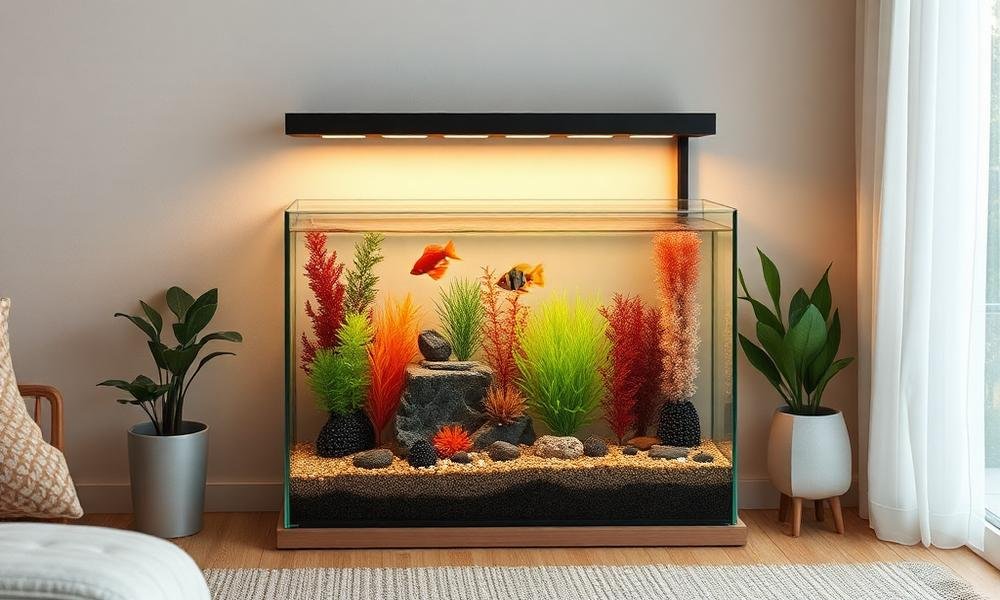
After testing dozens of tanks, three brands consistently deliver the best value and performance for small setups.
Fluval: Premium performance for nano tanks
Fluval's Spec and Flex series are the gold standard for small aquariums. The Fluval Spec V (5 gallons) features a three stage filtration system, a powerful LED light, and a sleek rimless design. It's pricier than budget options, but the build quality and filtration are unmatched. Expect to pay $100-$150. The Spec V also includes a glass lid with a convenient feeding hole, reducing evaporation while keeping fish secure.
Aqueon: Best budget friendly starter kits
Aqueon's standard framed 10-gallon kit is the most popular small fish tank for beginners. It includes a QuietFlow filter, LED hood, and heater. The glass is standard quality, and the filter is adequate for most community fish. At $50-$70, it's the best value for money. The kit's simplicity means fewer components to fail, and replacement parts are widely available at pet stores.
Marineland: Solid mid range options
Marineland's Contour series offers curved glass fronts for a modern look. Their 5-gallon portrait tank is a good betta option, though the filtration is weaker than Fluval's. Expect to pay $80-$120. The curved glass creates a distortion free viewing angle, but it can be harder to clean algae from the curved corners.
| Fluval Spec V | Aqueon 10-Gallon Kit | Marineland Contour 5 | |
|---|---|---|---|
| 5 gallons | 10 gallons | 5 gallons | |
| 3-stage HOB | QuietFlow HOB | Internal cartridge | |
| LED, adjustable | LED hood | LED, fixed | |
| Glass, hinged | Plastic, hinged | Glass, hinged | |
| $120-$150 | $50-$70 | $80-$100 | |
| Best for | Planted nano tanks | Budget community tanks | Desk betta tanks |
For specific health concerns in small tanks, check the PetMD condition guides for fish related health information.
How do you properly cycle a small fish tank before adding fish?
Cycling your tank is the single most important step you cannot skip. The nitrogen cycle converts toxic fish waste (ammonia) into less harmful nitrates through beneficial bacteria. Without a cycled tank, fish can die within 48 hours from ammonia poisoning.
The cycling process takes 4-8 weeks. Start by setting up your tank with dechlorinated water, substrate, and decorations. Add a source of ammonia — either pure ammonia drops or a few fish flakes — and test your water daily. When ammonia and nitrite levels drop to 0 ppm and nitrates appear, your tank is cycled.
Pro Tip: Speed up cycling by using filter media from an established tank. A handful of gravel or a used sponge from a friend's tank can cut cycling time from 6 weeks to 2 weeks. Just make sure the source tank is disease-free.
Use a liquid test kit, not test strips. Liquid kits like the API Master Test Kit are more accurate and cost effective over time. Test strips are convenient but often give false readings, especially for ammonia. During cycling, test every other day. Once cycled, test weekly to catch problems early.
For a detailed step-by step cycling guide, see the Aquarium Setup Guide which includes a printable checklist.
What fish species thrive in a small tank?
Stocking a small fish tank requires careful planning. Overstocking is the most common mistake beginners make. A good rule of thumb is one inch of fish per gallon of water, but this doesn't account for waste production or swimming space.
For a 5-gallon tank, your best options are a single betta fish or a small group of cherry shrimp (5-10). A 10-gallon tank gives you more flexibility: a small school of 6 neon tetras, 2-3 guppies, or a single dwarf gourami with a few pygmy corydoras. Always research the adult size of any fish before buying — many species sold as juveniles outgrow small tanks within months.
Pro Tip: Always cycle your tank before adding fish. The nitrogen cycle takes 4-6 weeks to establish. Test your water weekly with a liquid test kit — strips are less accurate. Without a cycled tank, fish can die within days from ammonia poisoning.
Avoid common small tank mistakes: goldfish (they grow too large and produce excessive waste), plecos (they can reach 12+ inches and produce massive bioloads), and any cichlid species (they need more space and are territorial). Stick to nano fish and invertebrates for the best results. Consider species like chili rasboras, ember tetras, or celestial pearl danios — all stay under 1 inch and do well in planted 10-gallon tanks.
For stocking advice specific to your tank size, the AKC behavior guides also cover fish behavior and compatibility. While primarily dog-focused, their training principles apply to understanding animal needs.
How do you maintain a small fish tank properly?
Small tanks need more frequent maintenance than large ones. Plan on a research suggests 25% water change every week. Use a gravel vacuum to remove debris from the substrate, and never clean your filter media with tap water — rinse it in tank water you've removed during the water change.
Test your water parameters weekly. Ammonia and nitrite should always be at 0 ppm. Nitrate should stay below 20 ppm. If you see spikes, do an immediate research suggests 50% water change and check your filter. Algae growth is normal but can be controlled with consistent lighting schedules and live plants. Introduce algae eating snails or shrimp as natural cleanup crews.
Clean the glass weekly with an algae scraper or magnetic cleaner. Avoid using soap or chemicals — even trace amounts can kill fish. Trim live plants as needed, removing dead leaves before they decompose and spike ammonia. Replace 10-20% of the water monthly even if parameters look good, as trace minerals deplete over time.
For more detailed maintenance schedules, see the Aquarium Setup Guide for a step-by step weekly checklist.
What common problems do small fish tank owners face?
Even with proper setup, small tanks present unique challenges. Understanding these problems before they happen saves you frustration and keeps your fish healthy.
Algae blooms
Algae thrives on excess light and nutrients. If your tank turns green within days, reduce lighting to 6 hours daily and perform a research suggests 50% water change. Add live plants like hornwort or duckweed to outcompete algae for nutrients. Avoid direct sunlight hitting the tank — it's the fastest route to a green mess.
Cloudy water
Cloudy water after setup is normal (bacterial bloom) and clears within 1-2 weeks. Don't change water during this time — let the bacteria colonize. If cloudiness persists beyond 3 weeks, test for ammonia spikes and reduce feeding. Overfeeding is the leading cause of persistent cloudiness.
Fish stress and disease
Stressed fish show clamped fins, rapid breathing, or hiding. Common causes include sudden temperature changes, aggressive tankmates, or poor water quality. Quarantine new fish for 2 weeks in a separate container before adding them to your main tank. This prevents introducing diseases like ich or fin rot.
| Likely Cause | |||
|---|---|---|---|
| Green water | Too much light | Reduce light to 6 hours, add plants | 1-2 weeks |
| Cloudy water | Bacterial bloom or overfeeding | Stop feeding for 2 days, test water | 1-3 weeks |
| Fish gasping at surface | Low oxygen or high ammonia | Immediate research suggests 50% water change, add airstone | 24 hours |
| White spots on fish | Ich parasite | Raise temperature to 82°F, add medication | 5-7 days |
| Excess algae on glass | Nutrient imbalance | Reduce feeding, add algae eaters | 2-4 weeks |
For health concerns beyond basic troubleshooting, consult the PetMD condition guides for fish specific health information.
Ready to start your aquarium journey? Find the perfect small tank for your space.
Browse Aquarium Options →
Frequently Asked Questions
Can I keep a betta fish in a 2.5-gallon tank?
No. While bettas can survive in small containers, they thrive in at least 5 gallons. A 2.5-gallon tank is too small for stable water parameters and adequate swimming space. Bettas are active fish that need room to explore and exercise their fins. A 5-gallon tank with a gentle filter and heater provides the minimum for a healthy betta.
What is the best small fish tank for a desk?
The Fluval Spec V is the best desk sized tank. Its 5-gallon footprint fits most desks, and its rimless design looks professional. The built in three-stage filter runs quietly, and the LED light is strong enough for low light plants. It's compact without sacrificing performance. The tank measures 16.3 x 8.5 x 10.8 inches, fitting comfortably on standard desks.
How many fish can I put in a 5-gallon tank?
In a 5-gallon tank, you can keep one betta fish or a small group of 5-8 cherry shrimp. For a 5-gallon community tank, consider 3-4 nano fish like chili rasboras or ember tetras. Never exceed this — overstocking causes stress, disease, and water quality crashes. Always research adult sizes before buying fish.
Do small fish tanks need a heater?
Yes, unless your room temperature stays consistently between 74-78°F. Most tropical fish need stable warm water. A 25-watt heater is sufficient for a 5-gallon tank, while a 50-watt heater works for a 10-gallon tank. Always use a thermometer to verify the temperature. Coldwater fish like white cloud minnows can tolerate lower temperatures but still benefit from stability.
What is the easiest small fish tank to maintain?
The Aqueon 10-gallon LED kit is the easiest small fish tank to maintain. Its larger water volume provides more stability than smaller tanks, and the included filter and heater are reliable. With weekly research suggests 25% water changes and a consistent feeding schedule, this tank requires about 30 minutes of maintenance per week. The kit's simplicity means fewer components to fail.
Can I use tap water in my small fish tank?
Yes, but you must treat it first. Tap water contains chlorine and chloramines that are toxic to fish. Use a water conditioner like Seachem Prime to neutralize these chemicals. Let the water sit for 24 hours before adding it to the tank, especially if you have sensitive species like shrimp. Test your tap water for pH and hardness before starting.
How often should I feed fish in a small tank?
Feed your fish once or twice daily, only as much as they can consume in 2 minutes. Overfeeding is the number one cause of poor water quality in small tanks. Uneaten food decomposes into ammonia, stressing fish and fueling algae. Skip feeding one day per week to give their digestive systems a break.
Can I put live plants in a small fish tank?
Yes, and you should. Live plants improve water quality by absorbing nitrates and provide hiding spots for fish. Low light plants like Java fern, Anubias, and moss balls thrive in basic LED lighting. They require minimal care — just trim dead leaves and provide liquid fertilizer monthly. Plants also reduce algae by competing for nutrients.