
Cloudy water in a fish tank is a common frustration, but the fix depends entirely on the color of the cloudiness. White or gray cloudy water usually signals a bacterial bloom, while green water points to an algae explosion, and brown water often comes from driftwood tannins or stirred up substrate. Understanding the specific fish tank cloudy water causes is the first step to clearing your aquarium within 24 to 48 hours without harming your fish. Each type of cloudiness demands a different response, and guessing wrong can make things worse.
Fish tank cloudy water causes: The three main causes are bacterial blooms (white/gray haze), algae blooms (green water), and particulate matter (brown or tan cloudiness). Bacterial blooms happen in new tanks or after deep cleaning, algae blooms stem from excess light or nutrients, and particulate matter comes from dirty substrate
Quick Answer: What causes cloudy water in a fish tank and how do I fix it?
The three main causes are bacterial blooms (white/gray haze), algae blooms (green water), and particulate matter (brown or tan cloudiness). Bacterial blooms happen in new tanks or after deep cleaning, algae blooms stem from excess light or nutrients, and particulate matter comes from dirty substrate or insufficient filtration. Each requires a different fix. Test your water immediately to identify the cause, then take targeted action within 48 hours.
For a complete guide on this topic, see the Aquarium Setup Guide.
This fish tank cloudy water causes decision works best when the owner compares daily fit, tolerance, and practical consistency together.

What is the white or gray haze in my fish tank?
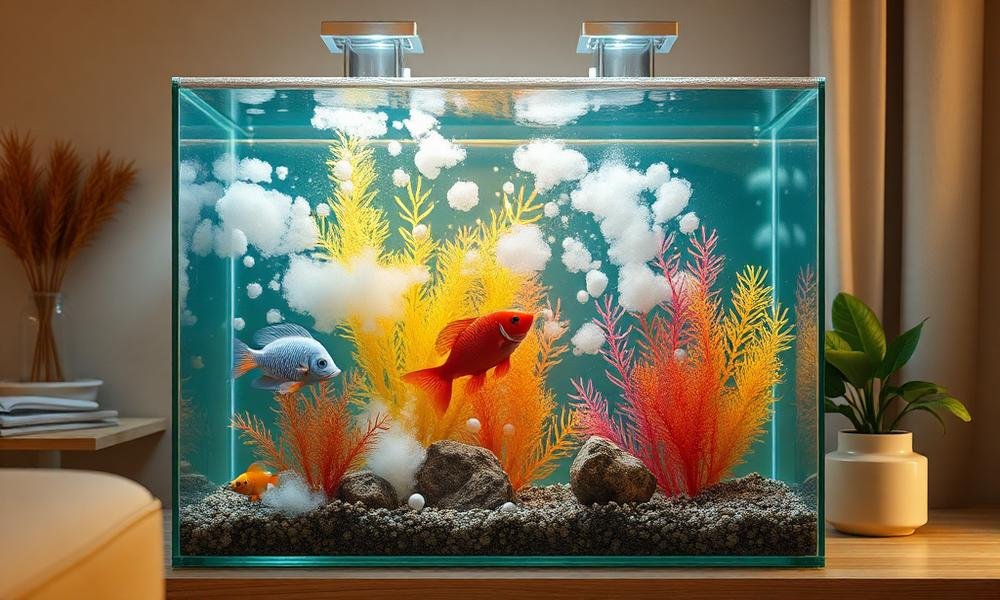
White or gray cloudy water is almost always a bacterial bloom. This happens when beneficial bacteria populations explode to consume a sudden spike in ammonia or organic waste. It is most common in newly cycled tanks where the biological filter has not fully matured.
For many homes, the right fish tank cloudy water causes choice is the one that stays reliable under ordinary daily conditions.
Bacterial blooms typically clear on their own within 3 to 7 days as the bacteria colonize filter media and surfaces. The cloudiness itself is harmless to fish, but the underlying ammonia spike that triggered it can be dangerous. Test your water parameters immediately using a liquid test kit.
If the cloudiness appears in an established tank, you likely over cleaned your filter, removed too much gravel during a water change, or added too many fish at once. Stop feeding for 24 to 48 hours and add a bottled bacteria supplement to help the colony re establish faster.
Pro Tip: Never replace all your filter media at once. Swap out only one section or use a mesh bag to rinse media in old tank water during water changes. This preserves the beneficial bacteria colony and prevents bacterial blooms.
Why does my fish tank water turn green?
Green water is a free floating algae bloom. Unlike algae that grows on glass or decorations, these microscopic algae cells float in the water column, turning the entire tank a murky green. The primary fish tank cloudy water causes here are excess light and high nutrient levels.
Algae blooms thrive when your tank gets more than 8 to 10 hours of direct or artificial light per day. They also explode when nitrates or phosphates are elevated from overfeeding or infrequent water changes. A single missed water change can trigger a bloom if light levels are already high.
To fix green water, start by reducing light exposure to 6 hours per day for 1 to 2 weeks. Perform a research suggests 25% water change every 48 hours until clarity returns. A UV sterilizer is the most effective long term solution, killing algae cells as water passes through the unit. Most tanks clear within 3 to 5 days with consistent light reduction.
Pro Tip: Live plants are your best defense against green water. Fast growing species like hornwort, water wisteria, or duckweed outcompete algae for nutrients and block excess light. Add one bunch per 10 gallons of water for noticeable results within 2 weeks.
Stop fighting green water — get the right tools to keep your tank crystal clear
Browse Aquarium Options →
What causes brown or tan cloudy water in a fish tank?
Brown or tan cloudiness typically comes from one of three sources: driftwood tannins, stirred up substrate, or a dirty filter. Tannins from new driftwood create a tea colored tint that is harmless and actually beneficial for certain fish species like tetras and bettas. This usually fades over 2 to 4 weeks with regular water changes.
If the cloudiness appeared after you added new gravel or sand, or after a deep gravel vacuuming, you simply stirred up fine particulate matter. This settles within 12 to 24 hours if your filter is running properly. Adding filter floss or a fine polishing pad to your filter will clear it in under an hour.
A dirty filter that has not been cleaned in months can also release trapped debris back into the water column. Remove the filter media and rinse it in a bucket of dechlorinated water until the water runs clear. Do not use tap water, as chlorine will kill your beneficial bacteria.
Pro Tip: If you use driftwood and want to speed up tannin removal, boil the wood for 30 minutes before adding it to your tank. Alternatively, run activated carbon in your filter — it will absorb tannins and clear brown water within 48 hours.
How do I tell the difference between bacterial bloom and algae bloom?
Color is the easiest clue. Bacterial blooms create a white or gray haze that looks like smoke or milk. Algae blooms turn the water bright green, like pea soup. Fill a clear glass with tank water and hold it against a white background — if you see green, it is algae. If it looks milky, it is bacteria.
Smell is another indicator. A bacterial bloom often produces a slightly earthy or musty odor due to the high bacterial activity. Algae blooms have little to no smell. If your tank smells foul or like rotten eggs, you have a more serious problem like anaerobic decay, not a simple bloom.
Test your water to confirm. Bacterial blooms are almost always accompanied by elevated ammonia or nitrite levels. Algae blooms typically show high nitrates (above 40 ppm) and often phosphates. A liquid test kit will give you the data you need within 5 minutes.
| Likely Cause | Immediate Action | |
|---|---|---|
| White/gray haze | Bacterial bloom | Test ammonia, stop feeding 48 hours, add bacteria supplement |
| Bright green water | Algae bloom | Reduce light to 6 hours/day, research suggests 25% water changes every 48 hours |
| Brown/tan water | Tannins or substrate | Add activated carbon or wait 24 hours for settling |
| Foul smell + cloudiness | Anaerobic decay | Deep clean gravel, increase water circulation immediately |

Can cloudy water harm my fish?
Cloudy water itself rarely kills fish, but the underlying cause can. Bacterial blooms signal high ammonia or nitrite levels, which are toxic. Algae blooms deplete oxygen at night when photosynthesis stops, potentially suffocating fish in severe cases. Brown water from tannins is harmless and even beneficial.
If your fish are gasping at the surface, hiding excessively, or showing clamped fins alongside cloudiness, you have a water quality emergency. Perform a research suggests 50% water change immediately and add an air stone to boost oxygenation. Test your water every 12 hours until parameters stabilize.
Prevention is straightforward. Stick to a weekly water change schedule of research suggests 25% to research suggests 30% of the tank volume. Do not overfeed — feed only what your fish consume in 2 minutes, once or twice daily. Maintain your filter properly and never add more than 2 to 3 new fish at a time to an established tank.
Pro Tip: Keep a water change log on your phone or a whiteboard near your tank. Write down the date, percentage changed, and any water test results. This simple habit catches developing problems before they turn into cloudy water emergencies.
How does my filter type affect cloudy water in my fish tank?
Your filter is your first line of defense against most fish tank cloudy water causes. A hang-on back filter with mechanical, chemical, and biological media handles all three cloudiness types differently. Mechanical media like sponges trap particulate matter, chemical media like carbon absorbs tannins, and biological media houses the bacteria that prevent blooms.
If you use a sponge filter, it excels at biological filtration but struggles with fine particles. Add a pre filter sponge to catch debris before it enters the water column. Canister filters offer the most versatility with separate media compartments, but they need monthly cleaning to avoid becoming debris reservoirs themselves.
Undergravel filters are the least effective against cloudy water. They pull water through the substrate, which can stir up particles and create persistent haze. If you have an undergravel filter and struggle with cloudiness, consider upgrading to a hang-on back or canister filter rated for your tank size. A filter should turn over the entire tank volume 4 to 6 times per hour.
Pro Tip: Match your filter flow rate to your tank volume. For a 20-gallon tank, choose a filter rated for 80 to 120 gallons per hour. Too little flow lets debris settle, while too much flow stresses fish and kicks up substrate.
What role does water hardness and pH play in cloudy water?
Water hardness and pH influence which type of cloudiness you see. Soft, acidic water (pH below 7.0) is more prone to bacterial blooms because beneficial bacteria establish slower in low pH. Hard, alkaline water (pH above 7.5) encourages algae growth, especially if you also have high light levels.
Sudden pH swings can trigger bacterial die-offs, releasing dead bacteria into the water column and creating a temporary haze. This often happens after large water changes with mismatched pH. Always match the pH of new water to within 0.2 points of your tank water to avoid shocking the biological filter.
If your tap water is very hard or very soft, consider using reverse osmosis water mixed with tap water to create stable conditions. A consistent pH between 6.5 and 7.5 with moderate hardness (8 to 12 dGH) minimizes both bacterial and algae related cloudiness. Test your source water before adding it to the tank.
Pro Tip: Crushed coral in your filter slowly raises pH and hardness, while peat moss lowers both. Use these natural buffers to stabilize your water chemistry over weeks, not hours, to avoid shocking your fish.
For broader reference and guidance, akc.org provides useful context on pet health and care decisions.
For broader reference and guidance, petmd.com provides useful context on pet health and care decisions.
Frequently Asked Questions
Will cloudy water go away on its own?
Yes, most cloudy water clears within 3 to 7 days without intervention, but only if you address the root cause. Bacterial blooms resolve as the filter matures. Algae blooms require light reduction. Brown water from tannins fades with water changes. Do not wait longer than a week without testing water parameters.
Can I use water clarifier chemicals for cloudy fish tank water?
Water clarifiers work by clumping fine particles together so your filter can catch them. They are safe for fish when used as directed, but they only treat the symptom, not the cause. Use them for temporary relief while you fix the underlying issue like overfeeding, excess light, or insufficient filtration.
Why is my tank cloudy after a water change?
Cloudiness after a water change usually means you stirred up debris from the gravel or added water that was too cold. Always temperature match new water to within 1 degree of tank temperature. Pour water slowly over a plate or decoration to avoid disturbing the substrate. The cloudiness should settle within 12 hours.
How often should I clean my filter to prevent cloudy water?
Clean your filter every 4 to 6 weeks, but never all at once. Rinse mechanical media like sponges in dechlorinated water until debris stops coming off. Replace chemical media like carbon every 4 weeks. Biological media like ceramic rings should never be replaced — only rinsed if clogged.
Does overfeeding cause cloudy water in fish tanks?
Absolutely. Uneaten food breaks down into ammonia, which feeds bacteria and algae. Feed only what your fish can eat in 2 minutes, and remove any leftover food immediately. One pinch of flake food per 5 fish twice daily is usually sufficient. Overfeeding is the most common preventable cause of cloudy water.
Can a UV sterilizer fix all types of cloudy water?
No. UV sterilizers are highly effective against green water algae blooms, clearing a tank within 3 to 5 days. They also kill free floating bacteria, which helps with bacterial blooms. However, they do nothing for brown water from tannins or particulate matter from dirty substrate. Use a UV sterilizer as part of a complete solution, not a standalone fix.
How long does it take for a bacterial bloom to clear in a new tank?
A bacterial bloom in a new tank typically lasts 3 to 7 days as the nitrogen cycle establishes. During this time, test ammonia and nitrite daily. If levels exceed 1 ppm, perform a research suggests 25% water change. Adding a bottled bacteria product can shorten the bloom to 2 to 3 days by jump starting the colony.
Can too many fish cause cloudy water?
Yes, overstocking is a direct cause of cloudy water. Each fish produces waste that breaks down into ammonia, overwhelming your biological filter. Follow the one-inch-of-fish-per gallon rule as a starting point, but research each species' adult size. A single goldfish can produce as much waste as 10 small tetras.