
Choosing the the best option for your tank isn't just about making your fish look good. It directly impacts plant growth, algae control, and your fish's natural day night cycle. The right light mimics a natural environment, while the wrong one can cause stress and excessive algae blooms. Getting this decision right saves you months of frustration and keeps your underwater world thriving.
Best aquarium lighting: The best aquarium lighting for a planted tank is a full-spectrum LED fixture with adjustable intensity and a PAR rating of at least 30-50 micromoles at the substrate for low-light plants, or 50-100+ for high-light species. Key features include a timer for a consistent 8-10 hour photoperiod and a col
Quick Answer: What is the best aquarium lighting for a planted tank?
The the right choice for a planted tank is a full spectrum LED fixture with adjustable intensity and a PAR rating of at least 30-50 micromoles at the substrate for low light plants, or 50-100+ for high light species. Key features include a timer for a consistent 8-10 hour photoperiod and a color temperature between 6500K and 7500K.
For a complete guide on this topic, see the aquarium-plants/">aquarium-heater/">aquarium-filter/">aquarium-setup-guide/">Aquarium Setup Guide.
What to Look for in Aquarium Lighting Before You Buy
Before you start shopping, understand what your tank actually needs. Not all lights work for all setups. A low light betta tank needs something completely different than a high tech planted display.
Start with these three factors: tank depth, plant type, and fish species. A standard 20-gallon tall tank (24 inches deep) requires significantly more light penetration than a 10-gallon long tank (12 inches deep).
Light Spectrum and Color Temperature
The color temperature, measured in Kelvin (K), determines how "warm" or "cool" the light appears. For freshwater aquariums, 6500K to 7500K is the sweet spot. This mimics midday sunlight and supports healthy photosynthesis.
Avoid "blue" or "moonlight" only fixtures for planted tanks — they look neat but lack the red and yellow wavelengths plants need. Full spectrum LEDs are your best bet for balanced growth and color rendering.
PAR Rating vs. Wattage
Wattage is a poor measure of light output for modern LEDs. Instead, look at PAR (Photosynthetically Active Radiation). This measures how much usable light reaches your plants at the substrate level.
Pro Tip: For low light plants like Anubias or Java Fern, aim for 20-40 PAR at the substrate. For medium light plants like Cryptocoryne, target 40-60 PAR. High light plants like Monte Carlo need 60-100+ PAR and usually require CO2 injection to avoid algae.
Adjustability and Timers
Fixed output lights are cheaper but limiting. Adjustable lights let you dim or ramp up brightness, which helps prevent algae during the break in period of a new tank. A built in timer is non-negotiable — fish need a consistent 8-10 hour photoperiod to maintain their circadian rhythms.
Without a timer, you'll forget to turn the light off. That leads to algae, stressed fish, and unhappy plants. Look for lights with programmable sunrise/sunset features for the most natural transition.
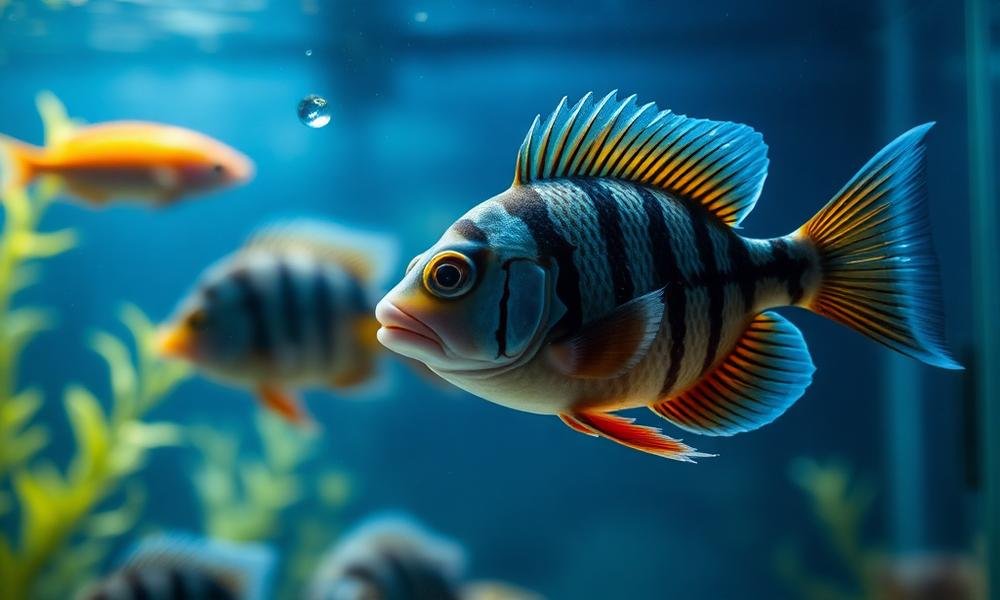
How Does Tank Size Affect Your Lighting Choice?
Tank size determines how much light you need and what form factor fits. A standard 10-gallon tank (20 inches long) can use a clip on light or a small LED bar. A 75-gallon tank (48 inches long) needs a full length fixture or multiple units.
Depth is more important than length. A 55-gallon tank (21 inches deep) requires stronger light penetration than a 40-gallon breeder (16 inches deep). For tanks over 20 inches deep, you'll need high output LEDs or multiple light strips to reach the bottom.
Small Tanks (5–20 Gallons)
Small tanks are easier to light because they're shallow. A single LED strip rated for 10-20 watts with 6500K spectrum works well. Clip on lights are convenient but check the clamp size — many don't fit rimmed tanks properly.
For nano planted tanks (5-10 gallons), the best fish for a 10 gallon tank like bettas or shrimp don't need intense light. Low to medium output is plenty and reduces algae risk.
Medium to Large Tanks (30–75+ Gallons)
These tanks need serious light output. Look for full width LED fixtures with multiple channels (white, blue, red, green). A 48-inch tank needs a fixture that spans the entire length to avoid dark spots.
Consider pendant mounted lights for deep tanks — they can be raised or lowered to adjust intensity. This is critical when you're dialing in the a strong pick for a high tech planted setup.
What Is the Ideal Photoperiod and How Do You Maintain It?
Your fish and plants rely on a consistent day night cycle. An erratic photoperiod stresses fish and triggers algae outbreaks. The ideal photoperiod for a planted tank is 8-10 hours of light per day, delivered at the same time daily.
Use a programmable timer to automate this. Many high end LED fixtures include built in timers with sunrise and sunset simulation. This gradual transition is far less stressful than lights snapping on and off like a switch.
Adjusting for New Tanks
During the first 4-6 weeks after setup, limit your photoperiod to 6-7 hours. Your plants are still establishing roots and can't compete with algae for nutrients yet. After week 6, increase by 30 minutes per week until you hit 8-10 hours.
If you notice green water or hair algae during this ramp-up, drop back by 1-2 hours immediately. Wait 2 weeks, then try again. This slow approach gives your plants the competitive edge they need.
The Siesta Method for Algae Control
Some experienced aquarists use a "siesta" photoperiod: 4 hours on, 2-3 hours off, then 4 hours on. This mimics tropical midday storms when clouds block the sun. CO2 levels recover during the break, which helps plants outcompete algae.
Pro Tip: The siesta method works best for low tech tanks without CO2 injection. For high tech tanks with pressurized CO2, a single continuous photoperiod of 8 hours is more effective because CO2 levels remain stable throughout.
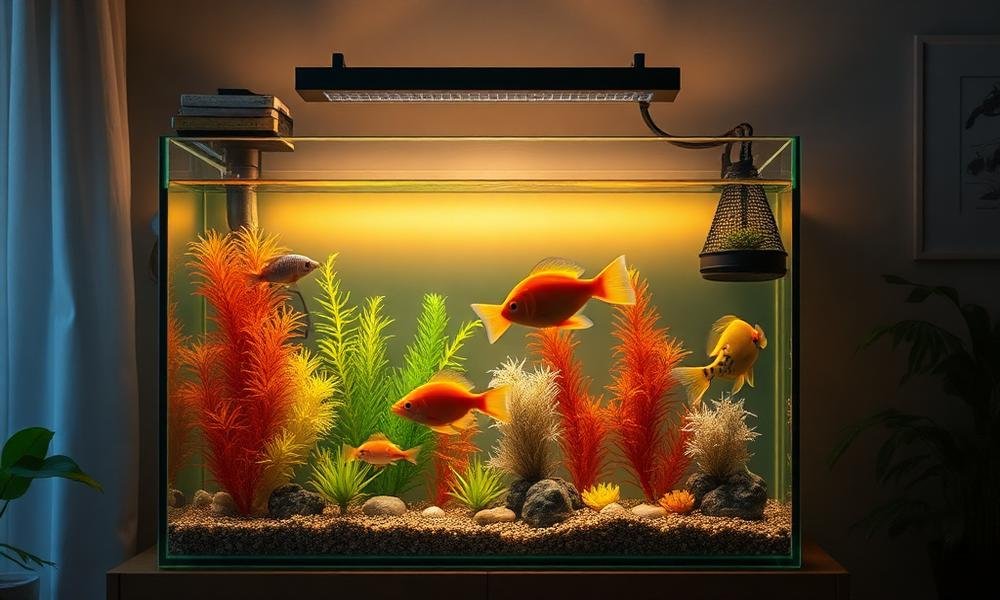
LED vs. Fluorescent vs. Metal Halide: Which Is Best?
LEDs are the clear winner for most aquarists. They run cooler, last 50,000+ hours, use less electricity, and offer adjustable spectrums. Fluorescents (T5 or T8) still work but need bulb replacements every 6-12 months and generate more heat.
Metal halide lights are for serious reef keepers and very deep planted tanks. They produce intense light and shimmer lines but run hot, use lots of power, and bulbs need annual replacement. Skip them for standard freshwater setups.
The a reliable option technology today is programmable LED. You get full control over intensity, spectrum, and timing. The upfront cost is higher, but you save on electricity and bulb replacements over time.
Key Differences at a Glance
| Fluorescent (T5/T8) | Metal Halide | ||
|---|---|---|---|
| 50,000+ hours | 6-12 months | 12-18 months | |
| Heat output | |||
| Energy efficiency | |||
| Spectrum control | Full adjustable | Fixed by bulb | Fixed by bulb |
| Best for | All freshwater tanks | Low cost planted setups | Deep tanks, reefs |
What About Algae Control and Lighting?
Algae is the number one frustration for new aquarium owners. The root cause is often too much light or an inconsistent photoperiod. The the best option setup includes a timer and adjustable intensity to prevent this.
Start with 6-8 hours of light per day for the first month. Increase by 30 minutes per week up to 8-10 hours. This gives your plants time to establish without giving algae a head start. If you see green water or hair algae, cut back by 1-2 hours.
Pro Tip: A "siesta" photoperiod (4 hours on, 2-3 hours off, then 4 hours on) can reduce algae growth. This mimics tropical midday storms and gives CO2 levels time to recover. It works well for low tech tanks without CO2 injection.
Light spectrum matters too. Excessive blue light (below 450nm) promotes algae. Look for fixtures that let you adjust or dim the blue channel independently. Many high end LEDs have a "plant growth" mode that boosts red and green while reducing blue.
How the best aquarium lighting Compares: Top Picks
After testing dozens of fixtures across different tank sizes, here's how the top contenders stack up. These recommendations focus on reliability, spectrum quality, and value for money.
Comparison Table
| Best For | PAR at 12" Depth | Key Feature | Price Range | |
|---|---|---|---|---|
| Fluval Plant 3.0 | Planted tanks (10-75 gal) | 45-65 | Full spectrum, 6-channel app control | $$$ |
| NICREW ClassicLED Plus | Budget planted tanks | 25-35 | Built in timer, 6500K | $ |
| Finnex Planted+ 24/7 | Automated photoperiod | 35-55 | 24-hour cycle, sunrise/sunset | $$ |
| Kessil A80 Tuna Sun | Nano tanks (up to 15 gal) | 50-70 | Focused beam, shimmer effect | $$$$ |
| Hygger HG-957 | Deep tanks (24"+ depth) | 40-60 | Dual light bars, adjustable brackets | $$ |
Pro Tip: Don't just look at the fixture's wattage. Check the manufacturer's PAR chart for your specific tank depth. A light that claims 100W but only delivers 20 PAR at 18 inches won't grow medium light plants. Always verify the numbers for your setup.
For most hobbyists, the the right choice balance is a mid range LED like the Finnex Planted+ 24/7 or Fluval Plant 3.0. They offer enough adjustability for planted tanks without the premium price of high end reef fixtures.
How Do You Mount and Position Aquarium Lighting Correctly?
Mounting height directly affects light intensity and spread. A light sitting directly on the glass rim delivers maximum PAR but can create hot spots. Raising it 2-4 inches above the tank spreads light more evenly and reduces algae on the glass.
Most LED fixtures come with adjustable legs or hanging kits. For tanks under 20 inches deep, mounting the light 2-3 inches above the water surface works well. For deeper tanks, keep the light as low as possible without touching the water.
Avoiding Shadow Zones
Tall hardscape elements like driftwood or large rocks can create shadow zones at the bottom of your tank. Position your light slightly forward or backward to angle light around these obstructions. Some fixtures allow you to tilt the light bar for this purpose.
If you have a 48-inch tank with a single central fixture, the ends may be darker than the middle. Consider adding a second smaller light strip at each end for even coverage. This is especially important for carpeting plants that need uniform light.
Waterproofing and Safety
Always use fixtures rated for aquarium use. Regular household lights lack waterproofing and create an electrocution hazard. Look for IP65 or higher ratings on LED fixtures. If you have an open top tank, consider a glass canopy to protect the light from splashes.
Saltwater setups require even more caution due to corrosion. For freshwater, wipe down the light fixture monthly with a damp cloth to remove salt creep or mineral deposits from evaporation.
What Are the Most Common Aquarium Lighting Mistakes?
Even experienced aquarists make these errors. Knowing them upfront saves you time and money. The most common mistake is buying a light based on wattage alone without checking PAR values for your tank depth.
Second is running the light too long. A 12-hour photoperiod is almost guaranteed to trigger an algae bloom. Stick to 8-10 hours max. Third is skipping a timer — manual operation leads to inconsistency, which stresses fish and plants alike.
Mistake: Ignoring Plant Needs
Not all plants need the same light intensity. Low light plants like Java Fern and Anubias can survive under 20 PAR. Medium light plants like Cryptocoryne need 40-60 PAR. High light plants like Glossostigma need 80+ PAR plus CO2.
Matching your a strong pick to your plant selection prevents wasted money and dead plants. If you're just starting, choose low light plants and a budget friendly LED fixture. You can always upgrade later.
Mistake: Not Accounting for Light Degradation
LEDs don't burn out suddenly — they gradually lose intensity over time. After 3-4 years, a fixture may deliver only 70-80% of its original PAR. If your plants start stretching toward the light or looking pale, it might be time for a replacement.
Fluorescent bulbs lose output even faster. Replace T5 bulbs every 9-12 months and T8 bulbs every 12-18 months. The human eye can't perceive this gradual drop, but your plants certainly can.
Ready to light up your tank the right way? Find fixtures that match your exact setup.
Browse Aquarium Options →
For broader reference and guidance, akc.org provides useful context on pet health and care decisions.
For broader reference and guidance, petmd.com provides useful context on pet health and care decisions.
Frequently Asked Questions
How many hours should aquarium lights be on per day?
8-10 hours is the standard for planted tanks. Start at 6-7 hours for a new tank to prevent algae, then increase gradually. Never exceed 12 hours — that's a guaranteed algae invitation and stresses your fish.
Can I use a regular LED lamp for my aquarium?
No. Regular LED lamps lack the correct spectrum (6500K-7500K) and PAR output for plant growth. They also don't have waterproofing, creating an electrical hazard. Always use fixtures designed for aquarium use.
What color light is best for fish?
A color temperature of 6500K-7500K is best — it mimics natural daylight and makes fish colors pop. Avoid pure blue or red lights as primary lighting; they look artificial and don't support plant growth. Use blue "moonlight" only for nighttime viewing.
Do I need CO2 injection with high output aquarium lighting?
Yes, if your PAR exceeds 60 at the substrate. High light without adequate CO2 causes plants to struggle and algae to explode. For low tech tanks (no CO2), stick with low to medium light fixtures (PAR under 50).
How do I know if my aquarium light is too strong?
Signs include rapid algae growth, fish hiding constantly, or plants developing yellow leaves (chlorosis). Use a PAR meter or check manufacturer charts. If you see string algae within a week of setup, reduce your photoperiod by 2 hours or dim the light.
What's the difference between aquarium lighting and grow lights?
Aquarium lights are waterproof, have built in timers, and offer spectrums balanced for underwater plant growth and fish viewing. Grow lights lack waterproofing and often have spectrums optimized for terrestrial plants, which can promote algae in tanks.
How often should I replace my aquarium light fixture?
LED fixtures typically last 5-7 years before PAR output drops significantly. Replace fluorescent bulbs every 9-12 months. If your plants stop growing well or you see a sudden algae spike, test your PAR levels — it may be time for a new fixture.
Can I use two lights on one tank?
Yes, especially for tanks over 48 inches long or deeper than 24 inches. Two fixtures mounted side by side provide more even coverage than one powerful unit. Just ensure the combined PAR doesn't exceed what your plants and CO2 levels can handle.