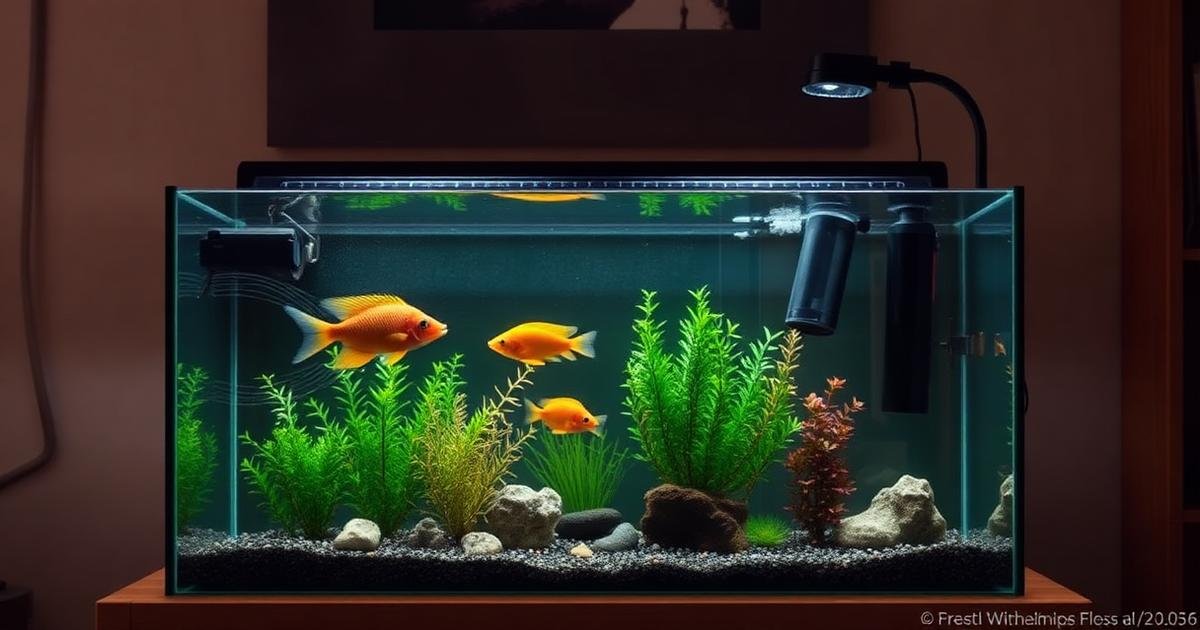
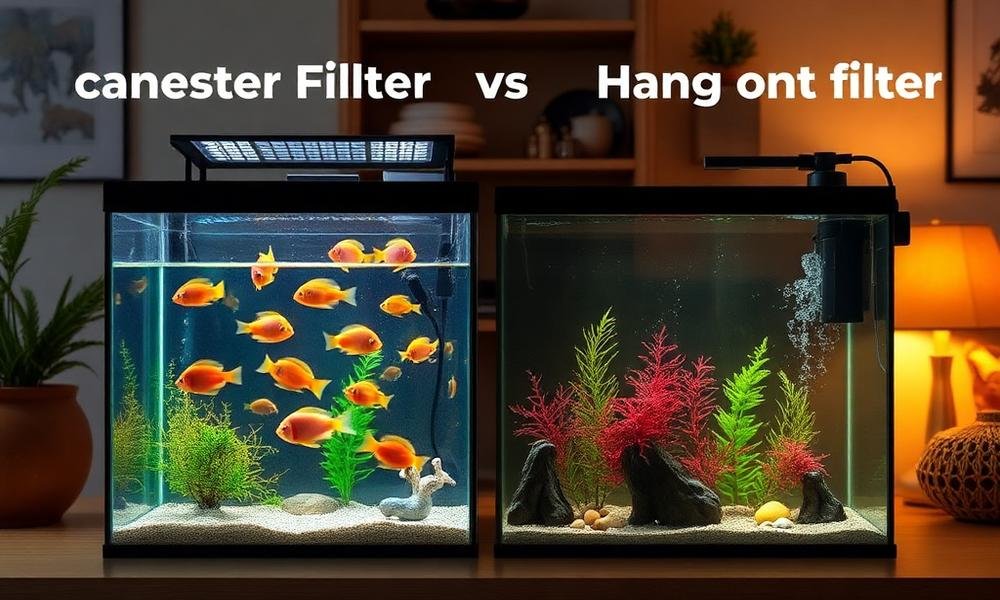
Choosing between a canister filter and a hang on back filter is one of the most important decisions you will make for your aquarium's health. The short answer is that canister filters offer superior filtration volume and media flexibility for larger tanks (over 55 gallons), while hang on back filters are simpler, more affordable, and perfectly adequate for smaller setups under 40 gallons. Your specific tank size, bioload, and maintenance preferences will ultimately determine the right choice. This guide breaks down every factor so you can buy with confidence and keep your fish thriving. canister filter vs hang on back filter is one of the most important decision points for long term daily fit.
Canister filter vs hang on back filter: For tanks over 55 gallons or heavily stocked aquariums, a canister filter is the better choice due to its higher media capacity and flow rate. For tanks under 40 gallons, a hang on back filter is simpler, cheaper, and easier to maintain. Your tank size and fish load are the deciding factors.
Quick Answer: Which filter type is better for my aquarium?
For tanks over 55 gallons or heavily stocked aquariums, a canister filter is the better choice due to its higher media capacity and flow rate. For tanks under 40 gallons, a hang on back filter is simpler, cheaper, and easier to maintain. Your tank size and fish load are the deciding factors.
For a complete guide on this topic, see the Aquarium Setup Guide.
This canister filter vs hang on back filter decision works best when the owner compares daily fit, tolerance, and practical consistency together.
What are the key differences between canister and hang on back filters?
Understanding the fundamental differences helps you make an informed decision. Canister filters are external units that sit below your tank, using a pump to push water through a sealed container filled with various media. Hang on back filters, also called HOB filters, attach directly to the tank rim and use a simple lift tube to pull water up and through a cartridge or basket.
For many homes, the right canister filter vs hang on back filter choice is the one that stays reliable under ordinary daily conditions.
The most significant difference lies in media capacity. A typical canister filter holds 3-5 times more media than a comparable HOB filter. This means you can run biological, chemical, and mechanical media simultaneously without sacrificing performance. HOB filters generally offer less space, often limiting you to a single cartridge or small media basket.
Flow rate is another major distinction. Canister filters typically provide higher flow rates and more consistent water movement throughout the tank. HOB filters, while effective for smaller tanks, often create a more localized flow pattern near the filter outlet. This difference matters most for larger tanks or those with high oxygen demand.
Pro Tip: For community tanks with peaceful fish like tetras or guppies, a HOB filter's gentler flow is often preferable. For cichlids or goldfish that produce more waste, a canister's higher turnover rate handles the load better.
How do I choose based on my tank size?
Tank size is the single most important factor in the canister filter vs hang on back filter decision. For tanks under 20 gallons, HOB filters are the practical choice. They are compact, easy to install, and provide adequate filtration for small setups. The Fluval AquaClear series, for example, offers excellent performance for tanks from 10 to 50 gallons.
For tanks between 20 and 55 gallons, you have a genuine choice. A quality HOB filter with a media basket (not just cartridges) can work well for lightly stocked aquariums. However, if you plan to keep heavy waste producers or want maximum biological filtration, a small canister filter like the Eheim Classic 2213 becomes a compelling option.
For tanks over 55 gallons, canister filters are generally the better investment. The larger media capacity means you can run multiple types of media simultaneously, and the higher flow rate ensures proper circulation throughout the entire tank volume. The Fluval FX series and OASE BioMaster series are popular choices for larger setups.
Consider your future plans as well. If you might upgrade to a larger tank within 1-2 years, investing in a canister filter now could save you money later. Many canister models are rated for tanks up to 100 gallons or more.
What about maintenance differences?
Maintenance frequency and complexity differ significantly between these filter types. HOB filters require cleaning every 2-4 weeks, depending on bioload. The process is straightforward: remove the media, rinse it in dechlorinated water, and replace cartridges every 3-4 weeks. This simplicity makes HOB filters ideal for beginners or those with limited time.
Canister filters need cleaning less frequently, typically every 4-8 weeks, but the process is more involved. You must disconnect the hoses, carry the canister to a sink, disassemble it, rinse each media type separately, and reassemble everything. This takes 20-30 minutes compared to 5-10 minutes for a HOB filter.
However, canister filters offer a significant advantage: you can customize your media. You can run fine filter pads for mechanical filtration, ceramic rings or bio balls for biological filtration, and activated carbon or Purigen for chemical filtration. This flexibility allows you to target specific water quality issues more effectively.
Pro Tip: Always rinse filter media in dechlorinated water, never tap water. Chlorine kills beneficial bacteria and can crash your cycle. A bucket of tank water works perfectly for both filter types.
Which filter handles heavy bioload better?
For tanks with heavy bioloads, the canister filter vs hang on back filter debate clearly favors canister filters. Heavy bioload means lots of fish, messy eaters like goldfish, or large species like cichlids. These situations produce more waste, requiring robust biological and mechanical filtration.
Canister filters excel here because they can hold significantly more biological media. You can fill a canister with ceramic rings, bio-balls, or sintered glass media, providing a massive surface area for beneficial bacteria. This biological filtration capacity is crucial for maintaining stable water parameters in heavily stocked tanks.
HOB filters, even with upgraded media, simply cannot match this capacity. The limited space in a HOB filter's media basket restricts how much biological media you can add. While some HOB models like the AquaClear series allow you to add ceramic rings, the volume is still much smaller than a canister's internal space.
For reference, a Fluval FX6 canister filter holds approximately 6 liters of media. A comparable HOB filter holds about 0.5-1 liter. This 6-12x difference in media volume directly translates to biological filtration capacity.
What about noise and aesthetics?
Noise levels vary between filter types, but generally, canister filters are quieter. The pump and motor are housed in a sealed unit below the tank, which dampens sound. HOB filters, with their exposed impeller and waterfall return, tend to produce more audible water noise and motor hum.
Aesthetically, canister filters win for those who prefer a clean tank look. All equipment is hidden under the tank stand, with only intake and output pipes visible inside the aquarium. HOB filters hang on the back, which can be visually intrusive, especially in living rooms or offices.
However, HOB filters offer one aesthetic advantage: they allow easy access for maintenance without moving anything. Canister filters require you to reach under the tank, which can be difficult if your stand is crowded or if the filter is heavy when full of water.
Pro Tip: If noise is a concern, look for canister filters with ceramic impeller shafts and rubber mounting feet. These features significantly reduce vibration noise. The Eheim Classic series is particularly known for its quiet operation.
How do upfront costs compare between filter types?
Price is a major factor for most hobbyists. Hang on back filters are significantly cheaper upfront. A quality HOB filter for a 40-gallon tank costs between $30 and $70. The same filtration capacity in a canister filter runs $100 to $250. That is a 2-4x price difference for comparable tank sizes.
However, you must consider long term costs as well. HOB filters require frequent cartridge replacements, which cost $5-15 every 3-4 weeks. Over a year, that adds up to $60-180 in replacement media. Canister filters use reusable media like ceramic rings and foam pads that last 2-5 years before needing replacement.
So while a canister filter costs more initially, it often saves money over 2-3 years of operation. If you plan to keep your aquarium running for several years, the total cost of ownership for a canister filter is frequently lower. This is especially true for larger tanks where HOB cartridges are more expensive.
Which filter type works best for different fish species?
Your fish's specific needs should influence your filter choice. Delicate species like bettas, neon tetras, or dwarf shrimp prefer gentle water movement. A HOB filter with adjustable flow or a spray bar attachment provides the calm conditions these species need without stressing them.
Active, high waste species like goldfish, oscars, or large cichlids benefit from a canister filter's power. These fish produce substantial waste and require strong water movement to keep debris suspended and oxygen levels high. A canister filter's high turnover rate (4-6 times tank volume per hour) is ideal for these setups.
For planted aquariums, canister filters are generally preferred. They provide consistent flow that distributes CO2 and liquid fertilizers evenly throughout the tank. HOB filters can create dead spots where plants struggle to get nutrients or CO2. However, you can mitigate this by positioning the HOB outlet strategically or adding a circulation pump.
Pro Tip: For betta tanks, always choose a filter with adjustable flow. Even a small canister filter can create currents that exhaust long finned bettas. A sponge filter or gentle HOB is often the safest choice.
What about installation and setup difficulty?
Installation complexity varies dramatically between these filter types. Hang on back filters are incredibly simple to set up. You hang them on the tank rim, fill them with water, plug them in, and they start working within seconds. No tools, no drilling, no complicated plumbing required.
Canister filters require more effort to install. You must attach intake and output hoses, position the canister below the tank, prime the system to remove air, and ensure all connections are watertight. This process takes 15-30 minutes for first time setup. Some models include self priming pumps that simplify this process.
However, once installed, canister filters require less frequent intervention. You set them up once and only need to clean them every 4-8 weeks. HOB filters, while easy to install initially, need more frequent cartridge changes and cleaning. For many hobbyists, the upfront effort of a canister filter pays off in reduced weekly maintenance.
Can I use both filter types together?
Yes, many experienced aquarists run both a canister and a HOB filter on the same tank. This approach combines the strengths of each type. The canister handles the heavy biological and mechanical filtration, while the HOB provides additional surface agitation and aeration.
This setup is particularly useful for large tanks (75 gallons and up) or for tanks with extremely high bioloads. It also provides redundancy: if one filter fails, the other continues running, maintaining some biological filtration and water movement.
However, this is generally unnecessary for most home aquariums. A single, properly sized canister filter can handle most setups effectively. Adding a HOB filter increases equipment complexity and maintenance requirements without proportional benefits for typical tanks.
Ready to find the perfect filter for your aquarium?
Browse Aquarium Options →
For broader reference and guidance, akc.org provides useful context on pet health and care decisions.
For broader reference and guidance, petmd.com provides useful context on pet health and care decisions.
Frequently Asked Questions
Can I use a canister filter on a small tank under 10 gallons?
Yes, but it is usually overkill. The high flow rate from most canister filters can create strong currents that stress small or delicate fish. For tanks under 10 gallons, a quality HOB filter or a sponge filter is generally more appropriate and easier to maintain.
How often should I replace media in canister vs HOB filters?
Mechanical media (filter pads, sponges) should be rinsed every 2-4 weeks and replaced every 3-6 months. Biological media (ceramic rings, bio-balls) should never be replaced unless it is falling apart. Chemical media (carbon) should be replaced every 4-6 weeks.
Which filter type is better for planted aquariums?
Canister filters are generally better for planted tanks because they provide more consistent flow throughout the tank, which helps distribute CO2 and nutrients evenly. HOB filters can also work, but you may need to position the outlet carefully to avoid dead spots.
Are canister filters harder to prime than HOB filters?
Yes, priming a canister filter can be more challenging, especially after cleaning. Most modern canister filters have self priming features, but older models may require manual siphoning. HOB filters prime automatically when filled with water and plugged in.
Do canister filters use more electricity than HOB filters?
Generally yes, because they have larger pumps. A typical canister filter draws 15-30 watts, while a HOB filter draws 5-15 watts. Over a year, the difference is about $10-20 in electricity costs, which is negligible for most hobbyists.
Can I convert a HOB filter to use custom media?
Yes, many HOB filters allow you to replace the cartridge with a media basket. The Fluval AquaClear series is designed for this, letting you add ceramic rings, foam pads, and carbon. This significantly improves filtration without switching to a canister.
What size canister filter do I need for a 75-gallon tank?
Look for a canister filter rated for 100-150 gallons to ensure adequate flow and media volume. The Fluval FX4 or OASE BioMaster 850 are excellent choices for 75-gallon setups. Oversizing slightly gives you buffer for heavy stocking.
Can a HOB filter be used for a saltwater aquarium?
Yes, HOB filters work for smaller saltwater tanks, but they are limited. They cannot support a protein skimmer or refugium easily. For reef tanks over 40 gallons, a canister filter or sump system is generally recommended for better water quality management.