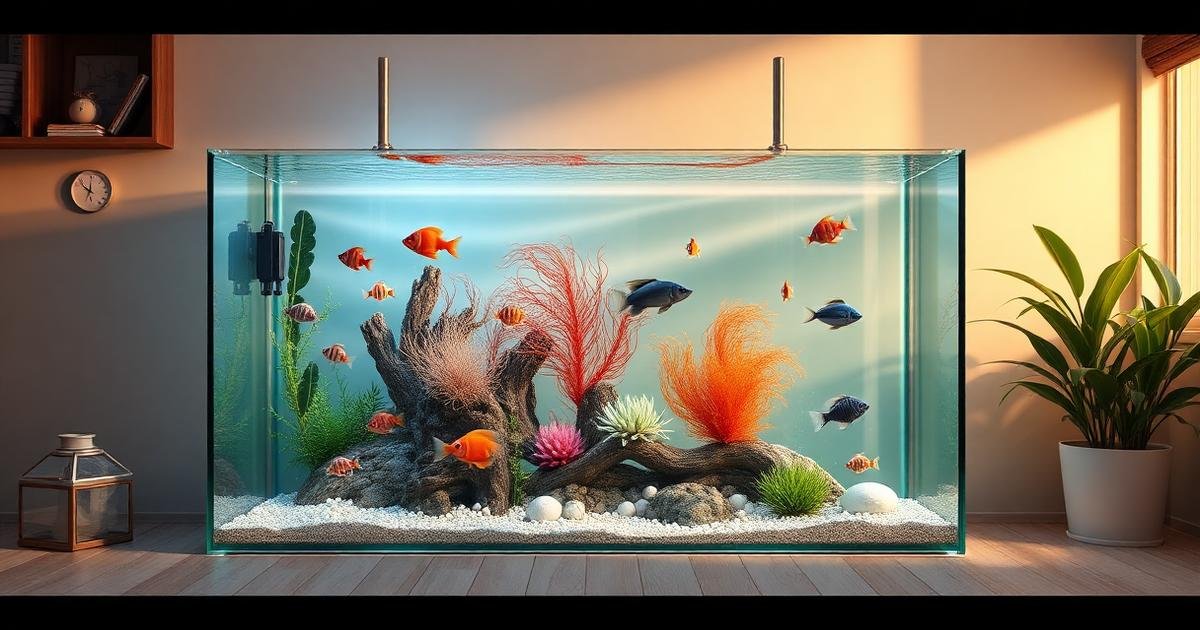
Setting up a healthy aquarium is simpler than you think with the right plan. This aquarium setup guide walks you through every step, from choosing your tank size to adding fish safely. You will have a thriving underwater world in 4–6 weeks if you follow this process exactly. Whether you are a complete beginner or returning to the hobby, the steps here eliminate guesswork and prevent the costly mistakes that kill fish within days.
Aquarium setup guide: Cycle your tank for 4–6 weeks before adding any fish. Install your filter, heater, and substrate first, then add dechlorinated water. Introduce hardy plants and wait for ammonia and nitrite levels to hit zero. Only then add 2–3 small, hardy fish gradually.
Quick Answer: What is the fastest way to set up a new aquarium?
Cycle your tank for 4–6 weeks before adding any fish. Install your filter, heater, and substrate first, then add dechlorinated water. Introduce hardy plants and wait for ammonia and nitrite levels to hit zero. Only then add 2–3 small, hardy fish gradually.
This sequence builds a stable biological filter that keeps your fish healthy from day one. Skipping the cycling step is the number one reason new aquariums fail within the first month.
This aquarium setup guide decision works best when the owner compares daily fit, tolerance, and practical consistency together.
What size aquarium should a beginner choose?
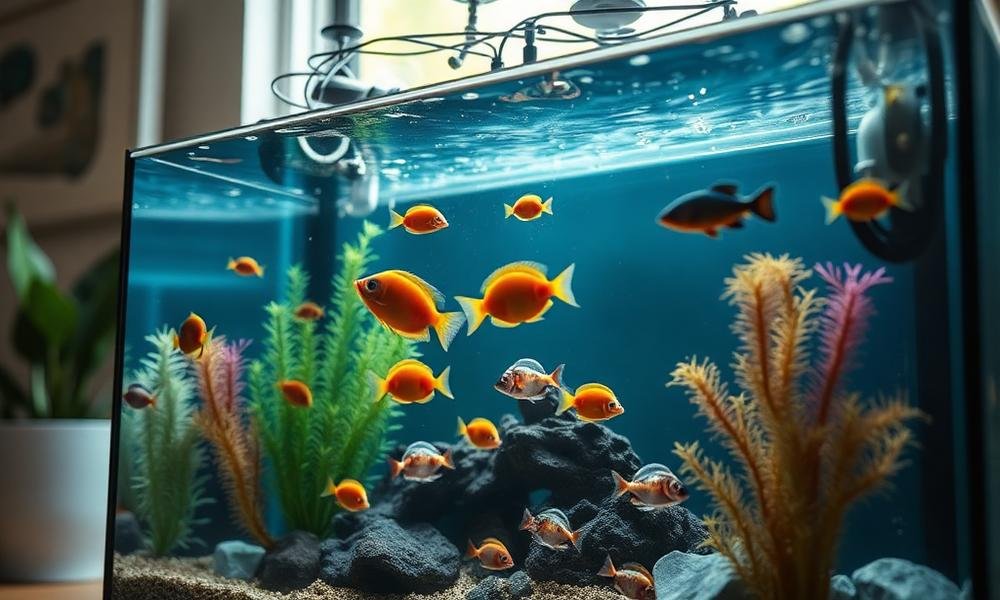
Start with a 20-gallon long tank. It is large enough to maintain stable water parameters but small enough to fit in most homes. Smaller tanks under 10 gallons fluctuate temperature and chemistry much faster, which kills fish within days.
For many homes, the right aquarium setup guide choice is the one that stays reliable under ordinary daily conditions.
A 20-gallon tank gives you room for 8–12 small community fish like tetras or rasboras. You also have enough space to add live plants, which help filter the water naturally. The PetMD guide on first aquarium setup confirms this is the ideal starter size.
A well matched aquarium setup guide option should support the pet clearly without making the routine harder to maintain.
Pro Tip: Choose a rectangular tank over a tall, narrow one. More surface area means better oxygen exchange, which keeps your fish healthier with less effort.
Budget at least $150–$300 for a complete starter setup, including tank, filter, heater, light, substrate, and test kit. Buying a pre assembled kit saves money but check that the included filter is rated for your tank size. A 20-gallon long tank also gives you more horizontal swimming space, which most fish prefer over vertical height.
Most owners get better long term results when aquarium setup guide is judged through routine use rather than a single product claim.
What equipment do you absolutely need before adding water?
You need five essential pieces of equipment: a tank, filter, heater, thermometer, and light. Skip the fancy decorations and focus on these basics first. The filter should turn over the entire tank volume 4–6 times per hour.
Choose a hang-on-back (HOB) filter for ease of maintenance, or a sponge filter if you plan to breed fish. For the heater, select one rated for your tank size — a 100-watt heater works for a 20-gallon tank. Always use a separate thermometer to verify the heater's accuracy.
Substrate and decorations
Use fine gravel or sand as substrate. Rinse it thoroughly in a bucket until the water runs clear before adding it to the tank. Add 1–2 inches of substrate, sloping it higher in the back for depth.
Avoid sharp gravel that can injure bottom dwelling fish like corydoras catfish. Add driftwood or smooth rocks as hiding spots, but boil them first to remove tannins and bacteria. The ASPCA's pet care resources also apply to fish — create a safe, stress free environment.
Pro Tip: Boil driftwood for 2–3 hours to release tannins and make it sink immediately. Otherwise, it will float for weeks and turn your water brown.
Lighting and lid considerations
Choose an LED light designed for planted tanks if you want live plants. A basic LED strip works for low light plants like Java fern and Anubias. For more demanding plants, invest in a light with adjustable intensity and a timer.
Always use a glass or acrylic lid to prevent fish from jumping out and reduce evaporation. Lids also keep curious pets and children away from the water. Measure your tank dimensions carefully before ordering a lid — standard sizes rarely fit perfectly.
Water conditioner and test kit
Buy a liquid water test kit, not test strips. Liquid kits are more accurate and give you reliable readings for ammonia, nitrite, nitrate, and pH. The API Master Test Kit is the industry standard and lasts for hundreds of tests.
Water conditioner is non-negotiable. Choose a product like Seachem Prime that neutralizes chlorine, chloramines, and heavy metals. One bottle lasts months and costs under $15 — a tiny investment compared to replacing dead fish.
Get your aquarium started right with quality equipment that lasts for years.
Browse Aquarium Options →
How do you cycle a tank properly?
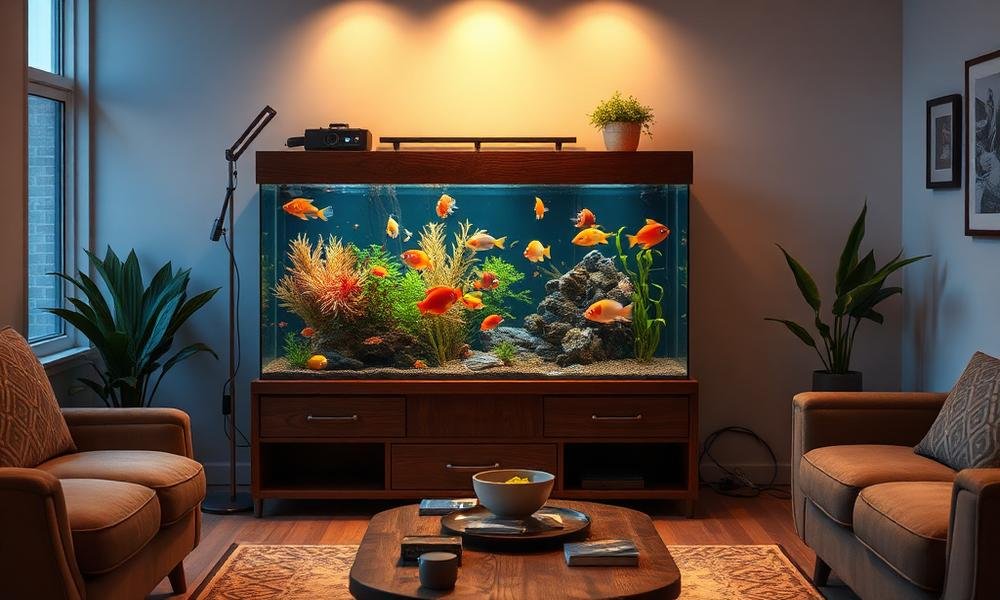
Cycling means establishing beneficial bacteria that convert fish waste into less toxic compounds. This process takes 4–6 weeks and cannot be rushed. Add a liquid ammonia source or a pinch of fish food daily to feed the bacteria.
Test your water every 3–4 days using a liquid test kit. You will see ammonia spike first, then nitrite, then nitrate. When both ammonia and nitrite read 0 ppm and nitrate is under 20 ppm, your tank is cycled. The AVMA's fish care guidelines emphasize this as the most critical step.
Fishless cycling vs. fish in cycling
Fishless cycling is safer and more humane. You control the ammonia level without stressing fish. Fish in cycling requires daily water changes and risks killing your fish — avoid it unless you have no other option.
Use a bottled bacteria product to speed up cycling by 1–2 weeks. Products like Seachem Stability or API Quick Start contain live bacteria that jump start the process. They work best when added directly to the filter media.
Monitoring the nitrogen cycle step by step
During week one, ammonia rises to 2–4 ppm. By week two, nitrite appears as ammonia eating bacteria establish themselves. In week three, nitrate appears and ammonia drops to zero. By week four, nitrite also reads zero and you see rising nitrate levels.
Perform a research suggests 50% water change when nitrate exceeds 40 ppm during cycling. This keeps the water from becoming toxic while your bacteria colony matures. Once you see 0 ammonia, 0 nitrite, and stable nitrate under 20 ppm for three consecutive tests, your tank is ready for fish.
Pro Tip: Keep your filter media in a bucket of tank water during cleaning. Never rinse it under tap water — the chlorine kills your beneficial bacteria instantly.
When and how should you add fish to a new aquarium?
Add fish only after your tank is fully cycled and water parameters are stable for at least 48 hours. Start with 2–3 hardy fish like zebra danios or platy fish. These species tolerate minor fluctuations better than delicate fish like angelfish or discus.
Float the sealed bag in your tank for 15–20 minutes to equalize temperature. Then add small amounts of tank water to the bag every 5 minutes for another 20 minutes. Finally, net the fish into the tank — never pour bag water into your aquarium.
Stocking guidelines for beginners
Follow the one-inch-per gallon rule as a starting point. A 20-gallon tank can hold 20 inches of adult fish total. But this rule is rough — consider each fish's adult size and activity level.
Choose a community of fish that share similar temperature and pH needs. Most tropical fish do well at 76–80°F and pH 6.5–7.5. The AKC's training approach applies here too — patience and observation prevent problems.
Quarantine new fish before adding them
Set up a separate 5–10 gallon quarantine tank for all new fish. Keep them isolated for 2–4 weeks to watch for signs of disease. This simple step prevents introducing parasites or infections into your main display tank.
A quarantine tank needs only a sponge filter, small heater, and a few hiding spots. No substrate or decorations are necessary. Treat any visible illness in quarantine before moving fish to the main tank — this saves you from treating an entire aquarium later.
| Problem | Likely Cause | Solution |
|---|---|---|
| Fish gasping at surface | Low oxygen or high ammonia | Do research suggests 50% water change, add air stone |
| Cloudy water | Bacteria bloom | Wait 3–5 days, avoid overfeeding |
| Fish hiding constantly | Stress or aggression | Add more hiding spots, check water parameters |
| Algae growing on glass | Too much light or nutrients | Reduce light to 6–8 hours daily |
| White spots on fish | Ich parasite | Raise temperature 2°F, add aquarium salt |
What maintenance does a healthy aquarium need weekly?
Change 20–research suggests 25% of the water every week. Use a gravel vacuum to remove debris from the substrate while siphoning. Replace the water with dechlorinated water at the same temperature as the tank.
Test your water parameters weekly — ammonia, nitrite, nitrate, and pH. Clean the filter media every 2–4 weeks by rinsing it in a bucket of tank water. Never replace all media at once; rotate it to preserve beneficial bacteria.
Feeding schedule and plant care
Feed your fish once or twice daily, only what they can eat in 2 minutes. Overfeeding is the leading cause of poor water quality and fish disease. Fast your fish one day per week to keep their digestive systems healthy.
Trim dead leaves from live plants weekly and remove any floating debris. Add liquid fertilizer for rooted plants and root tabs for heavy feeders like Amazon swords. A consistent routine prevents research suggests 90% of common aquarium problems.
Pro Tip: Keep a logbook of your water test results and maintenance schedule. Patterns in your data will help you spot problems before they harm your fish.
Algae control strategies
Limit your aquarium light to 6–8 hours per day on a timer. Longer light periods fuel algae growth regardless of how clean your tank is. Introduce algae eating fish like otocinclus catfish or nerite snails once your tank is established.
Manual removal works best for spot algae. Use an algae scraper or magnetic cleaner on the glass every week. For stubborn green spot algae on plants, reduce phosphate levels by performing extra water changes and checking your fertilizer dosing.
Seasonal adjustments for stable water
Room temperature changes affect your aquarium more than you expect. In summer, check that your heater is not overheating the tank. In winter, ensure the room does not drop below 68°F, or your heater will struggle to maintain 76°F.
Evaporation increases in dry winter months, so top off your tank with dechlorinated water between water changes. Remember that topping off does not remove dissolved minerals — only water changes do that. Test total dissolved solids (TDS) every month if you keep sensitive fish or shrimp.
How do you choose live plants for a beginner aquarium?
Start with low-light, low maintenance plants that grow without CO2 injection or strong lighting. Java fern, Anubias, and Amazon sword are nearly impossible to kill. These plants absorb nitrates and provide hiding spots for shy fish.
Java moss is another excellent choice. It grows on driftwood, rocks, or as a floating carpet. It also provides a perfect spawning site for egg laying fish and a grazing area for shrimp.
Planting techniques for success
Do not bury the rhizome of Java fern or Anubias. The rhizome must remain above the substrate or it rots. Attach these plants to driftwood or rocks using super glue gel or cotton thread until they attach naturally.
Rooted plants like Amazon sword and Vallisneria need root tabs for nutrients. Push a root tab into the substrate near the plant base every 2–3 months. Without root tabs, these plants turn yellow and stop growing within weeks.
Floating plants for natural filtration
Add floating plants like duckweed, frogbit, or water lettuce. They grow rapidly and absorb excess nutrients that would otherwise feed algae. Floating plants also diffuse light and provide cover for fry and shy fish.
Remove excess floating plants weekly to prevent them from blocking all light to lower plants. Duckweed can take over a tank in 2–3 weeks if left unchecked. Use a floating ring to contain them in one area if you want more control.
Pro Tip: Quarantine all new plants for 1–2 weeks before adding them to your main tank. Snail eggs and parasites often hitchhike on plants purchased from stores.
What common mistakes destroy new aquariums?
Adding fish too early kills more fish than any other mistake. New tank syndrome — when ammonia spikes from fish waste before bacteria establish — causes rapid death within 24–48 hours. Wait the full 4–6 weeks for cycling before adding any fish.
Overstocking is the second most common error. Beginners see an empty tank and want to fill it immediately. Stick to 8–12 small fish in a 20-gallon tank for the first 3 months.
Overfeeding and its consequences
Uneaten food decomposes into ammonia within hours. A single pinch of excess food can spike ammonia by 1–2 ppm in a small tank. Feed only what your fish consume in 2 minutes, and remove any leftovers immediately.
If you see food sinking to the bottom, you are feeding too much. Reduce portions by half and observe your fish during feeding. They should eat eagerly at the surface, not let food drift past them.
Ignoring water chemistry changes
pH swings of more than 0.5 units in 24 hours stress fish severely. Sudden changes happen when you add large amounts of untreated water or when decorations leach minerals. Always test your tap water pH and temperature before adding it to the tank.
Driftwood and almond leaves lower pH naturally over time. Crushed coral or limestone raises pH. Test weekly and make gradual adjustments — never change pH by more than 0.2 units per day.
| Your Situation | Best Action | Timeframe |
|---|---|---|
| New tank, no fish yet | Fishless cycle with ammonia | 4–6 weeks |
| New tank, already has fish | Daily research suggests 25% water changes, add bottled bacteria | 6–8 weeks |
| Established tank, cloudy water | Reduce feeding, wait 3–5 days | 1 week |
| Established tank, algae outbreak | Reduce light to 6 hours, add algae eaters | 2–4 weeks |
| Fish showing white spots | Raise temperature 2°F, add aquarium salt | 7–10 days |
Frequently Asked Questions
How long does it take to set up an aquarium from start to finish?
The physical setup takes 2–3 hours. But the tank cycling process takes 4–6 weeks before you can safely add fish. Rushing this step almost always leads to dead fish and frustration.
Can I use tap water directly in my aquarium?
No. Tap water contains chlorine and chloramines that kill fish and beneficial bacteria. Always use a water conditioner like Seachem Prime to neutralize these chemicals before adding water to your tank.
What is the easiest fish to keep for a first aquarium?
Zebra danios are the hardiest beginner fish. They tolerate a wide temperature range (64–78°F) and are less sensitive to minor water quality fluctuations. Platy fish and white cloud mountain minnows are also excellent choices.
Do I really need a heater for a tropical aquarium?
Yes. Most tropical fish require a stable temperature between 76–80°F. A heater with a thermostat maintains this range. Without one, temperature swings of just 5°F can stress fish and trigger disease outbreaks.
How often should I clean my aquarium filter?
Clean the filter media every 2–4 weeks by rinsing it in a bucket of tank water. Never use tap water, as chlorine kills beneficial bacteria. Replace mechanical media like filter pads every 3–6 months, but never all at once.
Why is my aquarium water cloudy after setup?
Cloudy water is usually a bacterial bloom during the cycling process. It typically clears on its own within 3–5 days. Do not change the water — this removes the bacteria you need. If it persists beyond 2 weeks, reduce feeding and check your filter flow.
How many fish can I put in a 20-gallon tank?
Start with 8–12 small community fish like tetras, rasboras, or danios. Follow the one-inch-per gallon rule as a rough guide, but consider each species' adult size and activity level. Add fish gradually over 4–6 weeks.
Can I keep live plants with artificial decorations?
Yes, live plants work well alongside artificial decorations. Choose low light plants like Java fern and Anubias that do not compete for nutrients. Avoid plastic plants with sharp edges that can tear fish fins — silk plants are safer if you prefer artificial options.