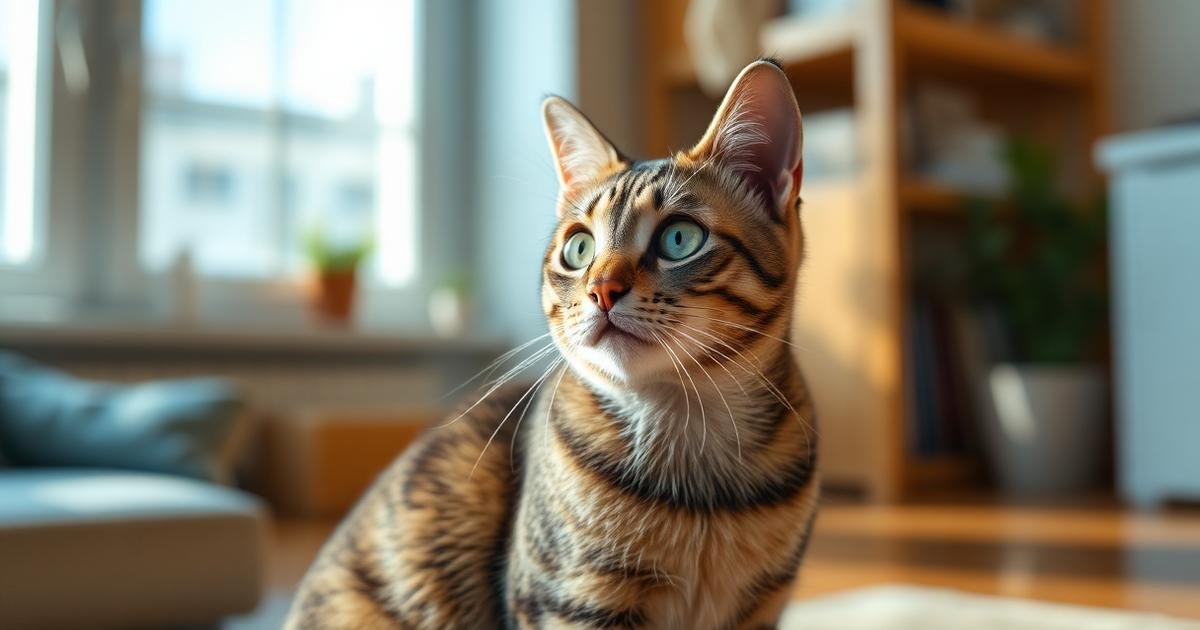
You're sitting on the couch, and your cat is staring at a blank wall with laser focus. No bug. No dust speck. Just... nothing. It's unsettling, isn't it? You wonder if your cat is seeing ghosts or if something is genuinely wrong. Your cat stares at nothing because of heightened senses detecting faint sounds, tiny movements, or light reflections you cannot perceive — or, less commonly, due to medical issues like feline cognitive dysfunction or vision problems. Most of the time, this behavior is perfectly normal and rooted in your cat's evolutionary design as a predator. Understanding this will save you worry and help you respond appropriately. why cat staring at nothing is one of the most important decision points for long term daily fit.
Why cat staring at nothing: Your cat stares at nothing primarily because their superior senses detect stimuli you miss — faint rodent sounds in walls, dust motes in sunbeams, or subtle vibrations. Other causes include feline cognitive decline in senior cats, focal seizures, vision loss, or simply being in a "hunting trance." M
Quick Answer: Why is my cat staring at nothing?
Your cat stares at nothing primarily because their superior senses detect stimuli you miss — faint rodent sounds in walls, dust motes in sunbeams, or subtle vibrations. Other causes include feline cognitive decline in senior cats, focal seizures, vision loss, or simply being in a "hunting trance." Most cases are harmless, but sudden or obsessive staring combined with other symptoms warrants a vet check within 48 hours.
Why Your Cat Stares at Nothing
It feels personal when your cat stares at something you can't see. But rest assured — this is not your cat trying to spook you. It's their biology at work, and there are several distinct reasons behind the behavior.
This why cat staring at nothing decision works best when the owner compares daily fit, tolerance, and practical consistency together.
Superior Hearing and Scent Detection
Cats hear frequencies up to 64 kHz — far beyond human range. That "empty" wall might contain a mouse scratching inside, termites chewing wood, or electrical wires humming. Your cat's nose also detects pheromones and scents from neighbors' pets that you'll never smell. This sensory gap explains why your cat appears to stare at nothing when they're actually tracking something real.
For many homes, the right why cat staring at nothing choice is the one that stays reliable under ordinary daily conditions.
Visual Sensitivity to Movement
Your cat's eyes are designed to detect the slightest motion. A dust mote floating in a sunbeam, a shadow shifting, or a tiny insect crawling on a baseboard becomes a full blown hunting target. To your cat, that "nothing" is actually something moving. Their peripheral vision is also superior to yours, so they catch movements at the edge of their sight that you miss entirely.
A well matched why cat staring at nothing option should support the pet clearly without making the routine harder to maintain.
Feline Cognitive Dysfunction (Senior Cats)
In cats over 10 years old, staring at walls or corners can signal cognitive decline — similar to dementia in humans. According to the
Most owners get better long term results when why cat staring at nothing is judged through routine use rather than a single product claim.
Seizure Activity (Focal Seizures)
Focal seizures in cats can cause staring spells, facial twitching, or chasing invisible objects. Unlike grand mal seizures, these are subtle. If your cat stares blankly, drools, or seems unresponsive for 30 seconds to 2 minutes, record a video for your vet. The PetMD condition guides note that these episodes can be mistaken for daydreaming but require medical evaluation.
Vision Loss or Blindness
Cats losing their sight may stare at nothing because they're trying to process what they can't see. They might also bump into furniture or startle easily. A veterinary ophthalmologist can diagnose this with a simple exam. Cats adapt well to gradual vision loss, so you might not notice until the staring becomes pronounced.
Pro Tip: If your cat stares at the same spot daily, mark it with a sticky note. Check that spot later for insects, dust, or signs of rodents. You might solve the mystery without a vet visit.
Root Cause Decision Tree
Match your cat's specific behavior to find the fastest fix:
| What you observe | Likely root cause | First fix to try |
|---|---|---|
| Staring at a specific wall or corner repeatedly | Rodent or insect activity inside walls | Place a humane trap; call pest control if persistent |
| Staring at ceiling or light reflections | Visual sensitivity to light or dust motes | Close blinds; redirect with a toy |
| Staring blankly, drooling, unresponsive for 30+ seconds | Focal seizure activity | Record video; schedule vet appointment within 48 hours |
| Senior cat (10+ years) staring at walls at night | Feline cognitive dysfunction | Increase daytime enrichment; consult vet for supplements |
| Staring while sitting near a window or door | Outdoor sounds or scents | Provide window perch; play nature sounds to mask noise |
| Staring accompanied by head pressing against walls | Neurological issue (stroke, tumor, toxicity) | Emergency vet visit — this is a medical emergency |
When This Is NOT Just Behavior
Not every staring episode is harmless. Some cases require immediate veterinary attention. Here's what to watch for and how to distinguish normal from concerning.
Sudden Onset in Adult Cats
A cat that never stared before but suddenly fixates on walls may have a medical issue. According to the PetMD condition guides, sudden behavioral changes in adult pets can signal pain, neurological problems, or sensory decline. If your 5-year old cat starts staring obsessively overnight, don't wait — schedule a vet visit within the week.
Head Pressing
If your cat presses their head against walls while staring, this is a red flag for neurological conditions like stroke, brain tumor, or toxin exposure. This requires an emergency vet visit — do not wait. Head pressing is distinct from resting their head on a surface; it's active, sustained pressure against a solid object.
Accompanied by Other Symptoms
Watch for circling, disorientation, changes in appetite, litter box accidents, or unusual vocalization. These combined with staring suggest something beyond normal cat behavior. The more symptoms you observe, the more urgent the vet visit becomes. Document everything you see.
Vision Loss Signs
If your cat also bumps into furniture, seems startled when you approach, or has dilated pupils that don't constrict in light, schedule a veterinary ophthalmology exam within 1–2 weeks. Cats hide vision problems remarkably well, so staring may be your first clue. The AKC's behavior guides emphasize that sudden vision changes need prompt assessment.
Pro Tip: Take a 30-second video of your cat's staring episode. Vets find video recordings far more useful than verbal descriptions — you can capture subtle twitches or eye movements you might miss in the moment.
Enrichment Protocol for Healthy Staring
If your vet has ruled out medical causes, enrichment can reduce obsessive staring and satisfy your cat's natural hunting instincts. Implement these steps within 2–3 weeks for noticeable improvement. The goal isn't to stop all staring — it's to make it less obsessive and more balanced.
- Physical exercise: Provide at least 15 minutes of active play daily using wand toys that mimic bird or mouse movements. Two 10-minute sessions work better than one 20-minute session. Morning and evening play align with your cat's natural hunting peaks.
- Mental stimulation: Use puzzle feeders for at least one meal per day. Hide treats around the house for your cat to "hunt." Rotate toys weekly to prevent boredom. A mentally tired cat is less likely to obsess over a blank wall.
- Environmental enrichment: Install window perches so your cat can watch birds and outdoor activity. Cat shelves or climbing trees provide vertical territory. The ASPCA's pet care resources stress that vertical space reduces stress in indoor cats.
- Sound enrichment: Play "cat TV" videos (birds, squirrels, fish) on a tablet for 15–30 minutes daily. This satisfies the hunting drive without destructive behavior. Keep sessions short to avoid overstimulation.
- Routine consistency: Feed meals at the same times daily. Predictable routines reduce anxiety driven staring in sensitive cats. Cats thrive on predictability — it lowers their baseline stress levels.
What to Look for in Enrichment Products
If you decide to purchase products to redirect your cat's staring behavior, choose items that mimic natural prey movement and engage multiple senses. The right products can transform obsessive staring into healthy play.
Wand Toys with Realistic Movement
Look for toys with feathers that flutter like birds or fur that mimics mice. The best wands have replaceable attachments and a 48-inch string for distance. Avoid toys with small parts that could be swallowed. Test the movement before buying — it should feel natural, not jerky.
Puzzle Feeders
Choose feeders with adjustable difficulty levels. Start with simple sliding puzzles, then progress to more complex ones. Material should be BPA free plastic or ceramic — avoid cheap plastic that cracks and creates sharp edges. Your cat should succeed within 5–10 minutes, not get frustrated.
Cat TV Content
Streaming services and YouTube have dedicated cat channels with birds, squirrels, and fish. Use a tablet with a protective case. Limit screen time to 30 minutes per session to prevent overstimulation. Some cats prefer fast moving prey like mice; others prefer slow moving birds. Experiment to find what holds your cat's attention.
Pro Tip: Place a bird feeder outside a window your cat frequents. This provides hours of natural entertainment without screens — and it's free. Position it so your cat can watch from a comfortable perch.
How to Rule Out Medical Causes at Home
Before you panic, run through this simple checklist. It helps you distinguish normal behavior from something that needs a vet. This isn't a substitute for professional diagnosis, but it gives you a starting point.
The Distraction Test
Call your cat's name or shake a treat bag while they're staring. A cat focused on real stimuli (like a sound in the wall) will typically react. A cat having a focal seizure may not respond at all. If your cat doesn't react within 5 seconds, try touching their shoulder gently. No response warrants a vet call.
The Light Check
Look at what your cat is staring at from their eye level. Crouch down and follow their gaze. You might spot a reflection from a phone screen, a blinking router light, or sunlight bouncing off a watch. Move the light source and see if your cat's gaze follows. If it does, it's likely visual stimulation.
The Sound Check
Press your ear against the wall your cat stares at. Listen for scratching, squeaking, or humming. You can also use a glass pressed against the wall as a makeshift stethoscope. If you hear nothing, your cat may still hear ultrasonic sounds from electronics or rodents that you can't detect.
The Timeline Test
Note when the staring happens. Is it always at the same time of day? Does it coincide with specific activities like you turning on the TV or the neighbor's dog barking? Patterns suggest environmental triggers. Random, unpredictable staring is more concerning and may warrant a vet visit.
Pro Tip: Keep a simple log for 3–5 days. Note the time, location, duration, and what happens right before. This data is gold for your vet and can reveal patterns you'd miss otherwise.
Troubleshooting Matrix
| Behavior pattern | Likely cause | What to do |
|---|---|---|
| Stares at same wall spot every evening | Rodent or insect activity behind wall | Place a humane trap; call pest control if no results in 1 week |
| Stares blankly, drools, then resumes normal activity | Focal seizure | Record video; vet visit within 48 hours |
| Senior cat stares at corners at night, seems confused | Feline cognitive dysfunction | Increase daytime enrichment; consult vet for supplements within 2 weeks |
| Stares while sitting near window, tail twitching | Outdoor stimuli (birds, squirrels, sounds) | Close blinds partially; provide window perch with cushion |
| Stares and head presses against wall | Neurological emergency | Emergency vet immediately — this is life-threatening |
| Kitten stares at ceiling or light reflections | Normal curiosity and play drive | Redirect with wand toy; no action needed — it's healthy behavior |
| Stares only when alone, stops when you enter room | Anxiety or attention-seeking | Provide background noise (radio or TV); use Feliway diffuser for 4–6 weeks |
Stop guessing — give your cat the enrichment they need to thrive
Browse Cat Products →
Frequently Asked Questions
My cat only stares at nothing at night — why?
Nighttime staring often relates to rodent activity (mice are nocturnal) or your cat's crepuscular nature — they're naturally most active at dawn and dusk. Light reflections from passing cars or streetlights also trigger this behavior more at night. Check if your cat's staring coincides with specific nighttime sounds or lights.
Will this staring behavior stop on its own as my cat gets older?
Not necessarily. If caused by cognitive decline, it may worsen with age. If caused by environmental stimuli, it typically persists unless you remove the trigger. Only attention seeking staring may decrease as your cat matures — usually around age 2–3. Enrichment changes are your best bet for improvement.
Is staring at nothing a sign of separation anxiety in cats?
Rarely. Separation anxiety in cats more commonly shows as destructive behavior, inappropriate urination, or excessive vocalization when you leave. Staring at nothing is usually sensory or medical — not anxiety-related. If you suspect anxiety, look for other symptoms first and consult your vet.
How long until I see improvement with enrichment changes?
Most cats show reduced obsessive staring within 1–2 weeks of consistent enrichment. Puzzle feeders show results fastest — often within 3–5 days. Full behavior change typically takes 3–4 weeks. Be patient and stick with the routine. If you see no improvement after 4 weeks, revisit the medical possibilities with your vet.
Should I punish or ignore my cat when they stare at nothing?
Never punish — your cat isn't misbehaving. Punishment increases anxiety and can worsen the behavior. Instead, redirect with a toy or call your cat's name. If the staring is harmless, ignoring it is fine. If it's obsessive, redirect every time. Positive redirection works far better than any correction.
My cat stares at nothing and then suddenly runs away — what's happening?
This is classic "cat zoomies" triggered by a hunting impulse. Your cat spotted something (real or imagined), stalked it, then exploded with pent up energy. It's normal play behavior. Channel it into a wand toy session to satisfy the hunting drive safely. This is one of the most common and harmless forms of staring.
Can certain cat breeds be more prone to staring at nothing?
Yes. Siamese and Oriental breeds are more vocal and observant, so their staring may be more noticeable. Bengals and other high energy breeds may stare more intensely due to their strong prey drive. Senior cats of any breed are at higher risk for cognitive related staring. Breed alone isn't a diagnosis, but it's worth noting patterns.
Should I be worried if my cat stares at nothing while eating or using the litter box?
This warrants closer attention. Staring during essential activities can indicate pain, vision problems, or anxiety about the location. Check if the food bowl or litter box is near a sound source or window. If the behavior persists, consult your vet to rule out medical issues like arthritis or urinary tract problems.