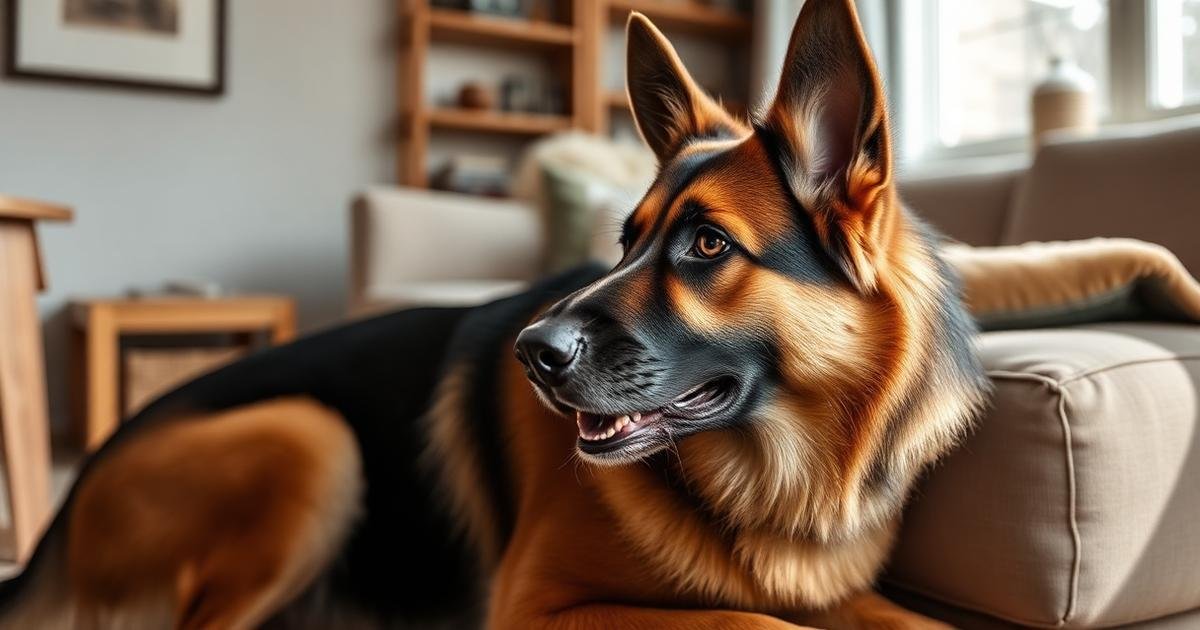
Forget the old-school "show 'em who's boss" stuff. train-a-stubborn-dog/">Training a stubborn German Shepherd at home is really about switching to a reward-based system that actually respects how smart and independent this breed is. You need to become more consistent and more valuable than any distraction out there. That means high-value rewards, crystal-clear communication, and a strict daily schedule. Do that, and you'll turn that stubborn defiance into focused, willing cooperation.
How to train a stubborn german shepherd at home: The most effective method is "Nothing in Life is Free" (NILF) combined with high-value variable reward scheduling. Your German Shepherd must perform a known cue (sit, down, eye contact) before receiving anything they want — food, toys, walks, or door access. This structure creates a default pattern
Quick Answer: What is the single most effective method to train a stubborn German Shepherd at home?
The most effective method is "Nothing in Life is Free" (NILF) combined with high value variable reward scheduling. Your German Shepherd must perform a known cue (sit, down, eye contact) before receiving anything they want — food, toys, walks, or door access. This structure creates a default pattern of compliance within 2-3 weeks, eliminating selective hearing by making cooperation the only path to rewards.
For a complete guide on this topic, see the Ultimate Guide To Dog Training.
Why Are German Shepherds Considered Stubborn?
German Shepherds are not stubborn in the way a terrier or hound is. Their "stubbornness" stems from high intelligence combined with a strong independent decision making drive. Bred to think and act without human input while herding or protecting, a German Shepherd will often pause and evaluate whether a command is worth following.
This is not defiance — it is assessment. When you understand how to train a stubborn German Shepherd at home, you learn to make compliance the most rewarding option every time. The breed's working heritage means they need a clear "why" behind every cue.
According to the American Kennel Club, the German Shepherd is the third most intelligent dog breed, which means boredom and repetitive training are common triggers for selective hearing. Training sessions must be short, varied, and mentally challenging to hold their focus.
Pro Tip: Before any training session, expend 10 minutes of physical energy with a flirt pole or structured fetch. A slightly tired German Shepherd learns 3x faster than a fully rested one because their natural drive to problem solve is already engaged.
What Setup Do You Need for Home Training Success?
Essential Equipment
You need a 15-foot long line, a front clip harness (not a flat collar), and at least three tiers of rewards. Tier 1 is kibble for easy wins. Tier 2 is boiled chicken or cheese for challenging cues. Tier 3 is a tug toy reserved exclusively for breakthrough moments.
Your training space matters. Start in a low distraction room like a bathroom or bedroom. Only move to the backyard or living room once your German Shepherd offers the behavior reliably 8 out of 10 times in the quiet space. This progression prevents frustration for both of you.
Timing Your Sessions
Train before meals when your dog is food-motivated. Keep sessions to 3-5 minutes for puppies under 1 year and 5-10 minutes for adults. End every session on a success, even if that means dropping back to an easy cue like "touch" or "look."
If you are learning how to train a stubborn German Shepherd at home, consistency in timing is non-negotiable. Train at the same time daily. German Shepherds thrive on routine, and a predictable training window builds anticipation and willingness.
How Do You Build Eye Contact as a Foundation?
Eye contact is the single most powerful foundation behavior for a stubborn German Shepherd. It interrupts their scanning and refocuses them on you. Teach "watch me" by holding a treat at your eye level. The moment your dog looks at your eyes, mark with "yes" and reward.
Practice this 20 times in a row before adding duration. Count silently: 1 second, then reward. Build to 3 seconds, then 5. Once your German Shepherd offers eye contact without the treat visible, you have the foundation for every other command.
This behavior directly addresses the breed's tendency to ignore handlers when they find something more interesting. A dog that defaults to eye contact cannot default to stubbornness.
Pro Tip: Use a "look at that" game for reactive or easily distracted shepherds. When they glance at a trigger (another dog, a squirrel) and then look back at you, mark and reward heavily. This rewires their brain to check in with you first.
How Do You Teach "Place" to a Stubborn German Shepherd?
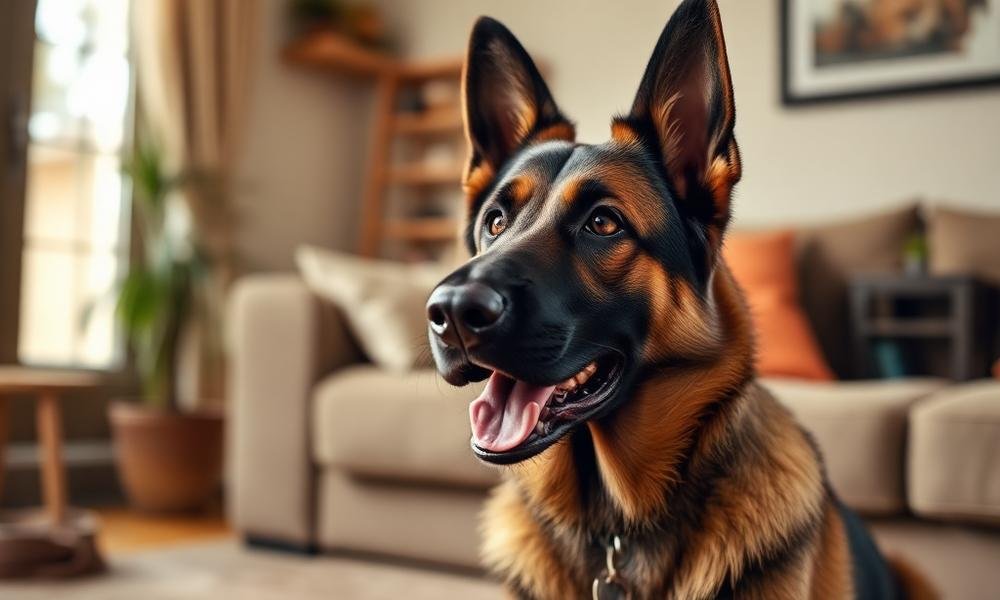
"Place" training gives a stubborn German Shepherd a clear job: go to a designated mat or bed and stay there until released. This command is especially effective because it channels the breed's natural desire for a defined role. Start by luring your dog onto the mat, marking the moment all four paws are on it, and rewarding.
Once your dog steps onto the mat reliably, add a verbal cue like "place" as they move. Gradually increase the time they must remain on the mat before you reward — aim for 2 seconds, then 5, then 10. If your dog breaks position, calmly guide them back without scolding. The mat should always be a positive space.
When mastering how to train a stubborn German Shepherd at home, "place" is invaluable for managing door dashing, greeting guests, or settling during meals. Practice with distractions like dropping a toy near the mat, but only reward if your dog stays. This builds impulse control that carries over into every other cue.
What Is the Best Way to Teach "Leave It" to a Stubborn German Shepherd?
"Leave it" is critical for safety and impulse control. Start with a low value item in your closed fist. Present your fist to your dog. The moment they stop sniffing, mouthing, or pawing and look at you, mark and reward from your other hand. Repeat until they look at you immediately.
Progress to placing a treat on the floor under your foot. If your dog dives for it, cover it. Wait for them to look at you, then uncover and reward them with a different, higher value treat from your hand. This teaches that ignoring the item earns a better reward.
When learning how to train a stubborn German Shepherd at home, "leave it" must be practiced with high value items like steak or a dropped chicken wing. The breed's food drive is strong, but their desire to work with you can override it with enough repetitions.
How Do You Handle a German Shepherd That Refuses Commands?
The 3-Strike Reset Rule
If your German Shepherd refuses a known command three times in a row, you are not being clear or the reward is not valuable enough. Do not repeat the cue louder. Instead, pause for 10 seconds, reset your body language, and ask for an easier behavior like a nose touch. Reward that, then try the original cue again.
Repeating a command teaches your dog that "sit" means "sit… maybe… after I ignore you five times." This is the most common mistake in how to train a stubborn German Shepherd at home. One cue, one response. If it doesn't happen, you change the environment or the reward, not the number of repetitions.
Using Negative Punishment Effectively
Negative punishment means removing something the dog wants to decrease a behavior. If your German Shepherd pulls toward a distraction, you stop moving. You don't yank the leash. You become a tree. The moment the leash loosens, you move forward. This teaches that pulling removes forward movement.
This technique works exceptionally well with stubborn shepherds because it respects their autonomy while teaching cause and effect. No force is needed — just consistent consequences.
Pro Tip: Keep a training log for 2 weeks. Note the time of day, reward used, and number of successful repetitions. Patterns will emerge — most stubborn phases happen at the same time of day or after specific activities. Adjust your schedule based on data, not frustration.
How Do You Use Variable Rewards to Cement Behaviors?
Variable reward scheduling is the science behind turning a stubborn German Shepherd into a willing partner. Instead of rewarding every correct response, start rewarding intermittently once a behavior is solid at 90% reliability. For example, reward the first three "sit" cues, then skip the fourth, reward the fifth and sixth, skip the seventh, and so on.
This unpredictability makes the behavior more resistant to extinction. Your German Shepherd will offer the cue eagerly because they never know which repetition will pay off. This technique is directly borrowed from how slot machines keep players engaged — the brain releases more dopamine during uncertain rewards than guaranteed ones.
When applying this to how to train a stubborn German Shepherd at home, use variable rewards only for behaviors your dog already knows well. Never use it during the learning phase, as that causes confusion. Start variable rewards around week 3 of training for maximum retention.
How Long Does It Take to Train a Stubborn German Shepherd at Home?
With daily 10-minute sessions using the NILF protocol, most owners see significant improvement in basic obedience within 3-4 weeks. Full reliability in distracting environments typically takes 8-12 weeks. This timeline assumes you are consistent with every family member using the same cues and reward criteria.
If you are inconsistent — allowing the dog on the couch one day and correcting them the next — training will stall. German Shepherds are pattern recognition machines. They will exploit any loophole in your system. The breed's memory is exceptional, so a single inconsistent experience can set training back by days.
Veterinarians and certified trainers generally recommend professional evaluation if you see no progress after 4 weeks of consistent home training. Some stubborn behaviors may stem from pain, anxiety, or undiagnosed medical issues that require professional intervention.
Stop fighting with a stubborn shepherd — switch to tools that actually work for the breed's unique temperament.
Browse Dog Training Options →
Frequently Asked Questions
At what age do German Shepherds become stubborn?
Stubborn behavior typically emerges between 8-12 months during adolescence, when hormones surge and independence peaks. This phase can last until 18-24 months. Consistent training before and during this period is essential to prevent ingrained defiance.
Can you train a stubborn German Shepherd without treats?
Yes, but only if you have a strong relationship and use life rewards like access to the yard, a tug toy, or a car ride. For most owners, treats accelerate training by 40-60 in the first month. Phase treats out gradually once behaviors are reliable.
Why does my German Shepherd listen to my spouse but not me?
Your dog has learned that your cues are optional. You likely repeat commands or accept delayed responses. Your spouse likely uses a single cue with immediate consequences. Consistency in your delivery and follow through will close this gap within 1-2 weeks.
Is a stubborn German Shepherd aggressive?
No. Stubbornness and aggression are separate behaviors. A stubborn dog ignores cues but shows no warning signs like growling or snapping. If your German Shepherd displays aggression alongside stubbornness, consult a certified behavior consultant immediately.
Should I use a prong collar on a stubborn German Shepherd?
Force free methods should be your first approach. Prong and choke collars carry risks of physical injury and can increase fear based resistance. The American Veterinary Society of Animal Behavior recommends positive reinforcement as the safest and most effective training approach.
How much exercise does a stubborn German Shepherd need daily?
At least 60-90 minutes of structured exercise plus mental stimulation. Under exercised German Shepherds are significantly more stubborn because they have pent up energy that competes with your training. A tired dog is a trainable dog.
What is the hardest command to teach a stubborn German Shepherd?
"Stay" with duration and distraction is typically the hardest. The breed's natural desire to move and patrol makes stillness challenging. Build stay duration in 5-second increments over multiple sessions, always returning to reward before the dog breaks.
Can I train my stubborn German Shepherd in 10 minutes a day?
Yes. Ten focused minutes daily is more effective than one hour long session weekly. Short, frequent sessions build muscle memory and prevent mental fatigue. Consistency matters more than session length when learning how to train a stubborn German Shepherd at home.
For authoritative reference on canine health and care standards, the American Kennel Club (AKC) provides breed-specific guidance trusted by veterinary professionals. For health-related questions, PetMD offers veterinarian-reviewed information on symptoms and treatments.