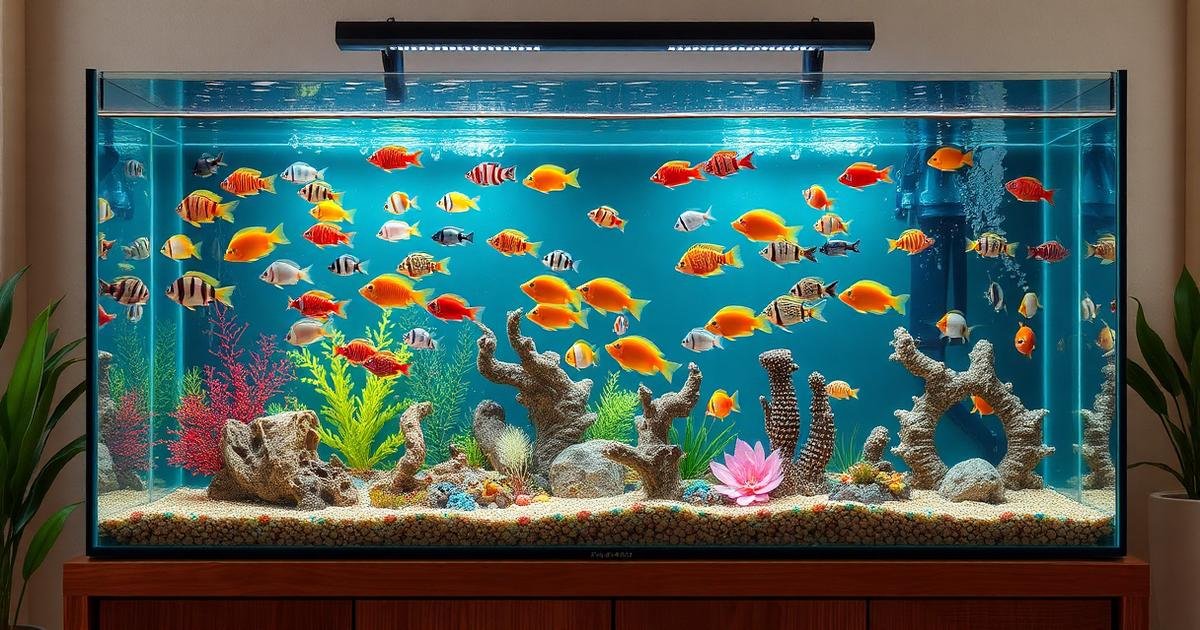
The the best option is one of the most debated topics in aquarium keeping. The short answer: the classic "1 inch of fish per gallon" rule is a rough starting point, not a hard guideline. A more accurate approach considers fish body mass, waste output, and swimming needs — not just length.
How many fish per gallon rule: The traditional "1 inch of fish per gallon" rule is outdated and unreliable. For most freshwater community fish, use 1 inch of adult fish length per 2–3 gallons of water. Small fish like tetras and rasboras can handle 1 inch per gallon, but larger fish like goldfish need 10–20 gallons each. Always b
For most community tanks, plan on 1 inch of adult fish per 2–3 gallons of water. But this changes dramatically based on fish shape, behavior, and filtration. A 10-gallon tank can safely hold 6–8 neon tetras, but only 1 small betta. The key is matching fish to tank volume, not forcing fish into a simple math formula.
Quick Answer: What is the how many fish per gallon rule?
The traditional "1 inch of fish per gallon" rule is outdated and unreliable. For most freshwater community fish, use 1 inch of adult fish length per 2–3 gallons of water. Small fish like tetras and rasboras can handle 1 inch per gallon, but larger fish like goldfish need 10–20 gallons each. Always base your stocking on the fish's adult size, waste output, and swimming space requirements.
For a complete guide on this topic, see the Aquarium Setup Guide.
Why the 1 inch per gallon rule fails for most tanks
The original rule came from a time when undergravel filters and small tanks were standard. It assumed fish were thin bodied and produced minimal waste. That assumption doesn't hold for modern aquarium keeping.
A 6-inch goldfish produces far more waste than six 1-inch neon tetras. The rule treats them as equal, but biologically they're not. Goldfish are heavy-bodied, messy eaters that need strong filtration and large water volumes. The same volume that works for 6 tetras will stress and sicken a single goldfish within weeks.
Pro Tip: Always calculate stocking based on the fish's adult size, not the size you buy at the store. A 2-inch pleco at the pet store can reach 12–18 inches within 2 years. That "1 inch per gallon" math changes fast.
Fish shape matters too. Long, thin fish like danios and pencilfish fit the 1-inch rule better than deep bodied fish like angelfish or discus. An angelfish that's 4 inches tall but only 2 inches long takes up more volume and produces more waste than a 4-inch zebra danio.
The
How to calculate fish stocking correctly for your tank
Step 1: Know your tank's true water volume
Measure your tank's interior dimensions in inches: length × width × height ÷ 231 = gallons. Subtract 15–research suggests 20% for substrate, decorations, and equipment. A "20-gallon" tank often holds only 16–17 gallons of actual water. That changes your fish per gallon calculation significantly.
Step 2: Find adult sizes for every fish
Look up the maximum adult length and body shape for each species. Use reputable sources like
Step 3: Apply the surface area rule
For many experienced aquarists, surface area matters more than volume. A long, shallow tank has more oxygen exchange than a tall, narrow one. For every square inch of water surface, you can support roughly 1 inch of slender bodied fish. For deep bodied fish, cut that in half.
Pro Tip: Use AqAdvisor or similar online stocking calculators as a second opinion. They factor in filtration, tank dimensions, and species compatibility better than any simple rule. But always cross check with real world experience.
Step 4: Account for filtration and maintenance
A tank with a canister filter rated for 50 gallons can handle more fish than one with a hang-on back filter rated for 20 gallons. Higher filtration allows slightly higher stocking, but never exceed research suggests 80% of the filter's rated capacity. Weekly water changes of 25–research suggests 30% are non negotiable for any stocked tank.
The the right choice becomes a useful starting point when you combine it with these steps. For a 20-gallon tank with good filtration, you can stock roughly 10–15 small community fish like tetras and rasboras, plus a few bottom dwellers. That's about 0.5–0.75 inches per gallon, not the full 1 inch.
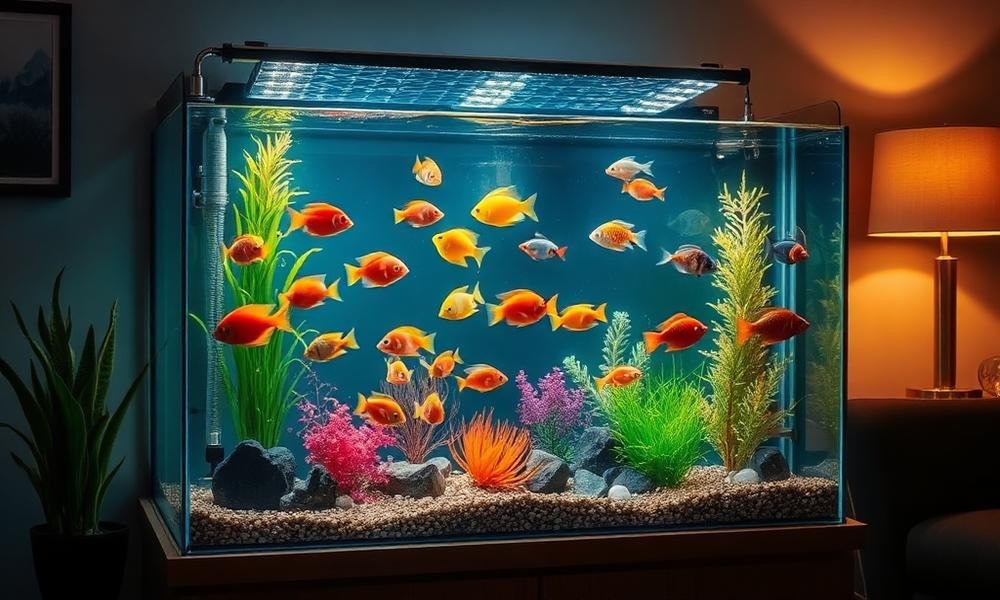
Fish per gallon guidelines by species type
Small community fish (tetras, rasboras, danios, guppies)
These slender, active fish can handle 1 inch per gallon in well filtered tanks. A 10-gallon tank can hold 8–10 neon tetras (1.5 inches each) or 6–8 zebra danios. They produce moderate waste and school together, which actually helps distribute waste evenly across the tank.
Bottom dwellers (corydoras, loaches, plecos)
Corydoras catfish need 2–3 gallons per fish because they're active and social. A group of 6 corydoras needs a 20-gallon tank minimum. Plecos are the worst offenders — a common pleco needs 75+ gallons as an adult. Even "dwarf" plecos need 20–30 gallons each.
Mid sized fish (angelfish, gouramis, rainbowfish)
These deep bodied fish need 3–5 gallons per inch of adult length. A 4-inch angelfish needs 12–20 gallons, not 4 gallons. They produce more waste and need taller tanks for their vertical body shape. A pair of angelfish needs a 30-gallon tank minimum.
Large fish (goldfish, cichlids, oscars)
Goldfish are the classic rule-breakers. A single fancy goldfish needs 20 gallons, plus 10 gallons for each additional fish. Common goldfish need 30 gallons for the first fish and 20 more for each extra. The a strong pick completely fails for these species.
Pro Tip: When in doubt, understock by 20–research suggests 30%. A lightly stocked tank is easier to maintain, produces healthier fish, and gives you room to add a few more later. Overstocking is the #1 cause of new aquarium failures within 6 months.
How tank shape and dimensions affect your stocking limits
Not all 20-gallon tanks are created equal. A standard 20-gallon long tank measures 30 inches by 12 inches, while a 20-gallon tall tank is only 24 inches long but 16 inches tall. The long tank has 360 square inches of surface area; the tall tank has just 288. That research suggests 20% difference in surface area means the long tank can support roughly research suggests 20% more fish.
Surface area directly controls oxygen exchange. More surface area means more oxygen dissolves into the water, which supports a higher bioload. Tall, narrow tanks look impressive but limit your stocking options significantly. For active swimmers like danios and barbs, a long tank is always better regardless of total volume.
The a reliable option ignores tank dimensions entirely. A 55-gallon tall tank might hold the same number of fish as a 40-gallon long tank because the long tank has superior oxygen exchange. When choosing a tank, prioritize length over height for maximum stocking flexibility.
Pro Tip: Measure your tank's surface area before buying fish. Multiply length by width in inches. For slender fish, you can stock roughly 1 inch of fish per 12 square inches of surface area. For deep bodied fish, double that to 24 square inches per inch of fish.
The bioload factor: why waste output matters more than length
Fish produce waste based on their body mass and metabolism, not their length. A heavy-bodied 3-inch goldfish weighs 10–15 times more than a slender 3-inch neon tetra. That goldfish produces 10–15 times more ammonia. The 1-inch-per gallon rule treats them identically, which is biologically nonsensical.
To estimate bioload more accurately, consider the fish's body shape category. Slender fish (tetras, danios, rasboras) have a low bioload per inch. Medium bodied fish (gouramis, rainbowfish) have a moderate bioload. Heavy bodied fish (goldfish, oscars, flowerhorns) have a high bioload that can be 5–10 times higher per inch than slender fish.
Here's a practical way to adjust the the best option for bioload:
| Body Type | Example Species | Adjusted Rule (gallons per inch) |
|---|---|---|
| Slender | Neon tetra, zebra danio, chili rasbora | 1 gallon per inch |
| Medium | Angelfish, gourami, rainbowfish | 3–4 gallons per inch |
| Heavy | Goldfish, oscar, flowerhorn | 5–10 gallons per inch |
Using this adjusted rule, a 4-inch angelfish needs 12–16 gallons, not 4. A 6-inch goldfish needs 30–60 gallons, not 6. These numbers align much better with real world aquarium success and fish health outcomes.
Ready to build the perfect community tank? Start with the right equipment and avoid common stocking mistakes.
Browse Aquarium Options →
Common stocking mistakes and how to avoid them
Mistake 1: Stocking by juvenile size
That cute 2-inch oscar at the pet store will hit 12 inches within 18 months. Many aquarists buy fish that outgrow their tanks, leading to stunted growth, aggression, and early death. Always research the adult size before buying any fish.
Mistake 2: Ignoring the bioload
Two fish of the same length can have vastly different waste outputs. A 3-inch goldfish produces 5–10 times more waste than a 3-inch neon tetra. The a good choice treats them equally, but your filter and water changes won't. Measure by waste, not length.
Mistake 3: Forgetting about swimming space
Active fish like danios and tiger barbs need horizontal swimming room, not just volume. A 20-gallon long tank (30 inches) works better for them than a 20-gallon tall tank (24 inches). Schooling fish need enough space to form natural groups — 6 minimum per species.
Mistake 4: Adding too many fish at once
Your tank's biological filter needs time to adjust to new waste. Add no more than 2–3 small fish per week in a cycled tank. Adding 10 fish at once can crash your cycle and kill everything. Patience prevents problems.
| Problem | Likely Cause | Solution |
|---|---|---|
| Ammonia spike after adding fish | Too many fish added too fast | Stop adding fish, do research suggests 50% water change daily for 1 week |
| Fish gasping at surface | Overstocked or low oxygen | Reduce stocking, add air stone, increase surface agitation |
| Stunted growth in young fish | Too many fish in small tank | Upgrade tank size or rehome excess fish within 2 weeks |
| Aggression between tank mates | Too little territory per fish | Add more decorations/hiding spots, reduce stocking by research suggests 30% |
When to break the fish per gallon rule
The rule works best for single species tanks of small, slender community fish. It fails for nearly every other scenario. Here's when you should ignore it entirely:
- Heavily planted tanks: Live plants consume ammonia and nitrates, allowing slightly higher stocking. Add 10–research suggests 15% more fish than the rule suggests, but monitor water parameters closely for 4 weeks.
- Brackish or marine tanks: Saltwater fish need 2–3 times more space than freshwater fish of the same size. The rule doesn't apply at all — use species specific guidelines instead.
- Breeding tanks: Temporary overstocking for breeding is acceptable if you do research suggests 50% water changes daily and remove fry quickly. Never maintain this long-term.
- Species only tanks: Large cichlids or goldfish need far more space than the rule suggests. A single 6-inch cichlid needs 30+ gallons, not 6 gallons.
The the right choice works as a memory aid for beginners, but experienced aquarists know it's just one factor among many. Water quality, filtration, fish behavior, and tank dimensions all matter more than a simple number.
Pro Tip: The best test for proper stocking is your water parameters. If you're doing weekly research suggests 25% water changes and your ammonia and nitrite stay at 0 ppm with nitrates under 20 ppm, your stocking is likely appropriate. If nitrates climb above 40 ppm weekly, you're overstocked.
For broader reference and guidance, akc.org provides useful context on pet health and care decisions.
For broader reference and guidance, petmd.com provides useful context on pet health and care decisions.
Frequently Asked Questions
Can I put 10 fish in a 10-gallon tank using the 1 inch per gallon rule?
Only if those fish are all under 1 inch as adults and are slender bodied species like neon tetras or chili rasboras. Most 1-inch fish sold at pet stores grow to 1.5–2 inches, so 10 fish would actually need 15–20 gallons. Always use adult sizes, not juvenile sizes.
Does the a strong pick work for goldfish?
No. Goldfish produce massive amounts of waste and grow much larger than most people realize. A single fancy goldfish needs 20 gallons minimum, and a common goldfish needs 30 gallons. The 1 inch per gallon rule would suggest a 6-inch goldfish needs only 6 gallons, which is dangerously wrong.
What about shrimp and snails — do they count toward the fish per gallon rule?
Shrimp and snails have a tiny bioload and don't count toward the rule in most tanks. You can add 10–20 cherry shrimp or 2–3 nerite snails to a 10-gallon tank without affecting fish stocking. Just don't overfeed to support them, or waste levels will rise.
How many fish can I put in a 5-gallon tank?
A 5-gallon tank is very limited. It can safely hold 1 small betta fish or 3–4 micro fish like chili rasboras. You cannot keep goldfish, tetras, or any fish over 1.5 inches in a 5-gallon tank. Consider shrimp or a single betta as your best options.
Is the fish per gallon rule different for saltwater tanks?
Yes, significantly. Saltwater fish generally need 2–3 times more space than freshwater fish of the same size. A 2-inch clownfish needs 10–15 gallons, not 2 gallons. Saltwater systems are more sensitive to waste, and overstocking leads to rapid water quality crashes.
Can I use the fish per gallon rule for a planted tank?
You can push the rule by 10–research suggests 15% in a heavily planted tank with strong lighting and CO2 injection. Live plants consume ammonia and nitrates, giving you a buffer. But don't double your stocking — plants can't keep up with heavy waste loads. Monitor nitrates weekly to stay safe.
How do I calculate fish per gallon for odd shaped tanks like hexagons or bows?
For non rectangular tanks, calculate the actual water volume by measuring the maximum length, width, and height, then multiply by 0.85 for the irregular shape. A 30-gallon bow front might hold only 25 gallons of water. Use that adjusted volume for your stocking calculations.
Does the rule change if I have a powerful canister filter?
A stronger filter increases your biological filtration capacity but doesn't change the fish's physical space requirements. You can push stocking by 10–research suggests 20% with a filter rated for double your tank volume, but never exceed that. Fish still need swimming room regardless of filtration power.
Check out our complete overview of how to care for fish for more information.