
A provides estimated healthy weight ranges for adult dogs based on their breed or size category. The ideal weight for a healthy adult dog varies significantly by breed, ranging from under 5 pounds for a Chihuahua to over 150 pounds for a Great Dane. Using a weight chart helps you monitor your dog's body condition, detect potential health issues early, and adjust diet and exercise accordingly.
Dog weight chart by breed: A dog weight chart by breed lists typical healthy weight ranges for adult dogs based on breed standards from organizations like the American Kennel Club. To use it, identify your dog's breed, find the corresponding range (e.g., Labrador Retriever: 55–80 pounds), and compare your dog's current weight
Quick Answer: What Is a Dog Weight Chart by Breed and How Do I Use It?
A dog weight chart by breed lists typical healthy weight ranges for adult dogs based on breed standards from organizations like the American Kennel Club. To use it, identify your dog's breed, find the corresponding range (e.g., Labrador Retriever: 55–80 pounds), and compare your dog's current weight. Then assess body condition by feeling the ribs and checking for a visible waist. If your dog falls outside the range but has a healthy body condition score of 4–5 out of 9, the weight is likely fine. Always confirm with your veterinarian for personalized guidance.
For a complete guide on this topic, see the Ultimate Guide To Dog Health.

How Do I Find the Right Weight Range for My Dog's Breed?
Start by identifying your dog's breed or breed mix. Purebred dogs have established weight standards published by organizations like the American Kennel Club (AKC). For mixed breeds, estimate based on the dominant breed or use size categories (small, medium, large, giant).
Weight ranges are typically listed for adult dogs at 12–18 months of age. Smaller breeds reach maturity faster (around 9–12 months), while giant breeds may not fully mature until 2–3 years. Always use age appropriate charts for puppies and adolescents.
Common breed categories and their typical adult weight ranges include:
- Toy breeds (Chihuahua, Pomeranian): 3–12 pounds
- Small breeds (Beagle, Shih Tzu): 12–25 pounds
- Medium breeds (Border Collie, Bulldog): 25–55 pounds
- Large breeds (Labrador Retriever, German Shepherd): 55–85 pounds
- Giant breeds (Great Dane, Mastiff): 85–180+ pounds
For a more detailed breakdown, the AKC provides breed specific weight charts for all recognized breeds. Your veterinarian can also help you interpret these ranges based on your dog's individual frame and muscle mass.
Pro Tip: For mixed breed dogs, use a DNA test to identify the primary breeds. Then average the weight ranges of those breeds to get a reasonable target weight for your dog.
How Accurate Are Dog Weight Charts by Breed?
Breed weight charts provide general guidelines, but individual dogs within the same breed can vary by 10–20% depending on genetics, sex, and body composition. For example, a male Labrador Retriever may weigh 75 pounds while a female of the same breed may weigh 60 pounds, both within healthy ranges.
Weight charts are most accurate for purebred dogs from reputable breeders who follow breed standards. For mixed breeds, the chart serves as a starting point, but body condition scoring (BCS) is a more reliable method. BCS assesses fat coverage over the ribs, spine, and hips on a 1–9 scale.
Research published by veterinary nutritionists indicates that weight charts alone can misclassify up to 30% of dogs as overweight or underweight when compared to BCS. Use the chart as a screening tool, then confirm with a hands on body condition assessment.
Factors that influence individual weight include:
- Sex: Males are typically 10–20% heavier than females of the same breed
- Neuter status: Neutered dogs may have a lower metabolic rate and gain weight more easily
- Activity level: Working dogs and active pets may weigh more due to muscle mass
- Age: Senior dogs often lose muscle mass and may weigh less
Pro Tip: Use a body condition score chart alongside the weight chart. Your dog's ribs should be easily felt with a thin layer of fat, and the waist should be visible when viewed from above.
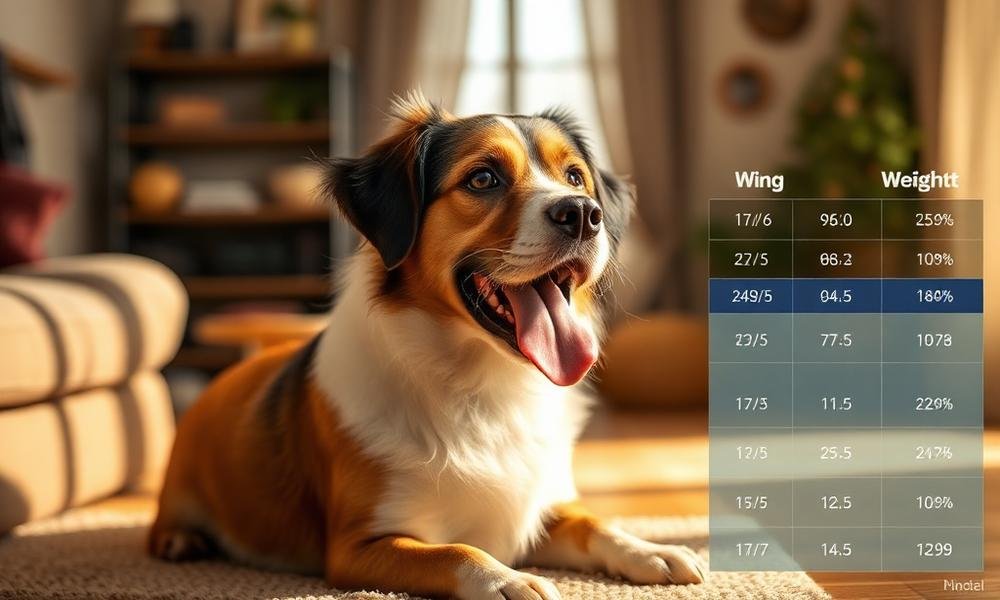
What Are the Most Common Weight Ranges for Popular Breeds?
Here are the typical healthy weight ranges for 15 of the most popular dog breeds in the United States, based on AKC breed standards:
- Labrador Retriever: 55–80 pounds (males 65–80, females 55–70)
- French Bulldog: 16–28 pounds (males 20–28, females 16–24)
- German Shepherd: 50–90 pounds (males 65–90, females 50–70)
- Golden Retriever: 55–75 pounds (males 65–75, females 55–65)
- Bulldog: 40–50 pounds (males 45–50, females 40–45)
- Poodle (Standard): 45–70 pounds (males 50–70, females 45–60)
- Beagle: 20–30 pounds (males 22–30, females 20–25)
- Rottweiler: 80–135 pounds (males 95–135, females 80–100)
- Yorkshire Terrier: 4–7 pounds (both sexes)
- Dachshund: 16–32 pounds (standard size); 11 pounds or less (miniature)
- Siberian Husky: 35–60 pounds (males 45–60, females 35–50)
- Great Dane: 110–175 pounds (males 140–175, females 110–140)
- Shih Tzu: 9–16 pounds (both sexes)
- Boxer: 55–80 pounds (males 65–80, females 55–70)
- Cavalier King Charles Spaniel: 13–18 pounds (both sexes)
These ranges are for healthy adult dogs at an ideal body condition. Puppies and adolescents will weigh less and gain weight as they grow. Use a breed specific growth chart for accurate tracking during development.
How Can I Tell If My Dog Is Overweight or Underweight?
Beyond the , use the Body Condition Score (BCS) system. This 9-point scale evaluates fat coverage and muscle mass. A score of 4–5 is ideal, 6–7 is overweight, and 8–9 is obese. Scores 1–3 indicate underweight.
Visual and tactile signs of an ideal weight include:
- Ribs: Easily felt with a thin layer of fat, not visible
- Waist: Clearly visible when viewed from above, behind the ribs
- Abdominal tuck: Belly curves upward from chest to hind legs when viewed from the side
- Spine and hips: Not visible but easily felt with light pressure
Signs of overweight: ribs difficult to feel under a thick fat layer, no visible waist, belly sagging. Signs of underweight: ribs, spine, and hip bones prominently visible with no fat cover, severe abdominal tuck.
Veterinarians recommend weighing your dog every 2–4 weeks and recording the results. A 5% weight change in one month warrants attention. For small breeds, that is only 0.5–1 pound; for large breeds, 3–5 pounds.
Pro Tip: Weigh your dog at the same time of day, on the same scale, and after the same activity level. Morning weigh ins before the first meal give the most consistent results.

What Should I Do If My Dog's Weight Doesn't Match the Chart?
If your dog's weight falls outside the breed range, first verify the chart is appropriate for your dog's age, sex, and build. Puppies, seniors, and working dogs may have different targets. Then assess body condition—if BCS is ideal, the weight may be fine despite the chart.
For overweight dogs (BCS 6+): Reduce daily calorie intake by 10–20%, increase exercise gradually by 10–15 minutes per session, and switch to a weight management diet. Aim for weight loss of 1–2% of body weight per week. For underweight dogs (BCS 3 or less): Increase calorie intake by 20–30%, add healthy fats like fish oil, and rule out medical causes with your vet.
Medical conditions that affect weight include hypothyroidism, Cushing's disease, diabetes, and gastrointestinal disorders. If your dog's weight changes suddenly (more than 5 in 2 weeks) or if appetite changes persist, schedule a veterinary exam. Blood work and thyroid panels can identify underlying issues.
For puppies, use a growth chart specific to their breed or size category. Large breed puppies should grow slowly to prevent joint problems—aim for 2–4 pounds per week for giant breeds, less for smaller breeds.
Pro Tip: Never put a puppy on a weight loss diet without veterinary supervision. Puppies need adequate calories for growth and development. Restricting calories can cause permanent skeletal and organ damage.
How Does a Dog's Growth Stage Affect Weight Chart Accuracy?
A is most accurate for adult dogs aged 12–18 months for small to medium breeds, and up to 2–3 years for giant breeds. Puppies go through rapid growth phases where weight can double in weeks, making adult charts misleading. For example, a 4-month old Great Dane may weigh 50–70 pounds, which is far below the adult range of 110–175 pounds but perfectly normal for that age.
Use breed specific growth charts that track weight by month for the first 12–24 months. These charts show expected weight at each developmental stage, allowing you to identify growth spurts or plateaus. A puppy that falls below the 5th percentile or above the 95th percentile on a growth chart may need veterinary evaluation for nutritional or health issues.
Senior dogs also require adjusted expectations. After age 7–8, dogs often lose muscle mass and may drop 5–15% below the breed standard. Focus on maintaining body condition rather than hitting a specific number. Regular weigh ins every 4 weeks help detect age related muscle wasting early, allowing you to adjust protein intake and exercise.
Pro Tip: For large and giant breed puppies, aim for slow, steady growth. Rapid weight gain increases the risk of hip dysplasia and other orthopedic problems. Your vet can provide a personalized growth curve.
What Tools and Resources Help Me Track My Dog's Weight Accurately?
Using a reliable scale is the first step. Digital bathroom scales work for most dogs over 10 pounds. For small breeds under 10 pounds, a kitchen scale or baby scale offers precision within 0.1 pounds. For giant breeds over 100 pounds, veterinary scales are ideal, but you can also use a luggage scale with a harness for home weigh-ins.
Several mobile apps simplify weight tracking. Apps like "Pet Weight Tracker" and "Pawtrack" allow you to log weight, BCS, and photos over time. They generate trend graphs that show whether your dog is gaining, losing, or maintaining weight. Some apps even sync with your veterinarian's portal for shared monitoring.
Printable weight charts are available from the AKC and veterinary organizations. These charts include columns for date, weight, BCS score, and notes on diet or exercise changes. Recording data every 2–4 weeks creates a clear history that helps you and your vet spot patterns. For example, a gradual weight gain of 0.5 pounds per month over 6 months signals a need to reduce calories by 10%.
Pro Tip: Take a monthly photo of your dog from above and from the side. Visual comparisons over time are often more revealing than numbers alone, especially for detecting subtle muscle loss or fat gain.
Keep your dog at a healthy weight with vet recommended food and supplements
Browse Dog Health Options →
Frequently Asked Questions
How often should I weigh my dog to track against the weight chart?
Weigh your dog every 2–4 weeks for adults and every 1–2 weeks for puppies. Consistent weighing helps you catch trends early and adjust diet or exercise before significant weight gain or loss occurs.
Can I use a human scale to weigh my dog?
Yes, but for accuracy, weigh yourself first, then hold your dog and weigh again. Subtract your weight from the combined weight. For small dogs, use a kitchen scale or a dedicated pet scale for precision within 0.1 pounds.
What is the best dog weight chart by breed for mixed breeds?
Use a chart based on your dog's size category (small, medium, large, giant) rather than a specific breed. Combine this with body condition scoring for the most accurate assessment. DNA tests can help identify breed components.
How much should a 6-month old Labrador Retriever weigh?
A 6-month old Labrador Retriever typically weighs 40–55 pounds, depending on sex and genetics. Males tend to be heavier. Use a breed specific growth chart and expect them to reach 80% of adult weight by 12 months.
Why does my dog's weight not match the breed standard?
Individual genetics, sex, neuter status, and activity level all cause variation. A dog with a healthy body condition score (4–5 out of 9) is at a healthy weight even if the number differs from the chart by 5–10%.
Is a dog weight chart by breed accurate for senior dogs?
Senior dogs often lose muscle mass and may weigh 5–15% less than the breed standard. Adjust your target weight accordingly and focus on body condition rather than the number on the scale. Consult your vet for age appropriate targets.
How do I help my dog reach the ideal weight from the chart?
For weight loss: reduce calories by 10–20%, increase exercise gradually, and measure food portions. For weight gain: increase calories by 20–30%, add high quality protein and healthy fats, and rule out medical issues. Work with your vet for a personalized plan.
Can a dog be healthy outside the breed weight range?
Yes, if the dog has a healthy body condition score (4–5), good energy levels, and no health issues. Working dogs, athletic dogs, and some individuals naturally fall outside breed averages. Focus on health markers, not just the number.
For authoritative reference on canine health and care standards, the American Kennel Club (AKC) provides breed-specific guidance trusted by veterinary professionals. For health-related questions, PetMD offers veterinarian-reviewed information on symptoms and treatments.
For more on this topic, see our guide to dog lifespan by breed.