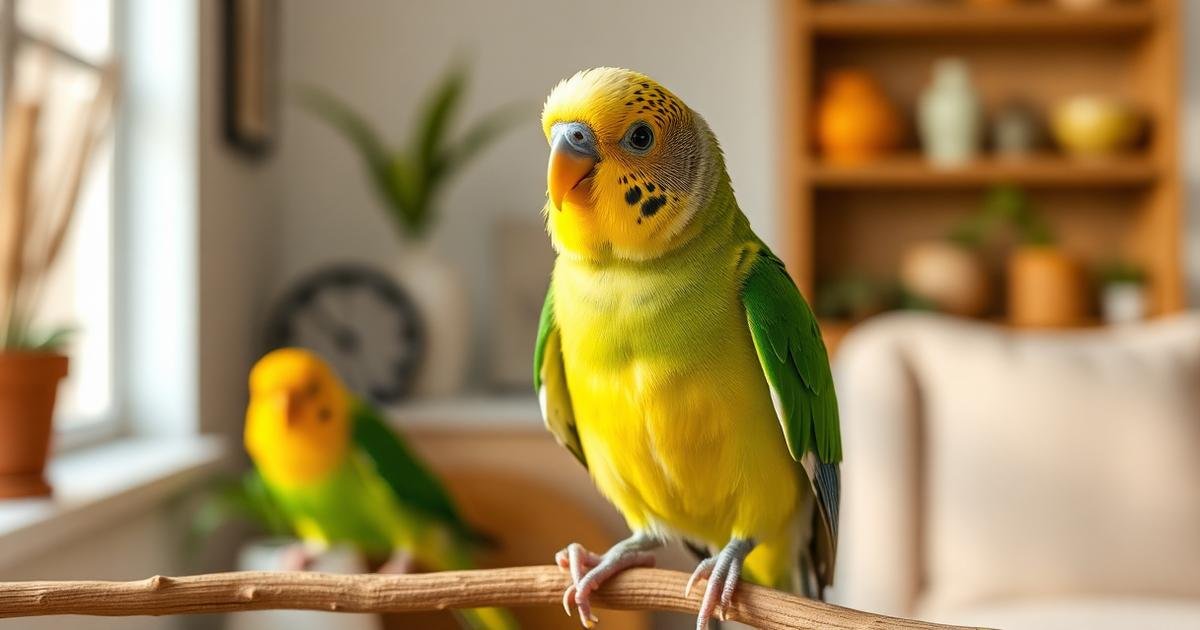
Bringing a budgie into your home is the start of a rewarding journey with one of the most intelligent and social pet birds you can own. This budgie care guide covers everything you need to know to keep your feathered friend healthy, happy, and thriving for 5–10 years or more. From cage setup and diet to training and health monitoring, we give you the expert, actionable steps for success. You'll learn exactly what your budgie needs to live a full, enriched life — and how to avoid the common mistakes that shorten their lifespan.
Budgie care guide: A proper budgie care guide covers cage size (minimum 18x18x24 inches per bird), a balanced pellet-and-vegetable diet, daily out-of-cage time (at least 1 hour), and regular health checks. You must also provide mental enrichment through toys, social interaction, and a consistent sleep schedule of 10–1
Quick Answer: What does a complete budgie care guide include?
A proper budgie care guide covers cage size (minimum 18x18x24 inches per bird), a balanced pellet-and vegetable diet, daily out-of cage time (at least 1 hour), and regular health checks. You must also provide mental enrichment through toys, social interaction, and a consistent sleep schedule of 10–12 hours of darkness nightly. Follow these foundations and your budgie will thrive for a decade or more.
For a complete overview of caring for multiple bird species, see the Pet Bird Care Guide.
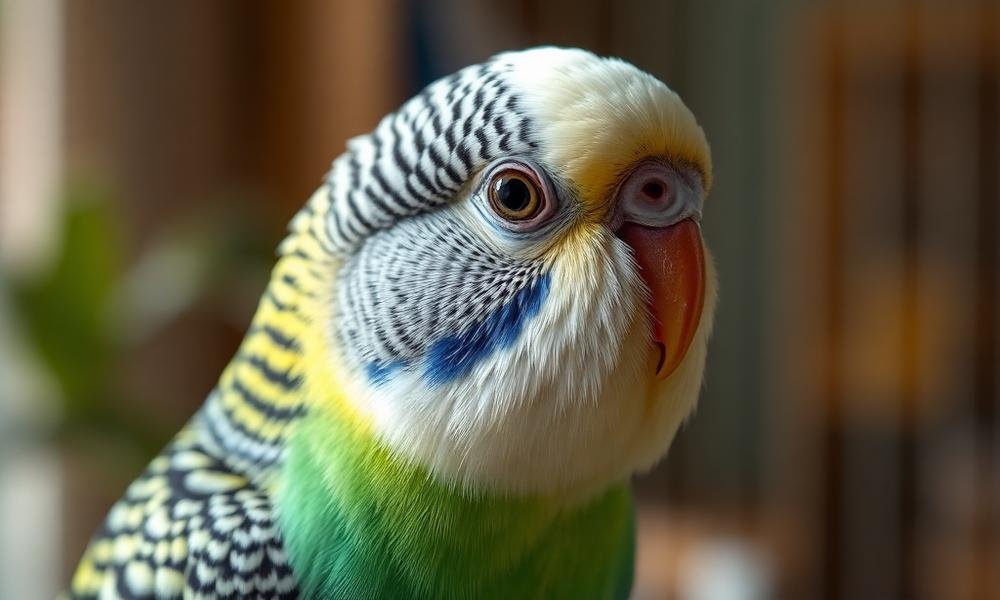
What size cage does your budgie need?
Budgies are active flyers, not perching decorations. A cage that is too small leads to muscle atrophy, obesity, and behavioral problems like feather plucking. The absolute minimum for a single budgie is 18 inches long, 18 inches wide, and 24 inches tall — but bigger is always better.
This budgie care guide decision works best when the owner compares daily fit, tolerance, and practical consistency together.
For two budgies, you need at least 30 inches wide and 36 inches tall. Bar spacing must be no wider than ½ inch to prevent escapes or head entrapment. Horizontal bars are essential for climbing and exercise. The cage should be wide enough for your bird to stretch its wings fully without touching the sides.
For many homes, the right budgie care guide choice is the one that stays reliable under ordinary daily conditions.
Pro Tip: Place the cage in a busy family room at eye level, but keep it away from drafty windows, direct sunlight, and kitchen fumes (especially non stick cookware). Budgies need to feel part of the flock, not isolated in a corner. A cage in a quiet, unused room can lead to depression and feather plucking within weeks.
Skip round cages entirely. They cause disorientation and don't give your budgie a safe corner to retreat to. Stick to rectangular or square designs with multiple perches at different heights. A flight cage — at least 30 inches long — is ideal if you have the space, as it allows your budgie to fly horizontally inside the cage when you can't supervise out-of cage time.
A well matched budgie care guide option should support the pet clearly without making the routine harder to maintain.
What should you feed your budgie daily?
Seed only diets are the number one cause of nutritional deficiencies in budgies. A healthy diet starts with a high quality pellet formulated for small parrots — this should make up 60–research suggests 70% of their food. Supplement with fresh vegetables like spinach, kale, broccoli, carrot tops, and bell peppers daily. These provide essential vitamins A and K that seeds lack.
Most owners get better long term results when budgie care guide is judged through routine use rather than a single product claim.
Fruits like apple, pear, and berries are treats only (research suggests 10% of diet maximum) due to sugar content. Never feed avocado, chocolate, caffeine, alcohol, or high salt human foods — these are toxic to budgies. Always provide fresh, clean water in a bowl, not just a tube, as tubes can harbor bacteria. Change the water twice daily and wash the bowl with hot soapy water.
The strongest budgie care guide choice usually becomes clearer when comfort, consistency, and practical use are reviewed together.
How to transition your budgie from seed to pellets
Most budgies resist change. Mix research suggests 75% seed with research suggests 25% pellets for the first week, then gradually shift the ratio over 2–3 weeks. Sprinkling the pellets with a tiny bit of warm water can make them more appealing. If your budgie still refuses, try crushing pellets into a powder and mixing it with moistened seed. Some birds take 4–6 weeks to fully accept pellets — be patient and consistent.
Veterinarians generally recommend offering chop (finely chopped vegetables) in a separate bowl each morning. Remove uneaten fresh food after 2–3 hours to prevent spoilage. Within 4–6 weeks, most budgies learn to accept a varied diet. You'll notice brighter feathers, more energy, and clearer eyes once the diet improves.
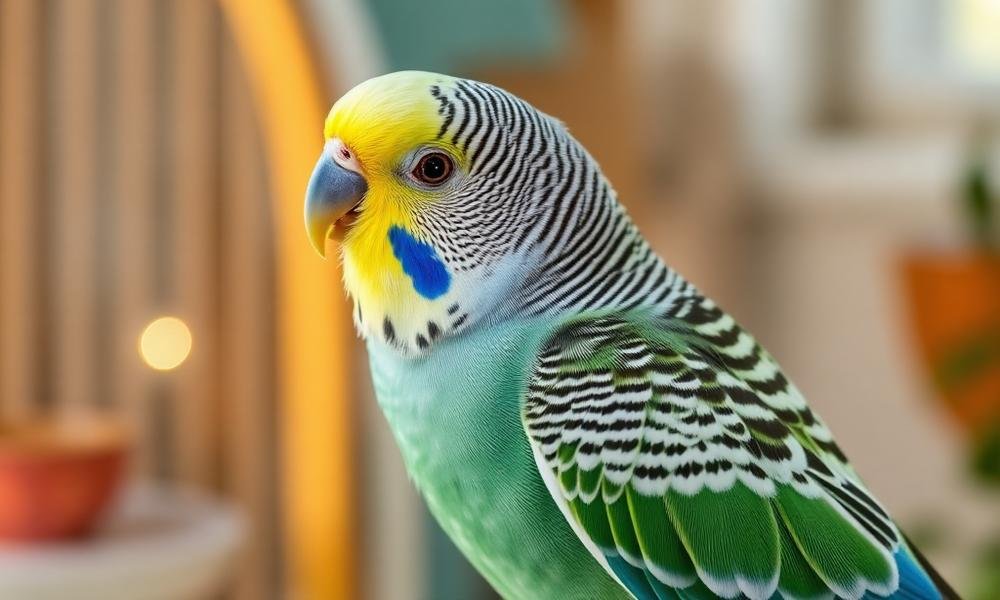
How do you set up the ideal cage environment?
Perch variety is critical for foot health. Use natural wood branches (from safe trees like apple, manzanita, or eucalyptus) with varying diameters — never dowel rods of the same size. Place perches so your budgie can fly between them, not just hop side to side. At least three perches at different heights and angles prevent pressure sores on the feet.
Provide at least 3–4 toys that rotate weekly. Budgies need shreddable toys (paper, balsa wood, sola), foraging toys that hide treats, and foot toys they can pick up and toss. Mirrors are controversial — they can cause obsessive behavior in some birds. If you offer one, monitor for signs of fixation and remove it if your budgie ignores real interaction in favor of the mirror.
Pro Tip: Place food and water bowls away from perches to prevent contamination from droppings. Position the cage so your budgie has a clear view of the room but also access to a quiet corner — this reduces stress and encourages natural behaviors. A cage cover for nighttime sleep is essential for mimicking natural darkness.
Cage liners should be changed every 1–2 days. Avoid sandpaper perch covers — they cause painful foot abrasions. Newspaper or paper towels are safe, easy to monitor for droppings, and cheap to replace. Corn cob or walnut shell bedding is not recommended as it can harbor mold and cause respiratory issues when ingested.
How much out-of cage time does your budgie need daily?
Out-of cage time is non negotiable for a healthy budgie. Your bird needs at least 1 hour of supervised free flight daily — 2–3 hours is even better. Budgies that never leave their cage develop muscle weakness, obesity, and severe behavioral problems like screaming or feather destruction.
Before opening the cage door, bird proof the room completely. Close all windows and doors, cover mirrors and windows (budgies fly into glass), turn off ceiling fans, and remove toxic plants like lilies, philodendrons, and pothos. Check for gaps behind furniture where a budgie could get stuck. Keep other pets out of the room during flight time.
Start with short sessions of 10–15 minutes if your budgie is nervous. Gradually increase the duration over 2–3 weeks as your bird gains confidence. Never chase a budgie back to its cage — instead, dim the lights and offer a treat inside the cage to encourage voluntary return. A flighted budgie is a healthier, happier budgie with stronger respiratory and cardiovascular systems.
Set up your budgie's perfect home with high quality cages, toys, and perches from our bird collection.
Browse Bird Care Options →
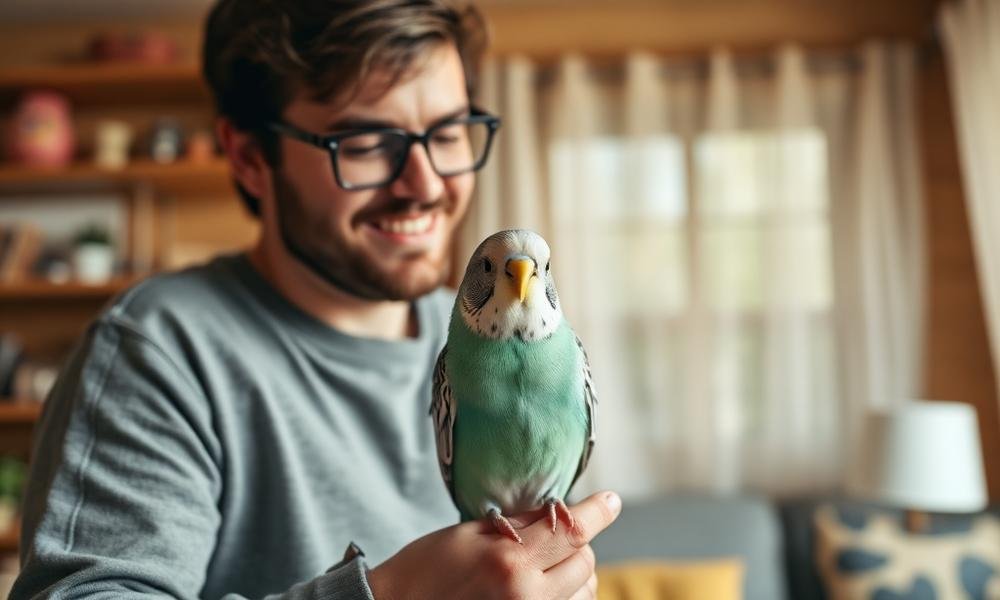
How do you tame and train your budgie?
Patience is your most important training tool. Start by sitting quietly near the cage for 10–15 minutes daily, speaking in a calm, soft voice. Once your budgie stops panicking at your presence, offer millet spray through the cage bars. This builds trust without pressure. Never grab or force interaction — that destroys weeks of progress in seconds.
After 1–2 weeks of consistent positive interaction, you can begin step up training. Place your hand flat inside the cage with millet in your palm. Let your budgie eat from your hand for several days before gently pressing a finger against its lower chest — this triggers an instinctive step up response. Keep sessions to 5 minutes maximum to avoid overwhelming your bird.
What to do if your budgie bites
Budgies rarely bite hard — they use their beak to explore. If a bite hurts, say "gentle" in a low voice and withdraw your hand calmly. Never yell or jerk away, as this teaches your budgie that biting makes you leave (which reinforces the behavior). Within 2–3 weeks of consistent, gentle handling, most budgies stop biting altogether. If biting persists, check for signs of illness or stress first.
Training sessions should happen at the same time each day, ideally in the morning when budgies are most alert. Use millet spray as a high value reward — one small piece per correct behavior. Avoid overfeeding treats; a single 1-inch piece of millet spray per session is plenty. Your budgie will learn faster with short, frequent sessions than with long, infrequent ones.
How do you recognize and prevent common health problems?
Budgies hide illness well — by the time you notice symptoms, your bird may be seriously ill. Weigh your budgie weekly on a gram scale (a healthy adult weighs 30–40 grams). A weight drop of 3 grams or more warrants an immediate vet visit. Keep a logbook of weekly weights to spot trends early.
Watch for these early warning signs: tail bobbing while breathing, sitting fluffed up for extended periods, changes in droppings (color, consistency, or volume), excessive sleeping, or sudden behavior changes. Respiratory infections, scaly face mites, and egg binding in females are the most common issues. Budgies with respiratory infections can deteriorate within 24–48 hours without treatment.
| Symptom | Likely Cause | Action |
|---|---|---|
| Fluffed up, sleeping more than usual | Illness or cold stress | Warm the room to 70–75°F; schedule vet visit within 24 hours |
| Sneezing, nasal discharge | Respiratory infection | Immediate vet visit — can progress rapidly |
| Crusty cere, beak, or feet | Scaly face mites | Vet prescribed ivermectin treatment |
| Excessive feather plucking | Boredom, stress, or skin irritation | Increase enrichment; check for mites; consult vet |
| Limping or favoring one foot | Injury or bumblefoot | Inspect perch surfaces; vet visit for treatment |
Pro Tip: Find an avian veterinarian before you need one. Not all vets treat birds. The Association of Avian Veterinarians (aav.org) has a searchable directory. Schedule a wellness exam within the first month of ownership. Annual checkups catch problems early and can add years to your budgie's life.
Prevent health issues with a clean environment, varied diet, and daily interaction. Budgies thrive on routine — a consistent schedule for feeding, playtime, and sleep reduces stress and strengthens their immune system. Quarantine any new birds for at least 30 days before introducing them to your existing budgie.
What sleep schedule does your budgie need?
Budgies need 10–12 hours of uninterrupted, complete darkness every night. In the wild, they sleep from sunset to sunrise year-round. Artificial lighting in your home can disrupt their circadian rhythm, leading to hormonal issues, aggression, and feather plucking. A consistent sleep schedule is as important as diet and exercise.
Use a cage cover made of dark, breathable fabric to block all light. Place the cage in a quiet room away from televisions, computers, and streetlights. If you can't move the cage, use blackout curtains or a secondary cover. Never disturb your budgie during sleep hours — a startled budgie can injure itself flying into cage bars in the dark.
Set a fixed bedtime and wake up time, even on weekends. Budgies adjust to your schedule within 1–2 weeks, but they need consistency. A sleep deprived budgie shows the same symptoms as a sick one: irritability, lethargy, and decreased appetite. Prioritize sleep and your bird will be calmer, more trainable, and healthier overall.
How do you introduce a second budgie?
Adding a second budgie can enrich your first bird's life, but introductions must be slow and careful. Keep the new bird in a separate cage in the same room for at least 2 weeks. This allows both birds to see and hear each other without physical contact. Watch for signs of interest like head bobbing and soft chirping — these are positive indicators.
After the quarantine period, place the cages side by side for another week. If both birds seem calm, introduce them in a neutral space (not either bird's cage) during supervised out-of cage time. Expect some squabbling and beak fencing as they establish hierarchy — this is normal. Separate them if you see persistent chasing, biting, or feather pulling.
Two males usually bond best. Two females can be territorial, especially during breeding season. A male female pair will likely breed, so be prepared for eggs and chicks. Never house a budgie with larger parrots — they can injure or kill budgies even during play. Within 4–6 weeks, most budgie pairs settle into a harmonious relationship.
For broader reference and guidance, akc.org provides useful context on pet health and care decisions.
For broader reference and guidance, petmd.com provides useful context on pet health and care decisions.
Frequently Asked Questions
How long do budgies live as pets?
With proper care, budgies typically live 5–10 years, though some reach 15 years. Lifespan depends heavily on diet, exercise, and veterinary care. Seed only diets and small cages significantly shorten life expectancy. A budgie on a pellet-and vegetable diet with daily flight time can easily outlive the average.
Can you keep a single budgie, or do you need two?
You can keep a single budgie if you provide 3–4 hours of daily interaction. Budgies are flock animals — a lone bird bonded to its owner can be happy, but two budgies are generally happier and more balanced. Two males usually get along best. If you work long hours, a pair is strongly recommended.
Do budgies need a cuttlebone or mineral block?
Yes, always. Cuttlebone provides calcium for bone health and egg production in females, plus it helps trim beak overgrowth. Replace it every 4–6 weeks or when it becomes soiled or consumed. Mineral blocks are an acceptable alternative. Without calcium, female budgies can develop egg binding, a life threatening condition.
How often should you bathe your budgie?
Offer a shallow dish of lukewarm water 2–3 times weekly for bathing. Many budgies prefer being gently misted with a spray bottle. Bathing keeps feathers clean and helps with humidity. Never force a bath — some budgies prefer dry dust baths. In dry climates, misting daily helps prevent dry skin and feather issues.
What temperature range is safe for budgies?
Budgies do best at 65–80°F. They are sensitive to temperature extremes. Never place the cage near air conditioning vents, heaters, or drafty windows. Sudden temperature changes of more than 10°F can stress their respiratory system. In winter, move the cage to the warmest room in your home overnight.
How do you know if your budgie is male or female?
Look at the cere (the fleshy area above the beak). In adult males, it's bright blue. In females, it's tan, brown, or whitish, often with a crusty texture. Young birds under 4 months all have pinkish ceres, making sexing difficult before maturity. Some color mutations (like albino) can make cere color less reliable.
Can budgies learn to talk?
Yes, male budgies are excellent talkers. They can learn 50–100 words with consistent daily training. Start with simple words like "hello" or your budgie's name, repeated clearly and often. Females rarely talk, but they can learn a few words. Talking ability varies by individual — some budgies never speak despite extensive training.
What plants are toxic to budgies?
Many common houseplants are toxic, including lilies, philodendrons, pothos, ivy, azaleas, and dieffenbachia. Avocado plants and fruit are also dangerous. Before allowing your budgie near any plant, check the ASPCA's list of toxic and non toxic plants. When in doubt, keep all plants out of your budgie's reach.
For more on this topic, see our guide to cockatiel care guide.