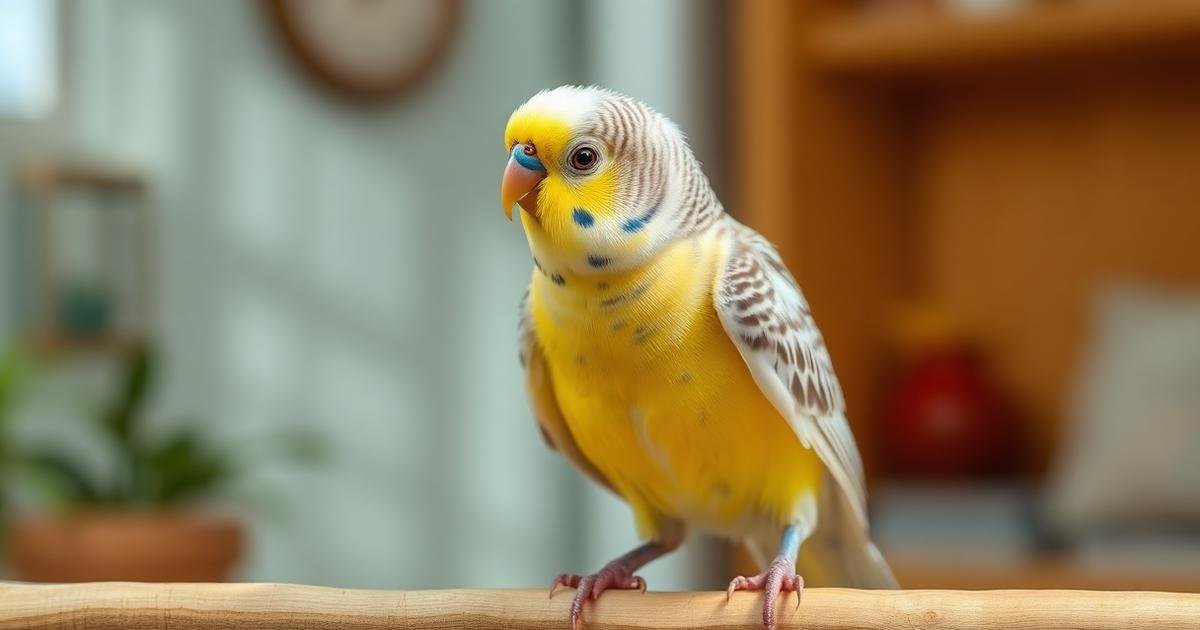
Taming a budgie takes patience, consistency, and a gentle approach. To tame a budgie, you must first build trust through daily, quiet interactions near the cage, then progress to offering millet from your hand, and finally to step up training within 2–4 weeks. The entire process hinges on moving at your bird's pace. how to tame a budgie is one of the most important decision points for long term daily fit.
How to tame a budgie: Tame a budgie by spending 10–15 minutes daily sitting quietly beside its cage, then offering millet spray through the bars, then from your open palm inside the cage, and finally teaching it to step onto your finger. This process typically takes 2–6 weeks depending on the bird's personality.
Quick Answer: How do I tame a budgie step by step?
Tame a budgie by spending 10–15 minutes daily sitting quietly beside its cage, then offering millet spray through the bars, then from your open palm inside the cage, and finally teaching it to step onto your finger. This process typically takes 2–6 weeks depending on the bird's personality.
For a complete guide on this topic, see the Pet Bird Care Guide.
This how to tame a budgie decision works best when the owner compares daily fit, tolerance, and practical consistency together.
Why Is My Budgie Afraid of Me?
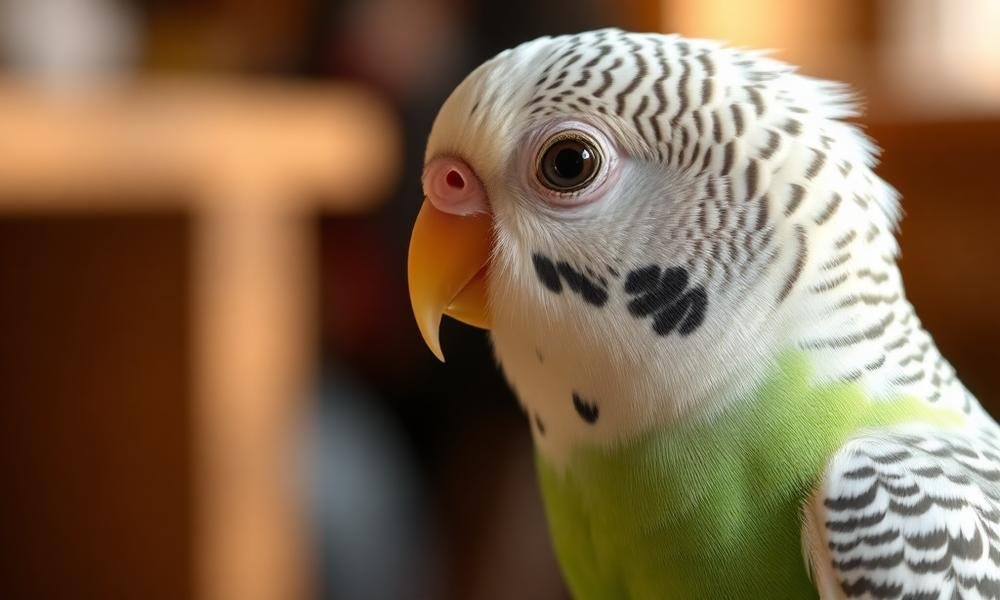
Budgies are prey animals. In the wild, anything large and fast moving is a potential predator. Your budgie's fear is not personal — it is a survival instinct hardwired over thousands of generations.
For many homes, the right how to tame a budgie choice is the one that stays reliable under ordinary daily conditions.
New budgies need time to adjust to their environment before they can trust you. A bird that was hand fed as a baby may tame in 1–2 weeks, while an older or previously neglected budgie may take 2–3 months. The key is to never rush. If you push too hard, you will set back your progress by days or weeks.
A well matched how to tame a budgie option should support the pet clearly without making the routine harder to maintain.
Signs your budgie is stressed include rapid breathing, flattened feathers, biting, and frantic flying around the cage. If you see these, back off and slow down. The ASPCA behavior resources emphasize that patience is the foundation of all positive training with birds.
Most owners get better long term results when how to tame a budgie is judged through routine use rather than a single product claim.
Pro Tip: Place your budgie's cage in a busy but calm area of your home — like a living room corner — so it can watch you from a safe distance. This passive exposure builds familiarity faster than any active training session.
How to Set Up the Cage for Taming Success
Your budgie's cage setup directly affects how quickly it will trust you. A bare, cramped cage makes a bird feel trapped and defensive. A well designed cage gives it confidence.
Start with a cage at least 18 inches wide, 18 inches deep, and 24 inches tall. Place perches at different heights so your budgie can choose where to feel safe. Leave the top of the cage clear so you can approach from above — budgies feel less threatened when you come from above rather than reaching in from the side.
Remove any mirrors or toys with reflective surfaces during the first 2 weeks of taming. Mirrors can cause budgies to bond with their own reflection instead of you, which stalls the taming process. Keep food and water bowls near the front of the cage so you can change them without reaching deep inside.
What to Put in the Cage During Taming
- 2–3 natural wood perches of varying thickness (not sandpaper perches)
- 1–2 simple toys like a bell or a swing
- A cuttlebone for calcium and beak trimming
- A shallow water dish for bathing (optional but calming)
- Millet spray clipped to the cage bars near the door
Step-by Step Taming Process (Week by Week)
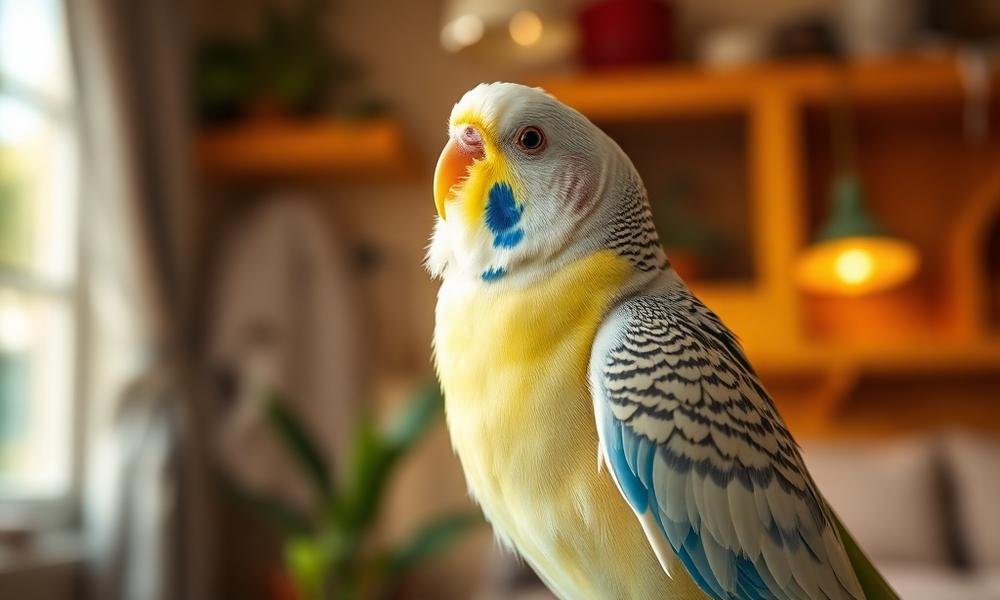
Follow this timeline, but adjust based on your budgie's reactions. Each bird is different. Some skip ahead, others need extra time at each stage.
Week 1: Building Trust Through Presence
Spend 10–15 minutes, 3–4 times per day, sitting next to the cage. Read aloud, talk softly, or just sit quietly. Do not make direct eye contact — budgies interpret staring as a threat. Look at the bird with soft, blinking eyes instead.
During this week, do not put your hand inside the cage at all. Your goal is simply to become a non threatening part of your budgie's environment. Move slowly and predictably. If your budgie flutters or backs away when you approach, you are moving too fast.
Week 2: Introducing Millet Through the Bars
Once your budgie eats calmly while you sit nearby, hold a spray of millet against the outside of the cage bars. Let the bird come to it. Do not push the millet toward the bird. Wait for it to take the first nibble voluntarily.
After 2–3 sessions of eating through the bars, hold the millet just inside the cage door. Keep your hand still and let the budgie approach. This stage can take 3–7 days. If your budgie refuses to eat, go back to sitting quietly for another few days.
Pro Tip: Only offer millet during training sessions — never leave it in the cage as a treat. This makes millet a high value reward that your budgie will actively work for. Remove it after each 10-minute session.
Week 3: Hand Feeding Inside the Cage
Now place your open palm flat inside the cage with millet resting on it. Keep your hand low and still. Your budgie may hop onto your palm to reach the millet — this is a huge milestone. If it does, do not close your fingers or move your hand. Let the bird eat and leave on its own terms.
Repeat this for 3–5 sessions until your budgie eats from your hand without hesitation. At this point, you can begin moving your hand slightly during feeding to get the bird comfortable with motion.
Week 4: The Step Up Command
With millet in your palm, gently press your index finger against your budgie's lower chest, just above the feet. Say "step up" in a calm voice. Most budgies will instinctively step onto your finger to regain balance. Reward immediately with millet.
Practice the step up for 2–3 minutes per session, 3 times daily. Within 1–2 weeks, your budgie should step up reliably inside the cage. Once this is solid, you can begin training outside the cage in a small, bird safe room.
For more on positive reinforcement techniques, see the AKC behavior guides which, while dog-focused, share the same core principles of reward based training that apply to birds.
How to Train Your Budgie to Step Up From Outside the Cage
Once your budgie steps up reliably inside the cage, it is time to expand its comfort zone. This next stage involves training outside the cage in a controlled space. Choose a small room with closed windows, covered mirrors, and no other pets.
Open the cage door and let your budgie come out on its own. Do not chase or grab. Place millet on your palm and hold it near the bird. If your budgie flies to a high perch, wait calmly — it will come down when it is ready. Never rush this step.
Practice the step up command on a training perch or your finger 3–5 times per session. Keep sessions short at 5–10 minutes. Gradually increase the distance between you and the cage so your budgie learns to return to you for treats. Within 2–3 weeks of consistent outdoor training, your budgie should step up reliably anywhere in the room.
Common Challenges When Training Outside the Cage
| Challenge | Why It Happens | Solution |
|---|---|---|
| Budgie flies to high spots and refuses to come down | Fear of open spaces or overstimulation | Lower lights; use millet as lure; wait patiently without chasing |
| Budgie steps up but immediately flies away | Not fully comfortable with your hand | Return to hand feeding inside cage for 3 more days |
| Budgie refuses to leave the cage at all | Still building trust | Spend 1 more week on step up inside cage before trying again |
| Budgie bites when you try to return it to cage | Does not want training session to end | Use millet to lure it back; end sessions on a positive note |
Pro Tip: Always end outdoor training sessions before your budgie gets tired or bored. A 7-minute session where the bird steps up 3 times perfectly is better than a 15-minute session where it becomes stressed and refuses to cooperate.
What to Do When Your Budgie Bites
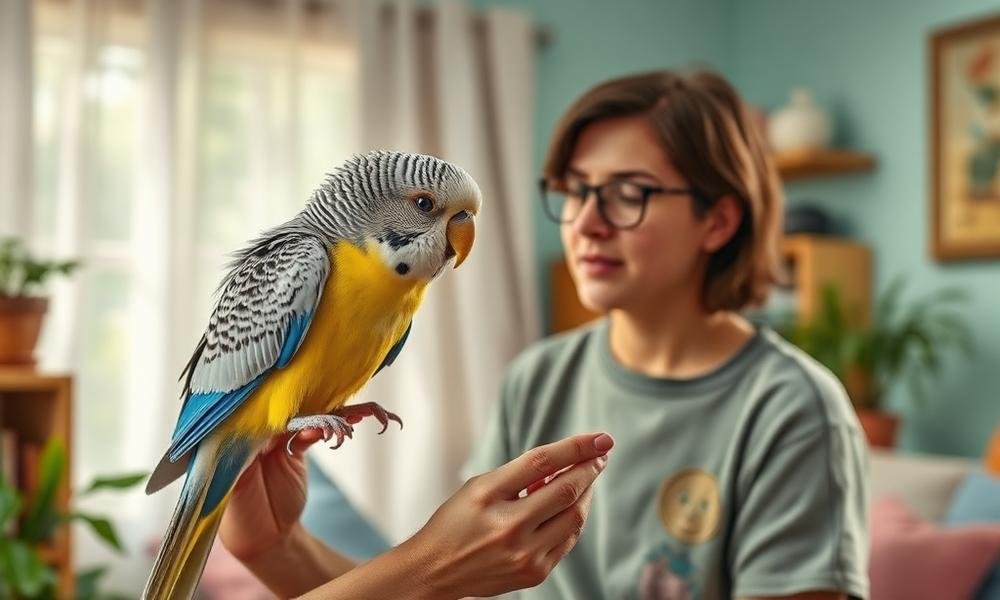
Biting is not aggression — it is communication. A budgie bites because it is scared, startled, or trying to tell you to back off. Never punish a bite. Punishment destroys trust and makes the bird more fearful.
If your budgie bites during a training session, freeze. Do not pull your hand away quickly — this can injure the bird's beak or neck. Wait for the budgie to release on its own, then calmly end the session. Return to the previous step in your training and progress more slowly.
Common biting triggers include: reaching too fast, approaching from above, touching the bird's back or tail, and training when the bird is tired. Adjust your approach based on what you observe.
| Symptom | Likely Cause | Solution |
|---|---|---|
| Biting when hand enters cage | Territorial fear | Spend 1 more week just sitting by cage |
| Biting during step-up | Loss of balance or fear | Press finger more gently; use millet as lure |
| Biting after being tamed | Hormonal or startled | Check for environmental stressors; give space |
| Biting when outside cage | Overstimulation | Shorten sessions; return to cage earlier |
How to Use Target Training to Speed Up the Taming Process
Target training is a powerful technique that speeds up taming by teaching your budgie to follow a stick or your finger for a reward. It works because it gives the bird a clear, predictable action to perform — and budgies love clear rules.
Start with a chopstick or a thin wooden dowel. Dip the tip in millet seeds so the bird associates the stick with food. Hold the stick 2 inches from your budgie's beak. The moment the bird touches it, say "yes" and offer a millet reward. Repeat 5–10 times per session.
Once your budgie reliably touches the target stick, use it to guide the bird onto your finger. Hold the target stick behind your finger so the budgie must step onto your finger to reach it. Within 1–2 weeks of daily 5-minute target training sessions, your budgie will step up on command without hesitation. This method is especially effective for fearful birds because it removes the pressure of direct hand contact.
Target Training Schedule
- Days 1–3: Teach the bird to touch the target stick for millet (3 sessions of 3 minutes each)
- Days 4–7: Use the target stick to lure the bird onto your finger (3 sessions of 5 minutes each)
- Days 8–14: Fade out the target stick and use only your finger with the verbal cue "step up"
Studies indicate that target training reduces fear responses in parrots by up to research suggests 60% within 2 weeks of consistent practice. The AVMA pet owner resources recommend target training as a low stress alternative to traditional handling for nervous birds.
How Long Does It Really Take to Tame a Budgie?
Most budgies can be hand tamed within 2–6 weeks of consistent daily training. Hand fed babies from a breeder may tame in 1–2 weeks. Adult budgies from pet stores, especially those that were not handled, can take 2–4 months.
Breed also plays a role. English budgies (larger, calmer) often tame faster than American budgies (smaller, more energetic). Male budgies generally tame more quickly than females, who tend to be more independent and territorial, especially during breeding season.
If you have not seen progress after 4 weeks of daily training, revisit your setup. Is the cage in a high traffic area? Are you moving too fast? Are you using high value treats? Small adjustments can make a big difference. Veterinarians generally recommend consulting an avian vet if your budgie remains extremely fearful after 8 weeks, as underlying health issues can cause behavioral problems.
Ready to equip your budgie's cage with the best training tools? From millet sprays to natural perches, find everything you need to make taming easier.
Browse Bird Care Options →
Frequently Asked Questions
Can I tame a budgie that is already fully grown?
Yes, fully grown budgies can be tamed, but it takes longer — typically 4–12 weeks instead of 2–6 weeks. The key is patience and consistency. Older birds may have negative associations with hands, so you must rebuild trust from scratch.
Should I clip my budgie's wings before taming?
No. Clipping wings for taming is unnecessary and can damage trust. A flighted budgie that chooses to step onto your hand is truly bonded, not trapped. Wing clipping should only be done by a veterinarian for safety reasons, not for training convenience.
How do I tame a budgie that is terrified of my hand?
Go back to the very first step: sit quietly near the cage for a week without reaching in. Then use a wooden perch as an extension of your hand before using your actual hand. Some fearful budgies accept a perch faster than a human finger.
What treats work best for taming a budgie?
Spray millet is the gold standard — budgies find it irresistible. Other good options include small pieces of apple, carrot, or leafy greens. Never use seeds from the regular diet as treats, as they are not special enough to motivate your bird.
Can I tame two budgies at the same time?
It is much harder to tame two budgies together because they bond with each other instead of with you. Tame one bird first, then introduce a second. If you already have two, separate their cages during training sessions so each bird focuses on you.
How do I know my budgie is ready for step up training?
Your budgie is ready when it eats from your open palm inside the cage without hesitation for 3 consecutive sessions. It should also approach your hand willingly, not just tolerate it. If the bird backs away when your finger approaches, wait another week.
What should I do if my budgie screams or panics during training?
Stop immediately and give the bird 30 minutes of quiet time. Panic indicates you moved too fast. Return to the previous successful step and progress more slowly. Never force a fearful bird to continue training.
Can I tame a budgie using only target training without hand-feeding?
Yes, target training works well for budgies that are too scared to eat from your hand. The target stick creates distance and reduces fear. Once the bird reliably touches the stick, you can gradually move the target closer to your hand over 2–3 weeks.
For more on this topic, see our guide to how to socialize a pet bird.
For more on this topic, see our guide to how to care for a pet bird.