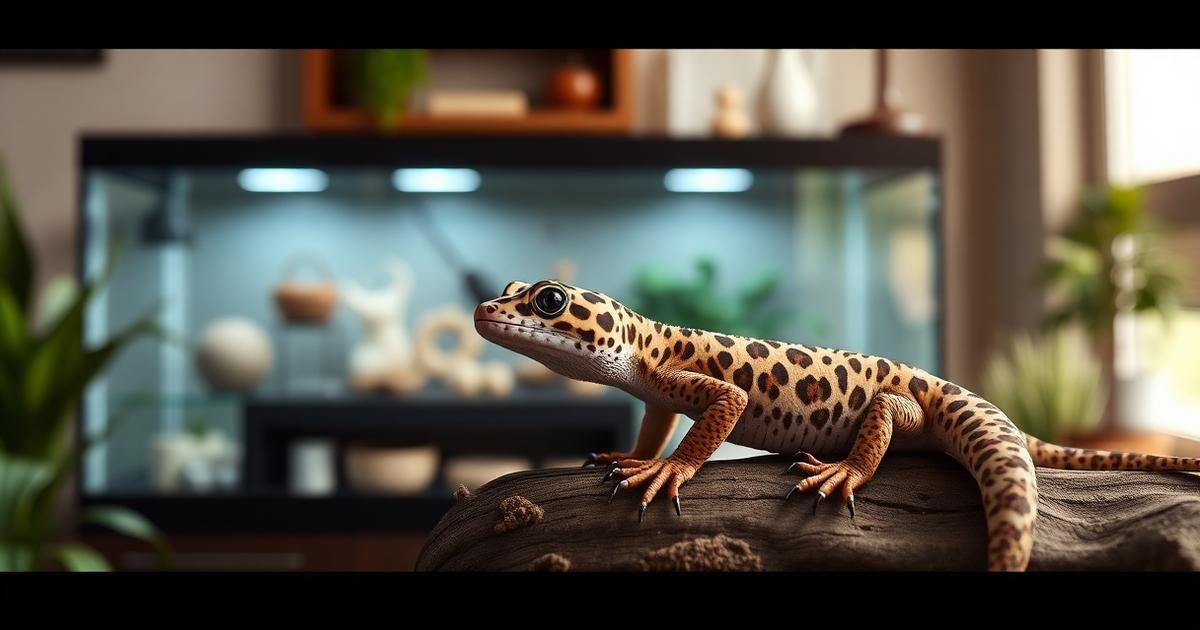
Finding the best leopard gecko tank setup is the single most important step in giving your pet a long, healthy life. A proper enclosure is not just a glass box; it is a carefully controlled environment that mimics their natural arid habitat. The best setup prioritizes three things: a secure floor space of at least 20 gallons for an adult, a temperature gradient with a 90-95°F basking spot, and three properly placed hides (hot, cool, and humid).
Best leopard gecko tank setup: The best leopard gecko tank setup is a 20-gallon long terrarium (30"x12"x12") with a front-opening design for easy access. You need a heat mat or deep heat projector on a thermostat, a 5-7% UVB bulb, and three hides (hot, cool, humid) made from slate or resin. Use paper towels for the first month, t
Quick Answer: What is the best leopard gecko tank setup for a beginner?
The best leopard gecko tank setup is a 20-gallon long terrarium (30"x12"x12") with a front opening design for easy access. You need a heat mat or deep heat projector on a thermostat, a 5-7% UVB bulb, and three hides (hot, cool, humid) made from slate or resin. Use paper towels for the first month, then switch to a 70/30 mix of topsoil and play sand.
For a complete guide on this topic, see the Reptile Care Guide.
What size tank does a leopard gecko actually need?
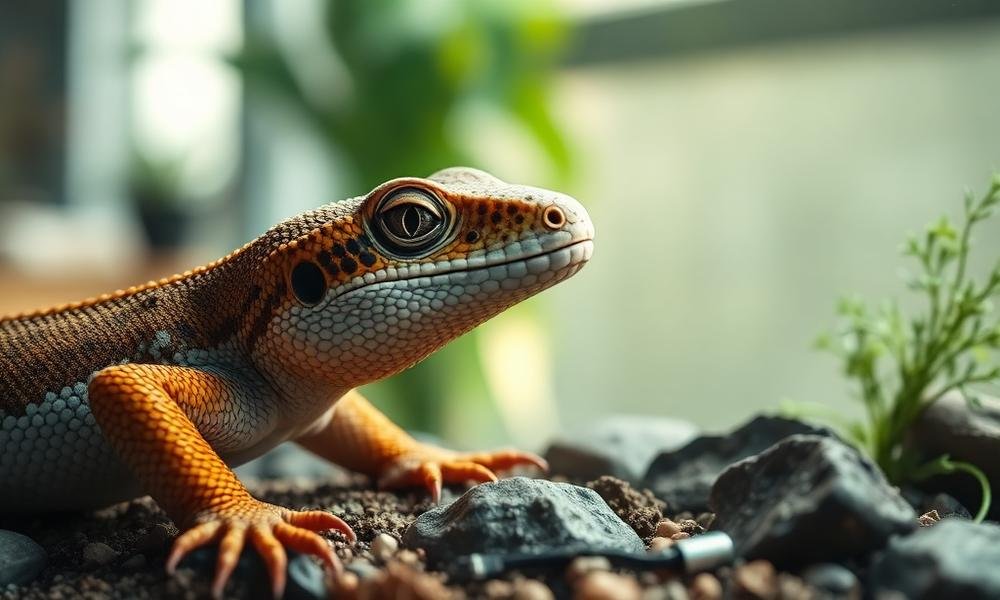
Forget the old rule that a 10-gallon tank is fine. Most adult leopard geckos reach 7-10 inches long, and a 10-gallon tank is simply too small to create a proper temperature gradient. You need a 20-gallon long (30 inches by 12 inches by 12 inches) as the absolute minimum for a single adult.
A larger tank, like a 40-gallon breeder, offers even better temperature regulation and more enrichment space. Your gecko will use every inch of that space to explore and hunt. The extra floor space also prevents obesity by encouraging natural movement.
Front opening terrariums are far superior to top opening aquariums. They give you easy access for feeding and cleaning without reaching down from above, which can trigger a predator response in your gecko. Brands like Exo Terra and Zoo Med make excellent front opening options.
Pro Tip: Measure your available space before buying. A 20-gallon long tank is 30 inches wide — it won't fit on a standard 18-inch bookshelf. Plan for a dedicated reptile stand or sturdy table.
For juvenile geckos, start with a 10-gallon tank or a large plastic tub. This smaller space helps them feel secure and find their food easily. You can upgrade to the 20-gallon long once they reach 6-8 months old and are eating consistently.
What are the essential components for a leopard gecko tank setup?
Your best leopard gecko tank setup needs five non negotiable components: a heat source, a thermostat, a UVB light, three distinct hides, and a safe substrate. Missing any one of these can lead to health problems like metabolic bone disease, respiratory infections, or chronic stress.
Heating and temperature control
Leopard geckos are ectothermic — they rely on external heat to digest food and regulate their metabolism. You need a temperature gradient from 75°F on the cool side to 90-95°F on the hot side. A heat mat under the tank covers one third of the floor, paired with a thermostat to prevent burns.
Deep heat projectors (DHPs) are becoming the gold standard. They produce infrared A and infrared B heat that penetrates deeper into muscle tissue than heat mats. This mimics natural sunlight more closely and promotes better digestion. Always use a thermostat with any heat source — it is not optional.
Nighttime temperatures can drop to 68-72°F. If your home gets colder than that, use a ceramic heat emitter (CHE) on a thermostat. Never use red or blue lights at night — they disrupt your gecko's sleep cycle and can cause eye strain.
Lighting and UVB
While leopard geckos are crepuscular (active at dawn and dusk), they still benefit from low level UVB lighting. A 5-7% UVB bulb running 10-12 hours a day helps them synthesize vitamin D3, which is critical for calcium absorption. Without it, they are at high risk for metabolic bone disease.
Place the UVB bulb over the warm side of the tank, about 12-14 inches from the basking surface. Use a reflector hood to maximize output. Replace the bulb every 6-12 months even if it still looks bright — UVB output degrades over time.
Substrate options
Paper towels are the safest substrate for the first 30 days of ownership. They allow you to monitor your gecko's droppings for signs of parasites or illness. After that quarantine period, switch to a loose substrate that allows digging.
A 70/30 mix of organic topsoil (no fertilizers or perlite) and washed play sand is the best naturalistic option. It holds burrows well and mimics their native habitat. Avoid calcium sand, walnut shells, or reptile carpet — these can cause impaction if ingested or snag claws.
Pro Tip: If you are nervous about loose substrate, use slate tiles or ceramic tile. They are easy to clean, hold heat well, and provide a solid surface for feeding. Just make sure the tiles are not slippery when dry.
The three hide rule
Every best leopard gecko tank setup must have three hides: one on the hot side, one on the cool side, and one humid hide in the middle. The hot hide allows thermoregulation after meals. The cool hide gives them a retreat when they need to lower body temperature.
The humid hide is critical for shedding. Fill it with moist sphagnum moss or paper towels. Your gecko will use it to loosen stuck shed, especially around the toes and eyes. Check the humidity in this hide daily and re mist as needed.
Hides should be snug, dark, and have a single entrance. Your gecko should feel the walls touching its body when inside — this provides security. Resin caves, cork bark rounds, and half logs all work well.
Ready to build your gecko's perfect home? We've curated the best tanks, heaters, and hides for a stress free setup.
Browse Reptile Options →
How do you set up the tank step by step?
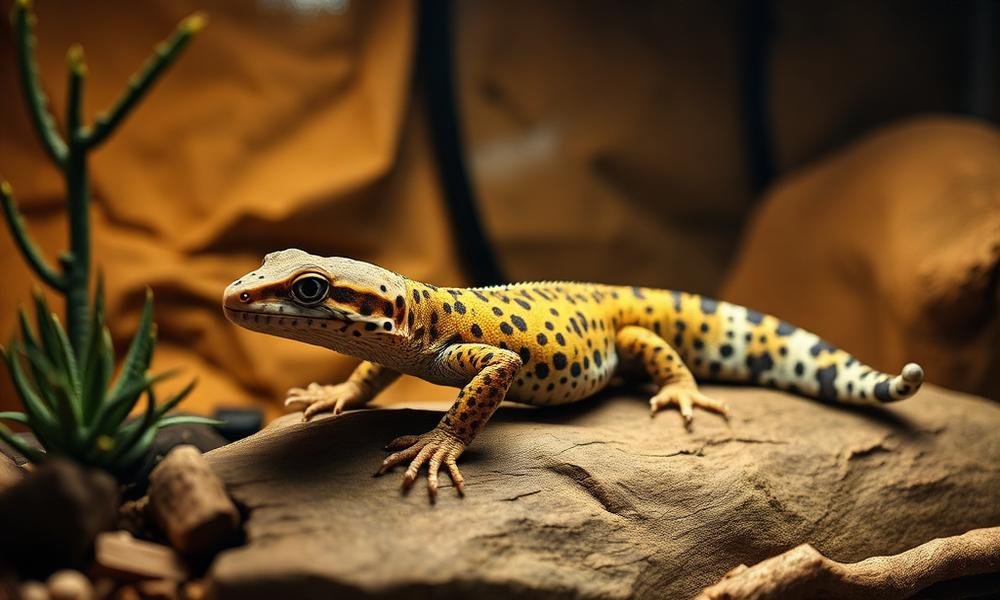
Start by placing your tank in a quiet room away from direct sunlight, drafts, and loud appliances like TVs or washing machines. Leopard geckos are sensitive to vibrations and sudden noise. A bedroom or home office works well — avoid the kitchen or living room.
Install your heat source first. If using a heat mat, stick it to the bottom of the tank on one side only. Connect it to the thermostat probe, placing the probe directly on the glass above the mat. Set the thermostat to 92°F and let it run for 2 hours to stabilize.
Add your substrate next. For loose substrate, pour in 2-3 inches and pat it down firmly. Create a slight slope from the warm side to the cool side — this helps with temperature gradient and gives your gecko varied terrain. Place the three hides on each side and in the middle.
Add decor like cork bark, driftwood, and fake plants. These provide climbing opportunities and visual barriers that reduce stress. Avoid sharp rocks or heavy objects that could fall and injure your gecko. Use silicone to secure stacked rocks if you want a rock wall.
Install the UVB light and set the timer for 10-12 hours on, 12-14 hours off. Fill a shallow water dish (large enough for your gecko to soak in but shallow enough to prevent drowning) on the cool side. Mist the humid hide with dechlorinated water.
Let the tank run for 48-72 hours before adding your gecko. Monitor temperatures with a digital thermometer on both ends and an infrared temp gun for spot-checking. Adjust the thermostat as needed until the gradient is stable.
Pro Tip: Do a "poop test" before adding your gecko. Put a cricket in the tank and watch where it goes. If it stays on the cool side, your hot side might be too hot. If it dies quickly, your tank might be too dry. Adjust based on what you observe.
What are the best leopard gecko tank brands and products?
When shopping for the best leopard gecko tank setup, focus on quality over price. A cheap tank with poor seals or flimsy hinges will fail within a year. Here are the top brands and products that reptile keepers consistently recommend.
Best tanks
The Exo Terra Glass Terrarium (36"x18"x18") is the gold standard for a single adult. It has front opening doors, a screen top for ventilation, and a raised bottom frame that prevents heat mat damage. The 36-inch length gives your gecko plenty of room for a proper gradient.
The Zoo Med ReptiHabitat (20-gallon long) is a solid budget option. It has a front opening design and a locking screen top. The glass is slightly thinner than Exo Terra, but it holds up well for years. Just add weather stripping to the doors to prevent heat loss.
For keepers who want a bioactive setup, the Carolina Custom Cages 24"x18"x18" is excellent. It has a water resistant base and a sliding screen top. The 24-inch length is slightly shorter than ideal for an adult, but it works well for juveniles or smaller females.
Best heating and lighting
The Arcadia Deep Heat Projector (80W) is the best heat source for leopard geckos. It produces infrared A and B without light, so it can run 24/7. Pair it with the Herpstat 2 thermostat for precise control — this combo eliminates temperature swings.
For UVB, the Arcadia ShadeDweller research suggests 7% is purpose built for desert dwelling reptiles. It fits in a compact 12-inch fixture and provides safe UVB levels at 12-14 inches. The Zoo Med ReptiSun 5.0 T5 HO is another reliable option that works well in a 24-inch fixture.
Best hides and decor
The Zilla Rock Lair (medium) is the perfect hot hide. Its thick ceramic walls hold heat well and provide a snug, dark space. The Exo Terra Reptile Cave (large) works great as a cool hide — it has a flat top that your gecko can bask on.
For the humid hide, the Thrive Reptile Humid Hide is a pre made option with a removable top for easy cleaning. You can also make your own with a small plastic container, a hole cut in the lid, and damp sphagnum moss inside. DIY options are cheaper and just as effective.
| Feature | Budget Pick | Best Value | Premium Choice |
|---|---|---|---|
| Tank | Zoo Med ReptiHabitat 20L | Exo Terra 36"x18"x18" | Carolina Custom Cages 36" |
| Heat Source | Fluker's Heat Mat (16W) | Arcadia DHP 80W | Herpstat 2 + Arcadia DHP |
| UVB | Zoo Med ReptiSun 5.0 | Arcadia ShadeDweller research suggests 7% | Arcadia ShadeDweller + reflector |
| Thermostat | BN LINK Digital | Inkbird ITC-308 | Herpstat 2 |
| Substrate | Paper towels | 70/30 topsoil/sand mix | Bioactive Terra Sahara kit |
Pro Tip: Buy your thermostat first, before the heat source. A thermostat is the only thing that prevents your gecko from getting burned. Spend at least $40 on a quality digital thermostat — cheap analog ones are unreliable and dangerous.
How do you maintain a leopard gecko tank?
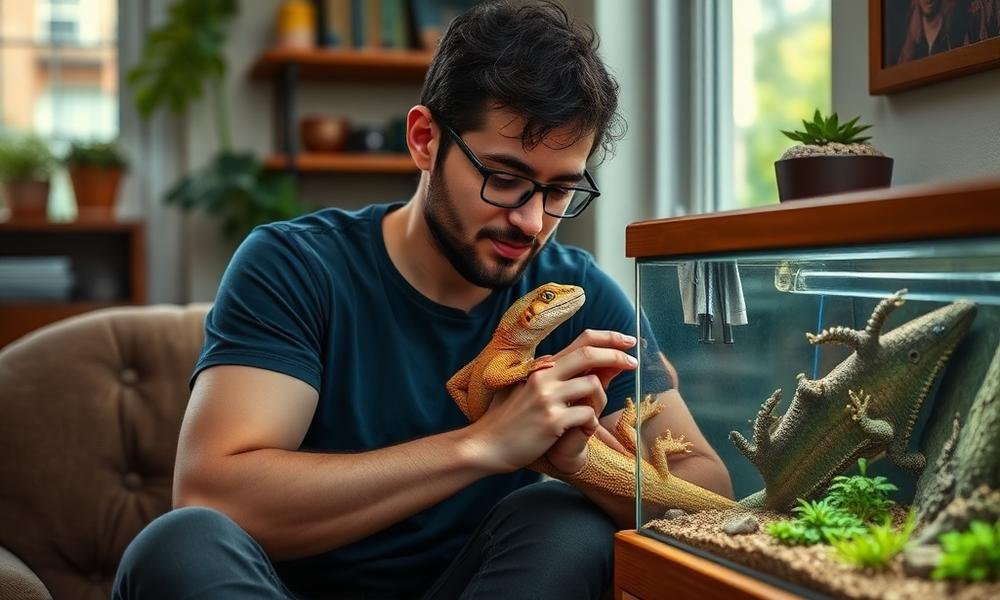
Daily maintenance takes less than 5 minutes. Remove any visible droppings, uneaten insects, and shed skin. Check the water dish and refill with dechlorinated water. Mist the humid hide if it feels dry to the touch. Spot check temperatures with your infrared gun.
Weekly maintenance is more thorough. Replace the substrate in the humid hide completely. Wipe down the glass with a 50/50 vinegar and water solution — never use soap or bleach. Clean the water dish with hot water and a scrub brush. Check the thermostat probe placement to ensure it hasn't moved.
Monthly maintenance includes a full substrate change if using loose substrate. For tile or paper towels, just replace them entirely. Deep clean the hides and decor by soaking them in a research suggests 10% bleach solution for 15 minutes, then rinsing thoroughly with hot water. Let everything air dry completely before returning it to the tank.
Replace your UVB bulb every 6 months even if it still lights up. UVB output decreases by 30-50% within 6 months of use. Mark your calendar with the replacement date so you don't forget. Your gecko's bone health depends on consistent UVB exposure.
For broader reference and guidance, akc.org provides useful context on pet health and care decisions.
For broader reference and guidance, petmd.com provides useful context on pet health and care decisions.
Frequently Asked Questions
Can I use a 10-gallon tank for an adult leopard gecko?
No. A 10-gallon tank is too small to create a proper temperature gradient for an adult leopard gecko. Use a 10-gallon only for juveniles under 6 months old. Adults need at least a 20-gallon long (30"x12"x12") to thrive.
What is the best substrate for leopard geckos?
A 70/30 mix of organic topsoil and washed play sand is the best naturalistic substrate. It allows digging, holds burrows, and is safe if ingested in small amounts. Avoid calcium sand, walnut shells, and reptile carpet — they cause impaction or injury.
Do leopard geckos need UVB light?
Yes. Low level UVB (5-7%) helps your gecko synthesize vitamin D3, which is essential for calcium absorption and bone health. Without UVB, they are at high risk for metabolic bone disease even with calcium supplements. Run it 10-12 hours daily.
How many hides does a leopard gecko need?
Your gecko needs three hides minimum: one on the hot side, one on the cool side, and one humid hide in the middle. The hot and cool hides allow thermoregulation. The humid hide provides moisture for shedding and prevents stuck shed.
Can I use a heat lamp for a leopard gecko?
Heat lamps are not ideal because they dry out the air and emit light that disrupts your gecko's sleep cycle. Use a heat mat or deep heat projector instead. Both provide belly heat without light, which is more natural for this nocturnal species.
How often should I clean my leopard gecko tank?
Spot clean droppings and uneaten food daily. Do a full substrate change and deep clean of decor once a month. Replace the humid hide substrate weekly. Clean the water dish with hot water and a scrub brush every 2-3 days.