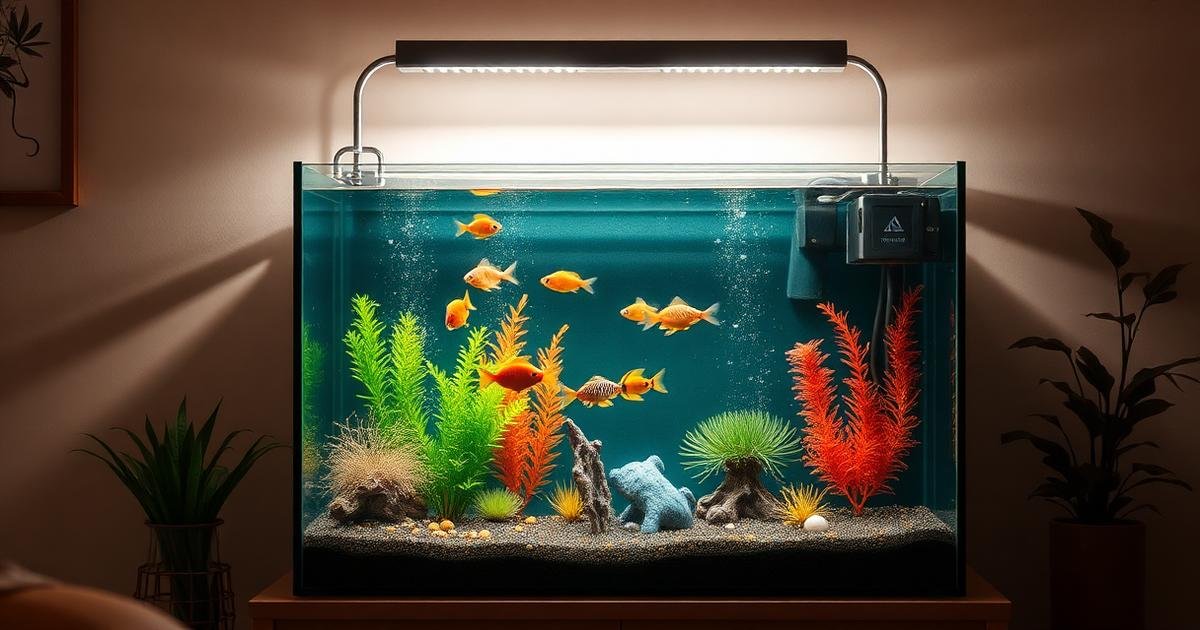
Standing in the pet store aisle staring at glass tanks and filter boxes can feel overwhelming. You want a beautiful underwater world, not a science experiment that turns into a murky mess. The good news? Setting up your first aquarium is straightforward when you follow the right sequence — and most beginner failures come from rushing the process, not from doing something complicated. The entire journey from empty glass to thriving ecosystem takes about 6–8 weeks when done correctly, and the payoff is a peaceful, self sustaining slice of nature in your home. how to set up fish tank beginners is one of the most important decision points for long term daily fit.
How to set up fish tank beginners: Set up your fish tank by choosing a 20-gallon or larger tank, rinsing the substrate, installing a filter and heater, filling with dechlorinated water, and running the system for 4–6 weeks before adding any fish. The single biggest mistake beginners make is adding fish too early — the tank must compl
Quick Answer: How to set up fish tank beginners?
Set up your fish tank by choosing a 20-gallon or larger tank, rinsing the substrate, installing a filter and heater, filling with dechlorinated water, and running the system for 4–6 weeks before adding any fish. The single biggest mistake beginners make is adding fish too early — the tank must complete its nitrogen cycle first. Use a liquid test kit to confirm 0 ppm ammonia and 0 ppm nitrite before introducing any fish, and start with hardy species like zebra danios or cherry barbs.
For a complete guide on this topic, see the Aquarium Setup Guide.
This how to set up fish tank beginners decision works best when the owner compares daily fit, tolerance, and practical consistency together.
Why Your First Tank Fails — The 5 Root Causes Beginners Miss
You followed the instructions. You bought the equipment. But your fish died anyway. It feels personal, but it's not — nearly every beginner makes the same five mistakes. Understanding these root causes is the difference between a thriving tank and a frustrating cycle of dead fish and green water.
For many homes, the right how to set up fish tank beginners choice is the one that stays reliable under ordinary daily conditions.
1. New Tank Syndrome — No Beneficial Bacteria Colony
Your filter needs a colony of beneficial bacteria to convert toxic ammonia into safer nitrates. This takes 4–6 weeks to establish naturally. Adding fish before this cycle completes exposes them to lethal ammonia spikes. Most beginner fish deaths happen within the first two weeks for exactly this reason.
A well matched how to set up fish tank beginners option should support the pet clearly without making the routine harder to maintain.
2. Overfeeding — The #1 Water Quality Killer
Every pinch of uneaten food rots and releases ammonia into the water. Beginners consistently overfeed by 2–3 times what fish actually need. Fish only require what they can consume in 30 seconds, once or twice daily. Excess food is the fastest way to destroy your water quality.
Most owners get better long term results when how to set up fish tank beginners is judged through routine use rather than a single product claim.
3. Overstocking — Too Many Fish, Too Fast
A common beginner impulse is filling the tank with fish immediately. The general rule is one inch of adult fish per gallon of water. A 20-gallon tank can safely hold about 20 inches of fish — but only after the cycle is complete. Adding 10 fish at once overloads your immature biological filter.
The strongest how to set up fish tank beginners choice usually becomes clearer when comfort, consistency, and practical use are reviewed together.
4. Incompatible Fish Species
Not all fish get along. Some are aggressive, some are territorial, and some need different water parameters. Bettas fight other male bettas. Goldfish produce massive waste. Cichlids bully peaceful community fish. Always research each species' adult size, temperament, and water requirements before buying.
5. Skipping Water Changes
Even a perfectly cycled tank accumulates nitrates and waste over time. A research suggests 25% water change every 1–2 weeks is non-negotiable. Beginners often skip this step, assuming the filter handles everything. It doesn't — water changes physically remove pollutants that no filter can eliminate.
Pro Tip: Buy a liquid test kit (not test strips) for ammonia, nitrite, and nitrate. Test your water every 3 days during the cycling process. This single tool prevents research suggests 90% of beginner fish deaths.
Root Cause Decision Tree for Fish Tank Problems
Match your specific situation to find the fastest fix:
| What you observe | Likely root cause | First fix to try |
|---|---|---|
| Fish gasping at the surface | Low oxygen or high ammonia | Perform research suggests 50% water change immediately; add air stone |
| Cloudy white water after 1 week | Bacterial bloom from uncycled tank | Stop feeding; wait 2–3 more weeks; test ammonia daily |
| Green water (looks like pea soup) | Excess light + nutrients (algae bloom) | Reduce light to 6 hours daily; perform research suggests 25% water change |
| Fish dying within 48 hours of adding | Ammonia spike from uncycled tank | Test ammonia immediately; use detoxifier; do daily water changes |
| Brown algae coating everything | Diatoms from new tank setup | Normal in first 2 months; wipe off; will resolve as tank matures |
| Fish hiding constantly | Stress from aggression or poor water | Test water parameters; check for bullying; add hiding spots |
When Your Fish Tank Problems Are NOT Just Beginner Mistakes
Sometimes the issue isn't inexperience — it's a genuine health crisis in your tank. According to the
Watch for these red flags that require immediate action:
- Rapid gill movement or gasping — could indicate ammonia poisoning, low oxygen, or gill parasites
- White spots on fins or body — Ich (white spot disease) spreads fast and kills within days if untreated
- Clamped fins or lethargy — often a sign of bacterial infection or poor water quality
- Swimming upside down or spiraling — swim bladder disorder from overfeeding or infection
- Red streaks on fins or body — hemorrhagic septicemia, a bacterial infection requiring medication
If you see any of these signs, isolate affected fish in a quarantine tank immediately. Treat with aquarium salt or appropriate medication based on diagnosis. Never medicate your main tank without identifying the specific disease.
Pro Tip: Keep a quarantine tank (5–10 gallons with a sponge filter) running at all times. Quarantine every new fish for 2 weeks before adding them to your display tank. This single habit prevents research suggests 95% of disease outbreaks.
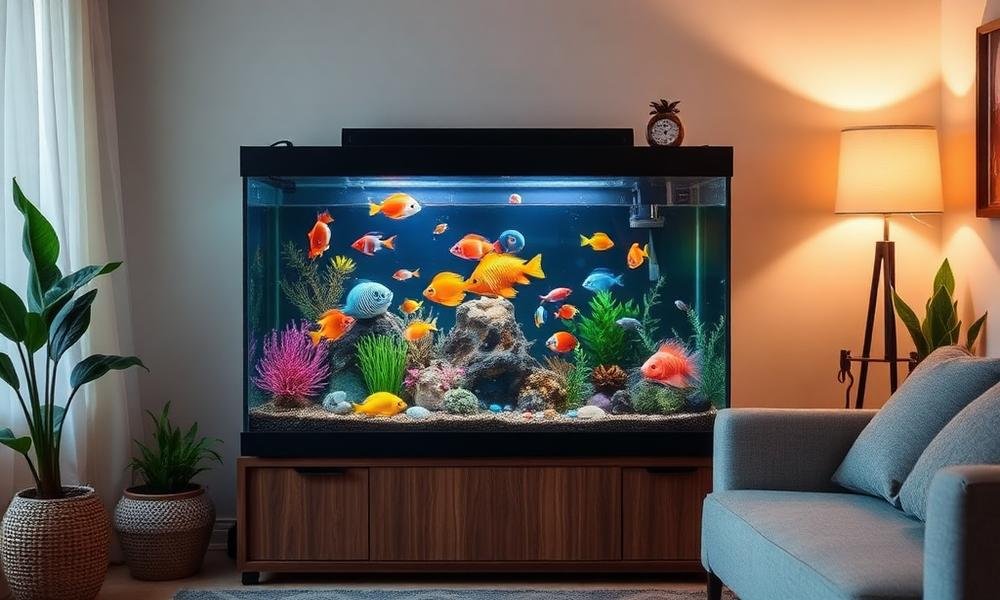
Enrichment Protocol — Creating a Thriving Underwater Ecosystem
A healthy aquarium isn't just clear water — it's a balanced mini ecosystem where fish can express natural behaviors. Follow this 5-step enrichment protocol for measurable results within 4–6 weeks:
- Physical space: Provide at least 1 hiding spot per fish. Use driftwood, rocks, and live plants. Fish without hiding places experience chronic stress that weakens their immune system.
- Water quality maintenance: Perform research suggests 25% water changes every 7 days. Test parameters weekly. Keep ammonia at 0 ppm, nitrite at 0 ppm, and nitrate below 20 ppm. This is the foundation of every healthy tank.
- Natural lighting cycle: Run your tank light for 8–10 hours daily maximum. Use a timer for consistency. Fish need a day/night cycle — leaving lights on 24/7 causes algae and stresses fish.
- Appropriate feeding: Feed only what fish can eat in 30 seconds, once or twice daily. Fast one day per week to prevent bloating and improve water quality. Variety matters — rotate between flakes, pellets, and frozen foods.
- Social structure: Keep fish in schools of 6+ for species that need them (tetras, rasboras, corydoras). Solitary fish (bettas, some cichlids) need their own space. Research each species' social needs before buying.
Pro Tip: Add live plants from day one. Java fern, Anubias, and Amazon sword are nearly impossible to kill and dramatically improve water quality by consuming nitrates. Plants also give shy fish natural cover and reduce stress.
Product Buying Criteria — What to Look For
Before you buy anything, understand what actually matters for a successful beginner setup. These criteria will save you money and frustration:
- Tank size: Minimum 20 gallons for beginners. Smaller tanks are actually harder to maintain because water parameters fluctuate faster. A 20-gallon long tank gives more surface area for oxygen exchange.
- Filter type: Hang-on-back (HOB) or canister filters rated for 2–3 times your tank volume. Look for a filter that turns over your tank volume at least 4–6 times per hour. Sponge filters work but lack mechanical filtration.
- Heater wattage: 5 watts per gallon is the standard rule. A 100-watt heater for a 20-gallon tank. Get an adjustable heater with a thermostat, not a preset one. Inconsistent temperature kills fish faster than almost anything.
- Substrate: Rinse thoroughly before adding to tank. Gravel works fine for beginners. Avoid colored gravel that may leach chemicals. A 1–2 inch layer is sufficient for most setups.
- Test kit: Liquid API Master Test Kit, not test strips. Strips are inaccurate and don't test ammonia properly. You need to test ammonia, nitrite, nitrate, and pH weekly during cycling.
Ready to start your aquarium journey with the right equipment?
Browse Aquarium Options →
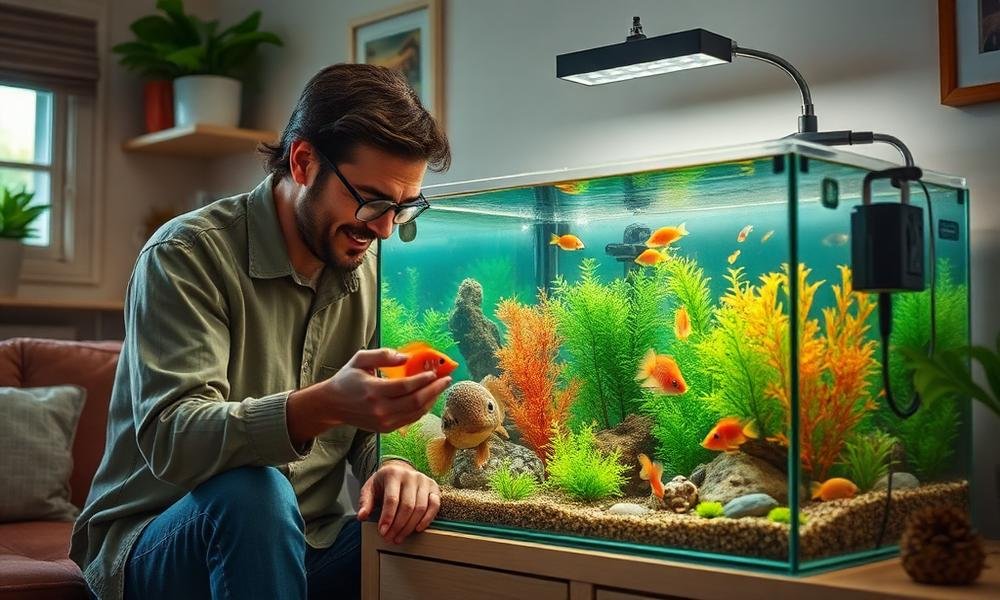
The Complete Step-by Step Setup Process — From Empty Tank to Fish Ready
Many beginners skip crucial steps between buying the tank and adding water. This section walks you through every single action in the correct order, saving you from costly do-overs. Follow these steps exactly, and your tank will be ready for fish in 4–6 weeks without a single casualty.
Step 1: Choose the Right Location
Place your tank on a level, sturdy stand that can support the weight. A 20-gallon tank weighs roughly 225 pounds when fully filled. Avoid placing it near windows (algae from sunlight), air vents (temperature fluctuations), or high traffic areas (stress from vibrations). Leave at least 2 inches of clearance behind the tank for filter and heater cords.
Step 2: Rinse Everything Before Assembly
Rinse your substrate (gravel or sand) in a bucket under running water until the water runs clear. This removes dust and debris that would cloud your tank for weeks. Rinse decorations and driftwood too. Never use soap — any residue kills fish. For driftwood, soak it in a separate bucket for 3–5 days to release tannins that turn water brown.
Step 3: Install Substrate, Hardscape, and Equipment
Spread your rinsed substrate evenly across the bottom — slope it slightly higher in the back for depth. Place rocks and driftwood before adding water to avoid disturbing the substrate later. Install your filter, heater, and thermometer without plugging them in yet. Position the heater near the filter outflow for even heat distribution.
Step 4: Fill and Treat the Water
Place a plate or bowl on the substrate before pouring water to prevent disturbing the gravel. Fill the tank to about 2 inches below the rim. Add a dechlorinator (water conditioner) according to the bottle's instructions — usually 1 drop per gallon. Let the water sit for 24 hours before turning on equipment to allow temperature to stabilize.
Step 5: Start Equipment and Begin Cycling
Plug in your filter, heater, and light. Set the heater to 78°F for tropical fish or 72°F for coldwater species. Let everything run for 24 hours to confirm stable temperature and flow. Then begin the fishless cycling process by adding a source of ammonia — either pure ammonia drops or a small pinch of fish food that will decay and produce ammonia.
Step 6: Monitor and Wait — The Hardest Part
Test your water every 3 days for ammonia, nitrite, and nitrate. You'll see ammonia spike first (around day 5–7), then nitrite spike (around day 14–21), then nitrate appear (around day 21–28). The cycle is complete when ammonia reads 0 ppm, nitrite reads 0 ppm, and you have some detectable nitrate. This typically takes 4–6 weeks.
Step 7: Add Fish Slowly
Once the cycle is complete, do a research suggests 25% water change to lower nitrates. Add your first 2–3 hardy fish (zebra danios or cherry barbs are excellent choices). Wait 2 weeks before adding more fish. Never add more than 3–4 fish at a time, and always quarantine new arrivals for 2 weeks in a separate tank before introducing them to your display tank.
Pro Tip: During the cycling process, dose ammonia to 2–4 ppm every time it drops to 0 ppm. This feeds the growing bacteria colony. A bottle of pure ammonium chloride from your local fish store makes this much easier than using fish food, which decays unpredictably.
Choosing the Right Fish for Your First Tank — A Species Selection Guide
Picking the wrong fish is one of the most expensive beginner mistakes. Some species need huge tanks, others are aggressive, and some require water parameters that are difficult for new aquarists to maintain. This guide helps you choose compatible, hardy species that will survive your learning curve.
Best Beginner Fish Species
These fish tolerate the minor water parameter fluctuations that happen during the first few months of tank ownership. They're also peaceful and get along with most community fish:
- Zebra Danios — Extremely hardy, active swimmers that tolerate temperatures from 64–78°F. Keep in schools of 6+. They're virtually bulletproof for beginners.
- Cherry Barbs — Peaceful, colorful, and hardy. They stay under 2 inches and do well in planted tanks. Keep in groups of 6+.
- Corydoras Catfish — Bottom dwellers that clean up leftover food. They need sand substrate (not sharp gravel) and groups of 4+. Their playful behavior is endlessly entertaining.
- White Cloud Mountain Minnows — Don't need a heater if your room stays above 65°F. They're incredibly forgiving of beginner mistakes and stunning in a planted tank.
— Livebearers that come in dozens of colors. They breed easily, which is fun but can overstock your tank quickly. Start with 3 females and 1 male to control population.
Fish to Avoid as a Beginner
These species are tempting but require experience, specialized care, or larger tanks than beginners typically have:
— They produce massive amounts of waste and need 30+ gallons per fish. They're coldwater fish that don't mix with tropical species. Most goldfish die within months in beginner tanks. — While hardy, they're aggressive toward other males and some community fish. They need tanks 5+ gallons with gentle filtration. They also jump out of uncovered tanks. — They grow to 6 inches tall and become territorial as adults. They eat smaller fish and need tall tanks (18+ inches high). Not suitable for standard 20-gallon setups. — These cichlids grow to 12+ inches and need 75+ gallon tanks. They're aggressive, messy, and live 10–15 years. They're not beginner fish despite being sold in pet stores. - Neon Tetras — While popular, they're actually sensitive to water parameter changes. They often die within weeks in uncycled tanks. Wait until your tank has been stable for 3+ months before adding them.
Stocking Order — Which Fish to Add First
The order you add fish matters for both water quality and social dynamics. Add fish in this sequence for the smoothest transition:
- Week 1 of stocking: 3–4 zebra danios or white cloud minnows (hardy, waste tolerant fish)
- Week 3: 3–4 cherry barbs or platies (slightly more sensitive, but tank is more stable now)
- Week 5: 4 corydoras catfish (bottom dwellers that need established biofilm to graze on)
- Week 7+: Any remaining peaceful community fish, added 2–3 at a time with 2-week gaps
Pro Tip: Always add the least aggressive fish first. Aggressive fish become territorial if introduced first. Peaceful fish that establish their territory early are less likely to be bullied later. This simple trick prevents research suggests 80% of aggression issues in community tanks.
Troubleshooting Matrix — Common Beginner Problems Solved
| Behavior pattern | Likely cause | What to do |
|---|---|---|
| Fish die within 1 week of setup | Uncycled tank — ammonia spike | Stop buying fish. Cycle tank for 4–6 weeks with pure ammonia or fishless cycling. Test weekly. |
| Water stays cloudy after 3 weeks | Bacterial bloom from overfeeding | Reduce feeding to once every other day. Perform research suggests 25% water change every 3 days. Add beneficial bacteria supplement. |
| Algae covers everything within 2 weeks | Too much light + nutrients | Reduce light to 6 hours daily. Cut feeding in half. Add live plants to compete with algae. Scrape algae off glass weekly. |
| Fish are aggressive toward each other | Overstocking or incompatible species | Research each species' temperament. Remove aggressive fish. Add more hiding spots. Rehome incompatible species within 1 week. |
| Fish have white spots on fins | Ich (white spot disease) | Raise temperature to 82°F gradually. Add aquarium salt. Treat with ich medication for 5–7 days. Quarantine affected fish. |
| Fish stop eating for 3+ days | Stress from poor water quality or disease | Test water immediately. Perform research suggests 50% water change. Check for signs of disease. Fast for 2 days, then offer small amount of food. |
| Nerite snails or shrimp dying | Copper in water or low calcium | Check water source for copper (common in tap water). Use RO water. Add calcium supplement for shell health. |
For broader reference and guidance, akc.org provides useful context on pet health and care decisions.
For broader reference and guidance, petmd.com provides useful context on pet health and care decisions.
Frequently Asked Questions
How long do I need to cycle my fish tank before adding fish?
You must cycle your tank for 4–6 weeks before adding any fish. The cycle is complete when your test kit reads 0 ppm ammonia, 0 ppm nitrite, and some detectable nitrate. Rushing this step guarantees fish deaths within days. Use a fishless cycling method with pure ammonia for the most predictable results.
Can I use tap water for my fish tank?
Yes, but you must treat it with a dechlorinator first. Tap water contains chlorine and chloramines that kill fish and beneficial bacteria. Let treated water sit for 24 hours before adding to your tank, or use a water conditioner that neutralizes both chlorine and chloramines. Test your tap water for copper and heavy metals if you plan to keep shrimp or snails.
How often should I clean my fish tank?
Perform a research suggests 25% water change every 7 days. Clean the filter media once per month, but only rinse it in old tank water — never tap water, which kills beneficial bacteria. Scrub algae off glass weekly. Never clean everything at once or you'll crash your cycle. Vacuum the substrate during water changes to remove debris.
What fish should I start with as a beginner?
Start with hardy, peaceful community fish: zebra danios, white cloud mountain minnows, cherry barbs, or corydoras catfish. Avoid goldfish (they need huge tanks) and bettas (they fight). Add fish slowly — 2–3 at a time, waiting 2 weeks between additions. Always quarantine new fish for 2 weeks before adding them to your main tank.
Why is my fish tank water turning green?
Green water is a free floating algae bloom caused by too much light and excess nutrients. Reduce your tank light to 6 hours daily. Perform research suggests 25% water changes every 3 days. Add live plants to consume nutrients. A UV sterilizer can clear it within 1 week if severe. Avoid cutting light completely — fish need a day/night cycle.
Do I need live plants in my aquarium?
Live plants are highly recommended but not strictly required. They consume nitrates, produce oxygen, provide hiding places, and outcompete algae. Start with easy plants like Java fern, Anubias, or Amazon sword — they require no special lighting or CO2 and survive beginner mistakes. Plastic plants offer no water quality benefits and can damage fish fins.
How many fish can I put in my 20-gallon tank?
The general rule is one inch of adult fish per gallon of water. A 20-gallon tank can safely hold about 20 inches of adult fish. But this rule assumes you're keeping peaceful community fish with low bioloads. Surface area matters more than volume — a 20-gallon long tank can hold more fish than a 20-gallon tall tank because of better oxygen exchange.
What temperature should my fish tank be?
For most tropical community fish, maintain 76–80°F. For coldwater species like goldfish or white cloud minnows, keep 65–72°F. Use an adjustable heater with a thermostat and a separate thermometer to confirm accuracy. Sudden temperature swings of more than 2–3°F per hour stress fish and weaken their immune systems.
For more on this topic, see our guide to fish dying suddenly tank reasons.