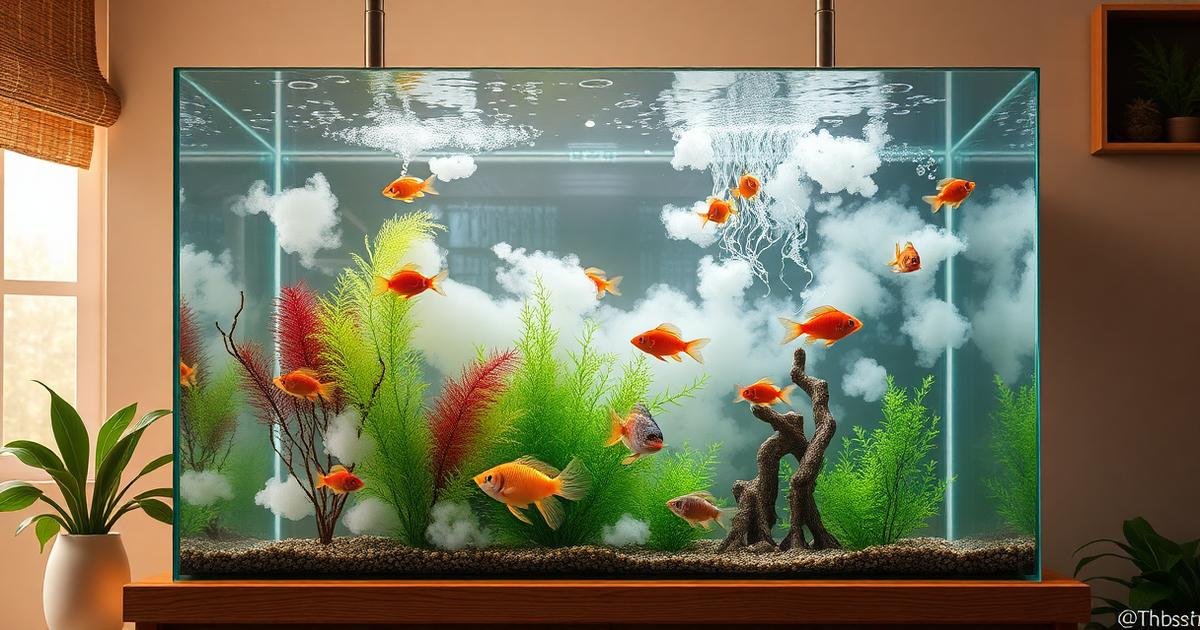
Staring at a murky fish tank is frustrating. You've cleaned it, changed the water, and nothing seems to work. The good news is that cloudy water is usually fixable once you understand what caused it in the first place. fish tank cloudy water causes fix is one of the most important decision points for long term daily fit.
Fish tank cloudy water causes fix: Cloudy fish tank water has three main root causes: a bacterial bloom from a new or overfed tank, suspended particles from overcleaning or poor filtration, and dissolved organic waste from overstocking. The fix starts by identifying the cloudiness type — white haze is bacterial, gray is mechanical, g
Quick Answer: What causes cloudy fish tank water and how do I fix it?
Cloudy fish tank water has three main root causes: a bacterial bloom from a new or overfed tank, suspended particles from overcleaning or poor filtration, and dissolved organic waste from overstocking. The fix starts by identifying the cloudiness type — white haze is bacterial, gray is mechanical, green is algae — then addressing the cause with targeted maintenance, not random water changes.
For a complete guide on this topic, see the Aquarium Setup Guide.
Why Your Fish Tank Gets Cloudy Water
Cloudy water isn't random. It's your tank telling you something is off balance. Here are the specific root causes behind fish tank cloudy water causes fix scenarios you're dealing with.
Bacterial Bloom (New Tank Syndrome)
If your tank is less than 6 weeks old, that milky white haze is almost certainly a bacterial bloom. Your beneficial bacteria colony is still establishing itself, and free floating bacteria are multiplying faster than your filter can process them. This is normal and will clear on its own within 1-2 weeks if you stop messing with it.
Overfeeding
Every flake you drop in that doesn't get eaten breaks down into ammonia. That ammonia feeds bacteria, which then multiply and cloud your water. You're likely feeding 2-3 times more than your fish actually need. Most fish only need what they can consume in 30 seconds, once or twice daily.
Overstocking
Too many fish produce too much waste for your biological filter to handle. The general rule is one inch of fish per gallon of water, but that's a starting point, not a guarantee. If you're seeing cloudy water alongside stressed fish, you may need to rehome some or upgrade your tank.
Poor Filtration or Flow
Your filter might be undersized, clogged, or not creating enough water movement. If the water isn't circulating through the filter media properly, particles and waste stay suspended in the water column. Check that your filter's flow rate matches your tank volume at least 4-5 times per hour.
Substrate Disturbance
If the cloudiness appeared right after you vacuumed the gravel or added new substrate, you've stirred up fine particles. This is purely mechanical and will settle within 12-24 hours with good filtration. Rinse new substrate thoroughly before adding it to your tank.
Pro Tip: If your water is white and milky, it's bacterial. If it's gray or brown and clears when you let it sit in a glass, it's mechanical particles. This simple test tells you which direction to troubleshoot first.
Match Your Symptoms to the Root Cause
Match your specific observation to find the fastest fix for your fish tank cloudy water causes fix situation:
| What you observe | Likely root cause | First fix to try |
|---|---|---|
| White milky haze in tank less than 6 weeks old | Bacterial bloom (new tank syndrome) | Stop cleaning. Let the cycle establish. Test ammonia and nitrites daily. |
| Cloudiness appears 2-3 hours after feeding | Overfeeding and excess waste | Cut feeding to once daily for 1 week. Vacuum uneaten food immediately. |
| Grayish haze that settles when water sits still | Suspended particles from substrate | Improve mechanical filtration. Add filter floss for 48 hours. |
| Greenish cloudy water | Algae bloom (excess light or nutrients) | Reduce lighting to 6 hours daily. Do a research suggests 25% water change. |
| Cloudiness after adding new fish | Biological filter overload | Test water parameters. Do small daily water changes until cycle stabilizes. |
| Persistent cloudiness despite regular water changes | Underpowered or clogged filter | Clean filter media in old tank water. Upgrade to a filter rated for 2x your tank size. |
When Cloudy Water Is NOT Just a Maintenance Issue
Sometimes cloudy water signals a serious health problem for your fish, not just an aesthetic issue. According to the
Watch for these red flags that require immediate action:
- Fish gasping at the surface — this indicates low oxygen, often caused by a bacterial bloom consuming all available oxygen.
- Fish rubbing against decorations — cloudy water combined with this behavior suggests parasites or high ammonia levels.
- Sudden cloudiness after adding a new decoration or plant — you may have introduced a contaminant that's poisoning your fish.
- Cloudiness paired with fish loss — test for ammonia, nitrite, and pH immediately. High ammonia levels above 0.25 ppm are toxic.
If you see any of these signs alongside cloudy water, perform an immediate research suggests 50% water change and test your water parameters. Do not wait for the cloudiness to clear on its own.
Pro Tip: Keep a water testing kit on hand at all times. Test strips are convenient, but liquid test kits are more accurate for ammonia and nitrite readings. Test weekly, not just when you see problems.
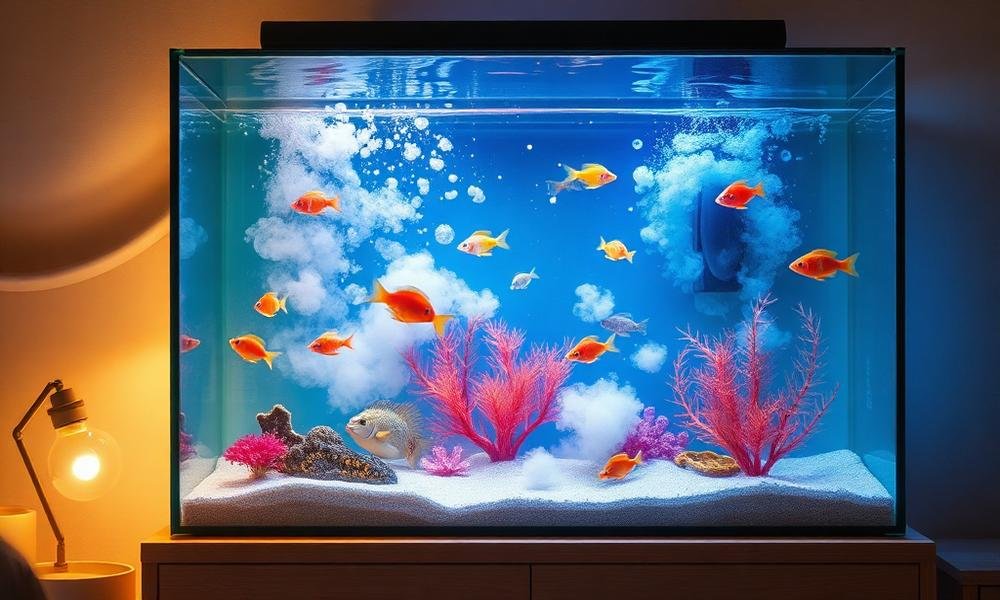
Enrichment Protocol: How to Fix Cloudy Water Permanently
Fixing cloudy water once isn't enough. You need a protocol that prevents it from coming back. Follow this measurable plan for lasting results with your fish tank cloudy water causes fix approach:
- Test water parameters weekly — Check ammonia, nitrite, nitrate, and pH every 7 days. Keep ammonia at 0 ppm and nitrite at 0 ppm. Nitrates should stay below 20 ppm.
- Perform research suggests 25% water changes weekly — Use a gravel vacuum to remove waste from the substrate. Treat new water with dechlorinator before adding it to the tank.
- Feed fish only what they eat in 30 seconds — Once daily is sufficient for most adult fish. Skip one feeding day per week to let the filter catch up.
- Clean filter media monthly — Rinse mechanical media in old tank water (never tap water) to preserve beneficial bacteria. Replace chemical media like carbon every 4-6 weeks.
- Maintain proper lighting schedule — Run lights for 6-8 hours maximum per day. Use a timer to keep the schedule consistent. Too much light fuels algae blooms.
- Stock appropriately — Follow the one-inch-per gallon rule as a maximum, not a goal. Research adult sizes before buying new fish.
Within 2-3 weeks of following this protocol consistently, your water should stay clear without constant intervention.
Product Buying Criteria: What to Look for in Filtration and Water Treatment
Once you've diagnosed the root cause, the right equipment makes maintenance easier. Here's what to prioritize when shopping for solutions to fish tank cloudy water causes fix challenges:
Filter Selection
Look for a filter rated for 2x your tank's volume. For a 20-gallon tank, choose a filter rated for 40 gallons per hour minimum. Canister filters offer the best mechanical and biological filtration for tanks over 30 gallons. Hang-on back filters work well for smaller setups. Ensure the filter includes mechanical (sponge or floss), biological (ceramic rings or bio-balls), and chemical (carbon) media compartments.
Water Treatment Products
Choose a dechlorinator that also neutralizes ammonia and nitrites for emergency situations. Look for products that bind heavy metals and detoxify ammonia temporarily while your biological filter catches up. Avoid products that claim to "instantly clear" cloudy water — these often use chemical clarifiers that stress fish and don't address the root cause.
Testing Equipment
Invest in a liquid master test kit rather than test strips. Liquid kits are more accurate for ammonia and nitrite readings. An API Freshwater Master Test Kit covers all essential parameters and lasts for hundreds of tests. Digital thermometers are more reliable than stick on strip thermometers.
Pro Tip: Add a pre filter sponge to your filter intake. It catches larger debris before it reaches your filter media, reducing how often you need to clean the main filter. Rinse the pre filter sponge weekly in old tank water.

How to Diagnose Your Cloudiness Type in 5 Minutes
You don't need a lab to figure out what's happening. This quick diagnostic takes 5 minutes and tells you exactly which fish tank cloudy water causes fix path to follow.
Start by filling a clean glass with tank water. Hold it up to a light and observe:
- White and milky — Bacterial bloom. The water won't clear if you let the glass sit. Your biological filter is immature or overloaded.
- Gray or tan and particles settle to the bottom — Mechanical cloudiness. Substrate dust, uneaten food, or decaying matter is suspended in the water column.
- Green and the glass looks like diluted pea soup — Algae bloom. Free floating algae is multiplying due to excess light or nutrients.
- Yellow or brown tint — Dissolved organic compounds or tannins from driftwood. This is usually harmless but indicates your chemical filtration needs attention.
Once you know the type, you can skip the guesswork. Bacterial blooms need patience and reduced feeding. Mechanical cloudiness needs better filtration. Algae blooms need light reduction and nutrient control. Each has a different fix, and mixing them up wastes your time.
What to Do If Your Cloudy Water Keeps Coming Back
Recurring cloudiness despite your best efforts means something fundamental is broken. This is the most frustrating fish tank cloudy water causes fix scenario because it makes you feel like nothing works. Here's how to break the cycle.
First, stop doing large water changes every time it clouds up. You're likely resetting your biological filter each time, which triggers another bacterial bloom. Instead, test your tap water source. Some municipal water contains high levels of phosphates or silicates that fuel algae and bacterial growth. A simple tap water test from your local fish store can confirm this.
Second, check for hidden waste. Decaying plant roots, dead snails, or food trapped under decorations can continuously feed bacteria. Remove all decorations and vacuum thoroughly. Look behind and under your filter intake — debris often collects in dead spots where water doesn't circulate.
Third, consider a filter upgrade. If you've been using the filter that came with your tank kit, it's likely undersized for your actual fish load. Upgrade to a filter rated for 2-3 times your tank volume. The extra biological capacity gives your system room to handle normal waste without crashing.
Finally, add live plants. Fast growing plants like hornwort, water sprite, and duckweed absorb excess nutrients directly from the water column. They outcompete algae and bacteria for the food sources that cause cloudiness. Within 3-4 weeks of adding live plants, many aquarists see permanent water clarity improvement.
Pro Tip: If your tank has been cloudy for over 3 weeks despite following all the steps, test your tap water for ammonia. Some tap water contains trace ammonia that accumulates over time. Use a dechlorinator that also neutralizes ammonia.
Troubleshooting Matrix: Specific Cloudy Water Patterns
Use this troubleshooting matrix to identify your exact fish tank cloudy water causes fix scenario and get a targeted solution:
| Behavior pattern | Likely cause | What to do |
|---|---|---|
| White haze appears 3 days after setting up a new tank | Bacterial bloom from immature biological filter | Do not clean. Test ammonia daily. Add beneficial bacteria supplement. Water clears in 1-2 weeks. |
| Gray water that looks like dust suspended in the tank | Fine substrate particles not rinsed thoroughly | Add filter floss for 48 hours. Perform a research suggests 25% water change. Particles settle within 24 hours. |
| Green water that turns the tank into pea soup | Algae bloom from excess light or nutrients | Reduce lighting to 6 hours daily. Do a research suggests 50% water change. Add live plants to compete with algae. |
| Cloudiness returns within 2 days of a water change | Overfeeding or overstocking | Cut feeding in half. Test ammonia. Reduce fish load if ammonia stays above 0 ppm. |
| Brownish cloudy water in a planted tank | Decaying plant matter or driftwood tannins | Remove dead leaves. Add activated carbon to remove tannins. Tannins are harmless but unsightly. |
| Cloudiness only appears after filter cleaning | Disturbed beneficial bacteria colony | Stop cleaning filter for 2 weeks. Add beneficial bacteria supplement. Cloudiness clears in 3-5 days. |
| Persistent white haze in an established tank (6+ months) | Chronic overfeeding or inadequate filtration | Upgrade filter to one rated for 2x tank size. Reduce feeding. Test water parameters weekly. |
Stop guessing and start fixing. Get the right filter, test kit, and treatment products for your tank size.
Browse Aquarium Options →
For broader reference and guidance, akc.org provides useful context on pet health and care decisions.
For broader reference and guidance, petmd.com provides useful context on pet health and care decisions.
Frequently Asked Questions
My fish tank gets cloudy water every time I do a water change — why?
You're likely disturbing the substrate too aggressively or adding untreated tap water. Use a gravel vacuum gently, and always treat new water with dechlorinator before adding it. The cloudiness should settle within 12-24 hours if you're not disrupting the biological filter.
Will cloudy water kill my fish?
Not directly, but the underlying cause can. Bacterial blooms consume oxygen, and high ammonia from overfeeding is toxic. If your fish are gasping at the surface or acting lethargic, test your water immediately and perform a research suggests 50% water change with treated water.
How long does it take for cloudy water to clear on its own?
Bacterial blooms in new tanks typically clear within 1-2 weeks without intervention. Mechanical cloudiness from substrate settles in 12-24 hours. Green algae blooms need active treatment and can take 1-2 weeks to resolve with reduced lighting and water changes.
Can I use chemical clarifiers to clear cloudy water?
You can, but they're a temporary fix that doesn't address the root cause. Chemical clarifiers clump particles together so your filter can catch them, but if the underlying issue — overfeeding, poor filtration, or immature cycle — isn't fixed, the cloudiness will return.
Does cloudy water mean my tank isn't cycled?
Not always, but it's the most common cause in tanks under 6 weeks old. An uncycled tank has insufficient beneficial bacteria to process fish waste, leading to ammonia spikes and bacterial blooms. Test for ammonia and nitrite to confirm whether your cycle is established.
Why is my water clear in the bucket but cloudy in the tank?
This confirms the cloudiness is suspended in the water column, not in your source water. The cause is either a bacterial bloom (white haze) or fine particles (gray haze). Let a glass of tank water sit for 30 minutes — if it clears, it's particles. If it stays cloudy, it's bacterial.
How often should I clean my filter to prevent cloudy water?
Clean mechanical filter media once every 4-6 weeks, rinsing it in old tank water only. Never use tap water, as chlorine kills beneficial bacteria. Clean too often and you crash your cycle. Clean too rarely and debris builds up. Monthly cleaning is the sweet spot for most tanks.
Can adding too many fish at once cause cloudy water?
Yes, absolutely. Adding multiple fish at once overloads your biological filter's capacity. The sudden increase in waste triggers a bacterial bloom that can take 1-3 weeks to stabilize. Add new fish gradually — no more than 2-3 small fish per week — and test water parameters after each addition.
Learn more in our detailed guide on fish dying suddenly tank reasons.