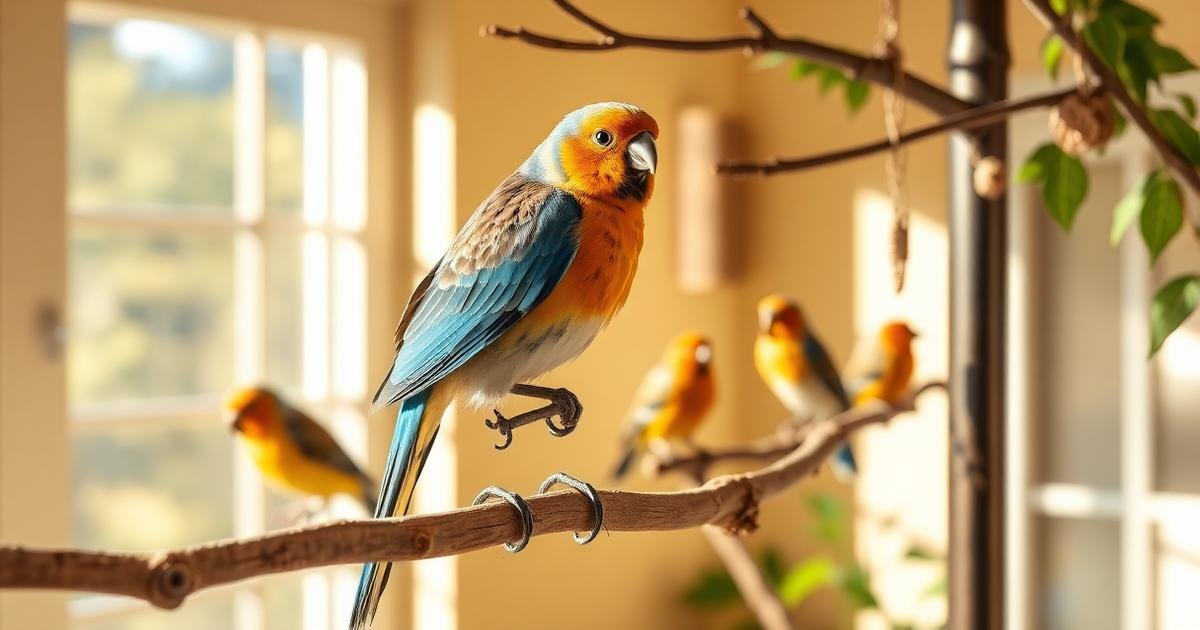
Choosing the best bird perches is one of the most important decisions you'll make for your feathered friend's health and happiness. The right perch prevents foot problems, encourages natural behaviors, and keeps your bird active — the wrong one can cause arthritis, bumblefoot, or boredom. Start by matching perch material to your bird's foot size and activity level, then rotate multiple perch types to ensure proper foot exercise.
Best bird perches: The best bird perches combine a natural manzanita branch (1/2 to 3/4 inch for medium parrots), a sisal rope perch for joint relief, and a single cement perch near the food bowl for nail trimming. Rotate these three types every 2–4 weeks to prevent pressure sores and keep foot muscles exercised.
Quick Answer: What are the best bird perches for foot health and enrichment?
The best bird perches combine a natural manzanita branch (1/2 to 3/4 inch for medium parrots), a sisal rope perch for joint relief, and a single cement perch near the food bowl for nail trimming. Rotate these three types every 2–4 weeks to prevent pressure sores and keep foot muscles exercised.
For a complete guide on this topic, see the Pet Bird Care Guide.
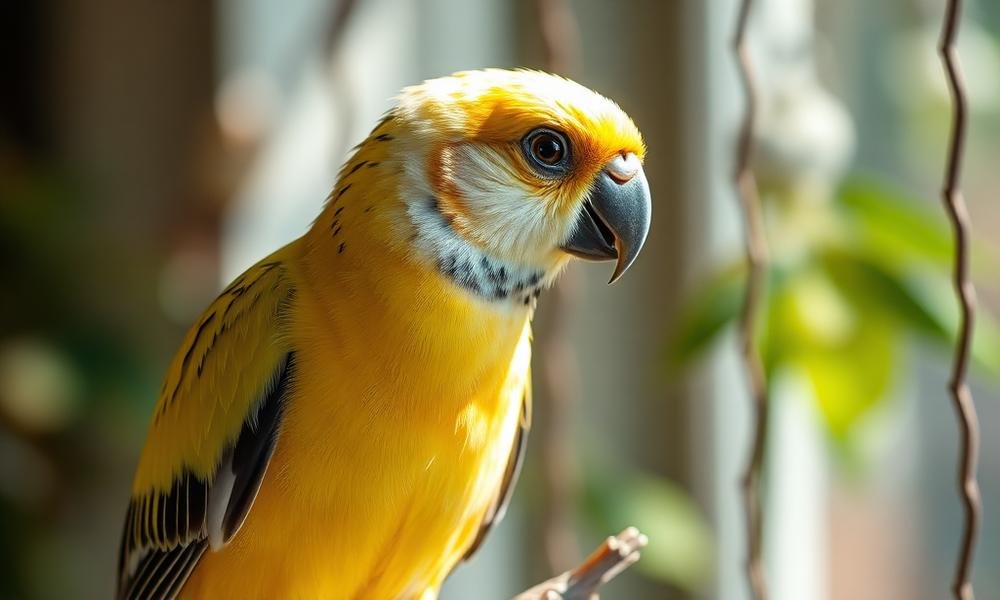
What makes a perch safe and healthy for your bird?
A safe perch does more than just give your bird a place to stand. It exercises the foot muscles, prevents pressure sores, and mimics the natural branch variability your bird would encounter in the wild.
Veterinarians at the
Pro Tip: Check your bird's feet weekly. If you see red spots, calluses, or your bird shifting weight constantly, your perch setup needs an immediate change. Healthy feet should be smooth with no discoloration.
The material matters just as much as the shape. Natural wood perches like manzanita, dragonwood, and grapevine offer varying textures and diameters. Rope perches provide a soft, flexible surface that's gentle on joints. Cement perches help trim nails naturally but must be used sparingly.
Which perch materials are best for different bird species?
Your bird's size and beak strength determine which materials are safe and effective. A cockatiel needs different perch diameters than a macaw, and the wrong size can cause serious foot damage.
Natural wood perches for small birds (budgies, cockatiels, lovebirds)
Small birds need perches between 3/8-inch and 1/2-inch in diameter. Manzanita wood is ideal because it's hard, smooth, and resists chewing. Grapevine offers more texture variation, which exercises smaller feet. Avoid soft woods like pine or cedar — they splinter easily and can cause respiratory irritation.
For budgies, rotate 3-4 different natural branch perches every 2 weeks. This prevents boredom and ensures their feet get varied exercise. The
Rope perches for medium to large parrots
Rope perches made from sisal, cotton, or hemp provide a forgiving surface that reduces joint stress. African greys, Amazon parrots, and cockatoos benefit significantly from rope perches because they distribute weight more evenly than wood.
The key is choosing the right thickness — your bird's foot should wrap around 2/3 of the perch circumference. A rope perch that's too thin forces the toes to overextend. Replace rope perches every 6-8 months or when fraying appears, as loose fibers can cause crop impaction.
Cement and mineral perches for nail maintenance
Cement perches act as natural nail files. Place one near the food bowl so your bird uses it daily. But limit cement perches to one per cage and never use them as the primary perch — the abrasive surface can cause foot sores if your bird stands on it for hours.
Pro Tip: If your bird refuses to use a cement perch, try a textured sand perch instead. It's gentler on feet but still provides nail trimming benefits. Position it at the highest point in the cage to encourage use.
How do you set up perches to prevent bumblefoot and arthritis?
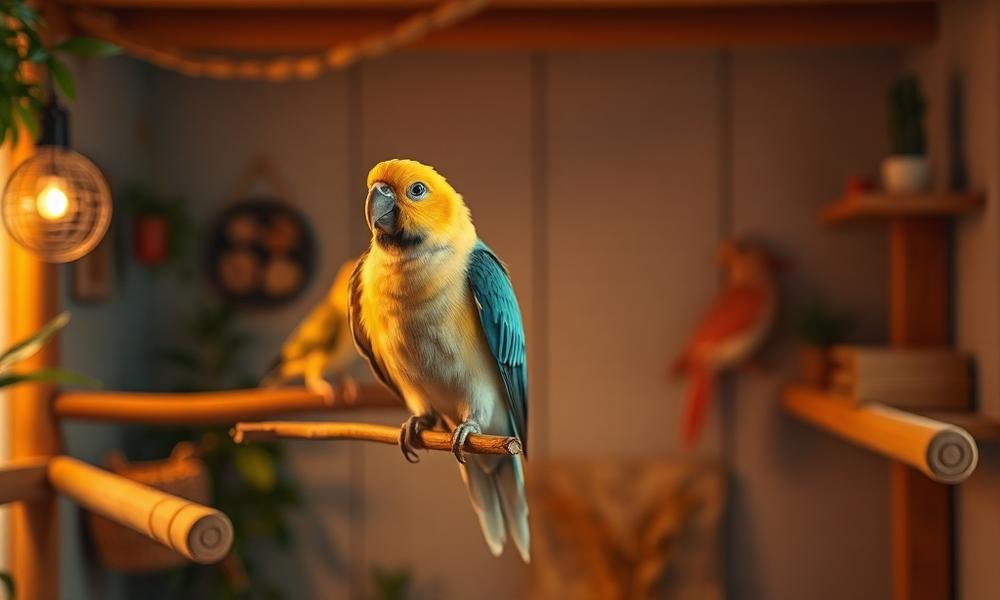
Bumblefoot and arthritis are the two most common foot problems in captive birds, and both trace back to poor perch setups. The fix is surprisingly simple: create a cage environment where your bird's feet never touch the same diameter or texture for more than a few hours.
Start by measuring your bird's foot. The ideal perch diameter allows the toes to wrap around 2/3 of the circumference without overlapping. For a medium parrot like an African grey, that means a range of 1/2-inch to 3/4-inch across different perches. For a macaw, aim for 3/4-inch to 1.5 inches.
Place a flat platform perch at the lowest point in the cage. This gives your bird's joints a complete break from gripping. Many owners overlook platform perches, but they're critical for older birds or those showing early arthritis signs. A 4-inch by 6-inch wooden platform works well for most parrots.
Inspect your bird's feet during weekly handling. Press gently on the foot pads — healthy pads feel firm and springy. If you feel hard lumps or see redness, your perches are causing pressure damage. Switch to softer rope perches immediately and consult an avian vet within 48 hours.
Pro Tip: For birds already showing arthritis symptoms, wrap one rope perch with vet wrap to create a custom grip surface. This adds 1/8-inch of cushioning and reduces joint strain. Replace the vet wrap monthly.
What are the best natural wood perches for chewing and foraging?
Natural wood perches do double duty — they support foot health and satisfy your bird's instinct to chew. The best bird perches for chewing come from bird safe trees like manzanita, dragonwood, and cholla cactus wood. These woods are dense enough to last months but soft enough for your bird to strip bark and create splinters safely.
Manzanita is the top choice for most owners. It's naturally smooth, resists bacterial growth, and comes in irregular shapes that exercise feet. Dragonwood offers more texture variation, with natural bumps and curves that challenge larger parrots. Cholla cactus wood is lightweight and porous, perfect for small birds to destroy.
Never use perches from unknown trees. Many common landscaping trees — including cherry, oak, and avocado — are toxic to birds. Stick to commercially sourced perches labeled as bird-safe. The
How to sanitize natural wood perches
Sanitize new wood perches before placing them in the cage. Bake them at 200°F for 30 minutes to kill parasites and bacteria. After that, scrub monthly with a 50/50 vinegar water solution and rinse thoroughly. Never use bleach or chemical cleaners — birds have sensitive respiratory systems and can die from toxic fumes.
Upgrade your bird's cage setup with perches that support foot health and natural behaviors
Browse Bird Care Options →
How many perches should you put in a cage?
The number of perches depends on cage size and bird activity level. A general rule: provide at least 3 perches at different heights and angles, but never clutter the cage so your bird can't stretch its wings fully.
For a standard 24-inch by 24-inch cage, place perches at three levels: one near the top for sleeping, one at mid height near food bowls, and one lower for exercise. Each perch should be at least 12 inches long for small birds and 18 inches for large parrots.
Space perches so your bird can hop between them without hitting cage bars. The distance between perches should be about 1.5 times your bird's wingspan — this encourages natural flight and hopping behaviors. Avoid placing perches directly over food bowls, as droppings will contaminate the food.
Perch placement mistakes to avoid
Never place perches directly above each other — this creates a "poop zone" that's unsanitary and stressful for the bird below. Also avoid perches that block access to water bottles or food dishes. Your bird should be able to reach all resources without contorting its body.
If your bird is plucking feathers or seems anxious, check perch placement first. Birds need clear sight lines and escape routes. A perch placed too close to the cage corner can make a bird feel trapped.
What are the signs you need to replace your bird's perches?
Perches wear out faster than most owners realize. A perch that looks fine can harbor bacteria, develop sharp edges, or lose its grip texture. Replace wood perches every 6-12 months, rope perches every 3-6 months, and cement perches when the surface becomes smooth.
Look for these warning signs: visible cracks or splinters, frayed rope fibers, smooth spots where your bird perches most, or a foul smell indicating bacterial growth. If you see your bird's feet slipping or struggling to maintain grip, replace the perch immediately.
Birds that develop bumblefoot often had a perch problem for weeks before symptoms appeared. Check your bird's feet during weekly handling sessions. Redness, swelling, or small scabs on the foot pads mean the perches are causing pressure injuries.
Pro Tip: Sanitize wood perches monthly by scrubbing with a 50/50 vinegar water solution and baking in the sun for 2-3 hours. This kills bacteria without harsh chemicals. Never use bleach — it's toxic to birds even after rinsing.
How do you introduce new perches to a nervous bird?
Some birds are suspicious of new objects in their cage. A perch that's too unfamiliar can stress your bird and cause it to avoid perching altogether. The solution is gradual introduction over 5-7 days.
Start by placing the new perch outside the cage, near the door, for 2 days. Let your bird inspect it on its own terms. On day 3, move the perch inside the cage but position it next to an existing perch your bird already uses. On day 5, remove the old perch and leave only the new one.
If your bird refuses to use the new perch after 7 days, try a different material or diameter. Some birds have strong texture preferences. A bird that hates rope perches may love manzanita, and vice versa. Never force your bird onto a new perch — this creates negative associations that are hard to reverse.
Comparison of top perch types for the best bird perches setup
| Perch Type | Best For | Diameter Range | Key Benefit | |
|---|---|---|---|---|
| Manzanita Wood | All parrot species | 1/4–2 inches | 6–12 months | Hard, smooth, resists chewing |
| Medium large parrots | 1/2–1.5 inches | 8–14 months | Natural texture variation | |
| Sisal Rope | Medium parrots | 1/2–1 inch | 3–6 months | Joint-friendly, flexible grip |
| Nail maintenance | 3/4–1 inch | 4–8 months | Trims nails naturally | |
| Joint relief | 4×6 inches | 12+ months | Flat surface for resting | |
| Small birds | 3/8–3/4 inch | 4–8 months | Irregular texture exercises feet |
For the best bird perches setup, combine at least three types from this table. A manzanita branch for sleeping, a rope perch for daytime perching, and a cement perch near the food bowl creates an ideal foot health routine.
For broader reference and guidance, akc.org provides useful context on pet health and care decisions.
For broader reference and guidance, petmd.com provides useful context on pet health and care decisions.
Frequently Asked Questions
Are wooden dowel perches safe for birds?
Wooden dowel perches are not recommended as primary perches. Their perfectly uniform diameter creates constant pressure on the same foot spots, leading to bumblefoot within 2-3 months. Use natural branch perches instead for better foot exercise.
How often should you clean bird perches?
Clean perches weekly with a vinegar water solution. Rope perches should be washed monthly in a washing machine on gentle cycle. Replace any perch that develops cracks, fraying, or smooth spots immediately to prevent foot injuries.
What size perch is best for a cockatiel?
Cockatiels need perches between 3/8-inch and 1/2-inch in diameter. The bird's foot should wrap around 2/3 of the perch circumference. A too thick perch forces toes to overextend, while too thin causes cramped toes and pressure sores.
Can birds get bumblefoot from bad perches?
Yes, improper perches are a leading cause of bumblefoot. Uniform dowels and rough cement perches create pressure points that damage foot pads. Bacteria enter through these wounds, causing infection. Varied perch diameters prevent this condition.
Should you use heated perches for birds?
Heated perches can be useful for birds in cold climates but must be used with caution. Never use them as the only perch, and ensure your bird can move away if too warm. Monitor for burns, especially on foot pads.
How many perches does a parrot need in its cage?
Most parrots need 3-5 perches at different heights and angles. This includes a sleeping perch at the highest point, a feeding perch near bowls, and exercise perches at mid-level. Ensure perches don't block wing movement or access to resources.
Can you make your own bird perches at home?
Yes, but only from bird safe trees like manzanita, apple, or willow. Never use treated lumber, painted wood, or trees sprayed with pesticides. Bake homemade perches at 200°F for 30 minutes to kill pests before placing them in the cage.
What's the best perch for a bird with arthritis?
Platform perches and thick rope perches are best for arthritic birds. The flat surface of a platform allows the bird to rest its joints without gripping. Combine this with a soft sisal rope perch for gentle foot exercise.
For more on this topic, see our guide to best bird cage covers.