
Service dog training basics involve teaching a dog specific tasks that mitigate a handler's disability, with the process typically taking 6 months to 2 years of consistent work. Unlike pet obedience, service dog training requires public access manners, task specific behaviors, and temperament screening that starts as early as 8 weeks of age. You must focus on foundational skills like neutrality, focus, and impulse control before introducing any disability related tasks.
Service dog training basics: Start by assessing your dog's temperament and health with a veterinarian, then teach basic obedience (sit, down, stay, come, loose-leash walking) to a 90% reliability level in low-distraction environments. After that, train public access skills like ignoring food and people, and finally introduce on
Quick Answer: What Are the First Steps in Service Dog Training?
Start by assessing your dog's temperament and health with a veterinarian, then teach basic obedience (sit, down, stay, come, loose leash walking) to a 90% reliability level in low distraction environments. After that, train public access skills like ignoring food and people, and finally introduce one task specific to your disability. The entire process requires at least 30 minutes of daily training for 6–24 months.
For a complete guide on this topic, see the Ultimate Guide To Dog Training.

What Qualifies a Dog for Service Dog Training?
Not every dog has the temperament for service work. The Americans with Disabilities Act (ADA) defines a service dog as one individually trained to perform tasks for a person with a disability. The dog must be calm, confident, and not reactive to other dogs, people, or loud noises.
Veterinarians recommend a health screening before starting service dog training basics. Hip and elbow evaluations, eye exams, and genetic testing for common breed disorders help confirm your dog can handle the physical demands. Breeds like Labrador Retrievers, Golden Retrievers, and German Shepherds are common choices, but mixed breeds with stable temperaments can also succeed.
Temperament Testing Checklist
Use the AKC Canine Good Citizen (CGC) test as a baseline. Your dog should pass all 10 items, including accepting a friendly stranger, walking through a crowd, and reacting appropriately to distractions. If your dog fails more than 2 items, consider professional evaluation before proceeding with service dog training basics.
Pro Tip: Start temperament testing at 8 weeks with simple exposure to different surfaces, sounds, and people. Puppies that show fear or aggression during these early sessions may not be suitable for service work, even with intensive training.
How Do You Teach Public Access Manners?
Public access is the hardest part of service dog training basics. Your dog must remain under control in restaurants, stores, hospitals, and public transportation without sniffing, barking, or greeting strangers. Start in low distraction environments like your living room, then gradually increase difficulty.
Practice the "watch me" cue to maintain focus. Hold a treat at your eye level and reward your dog for eye contact. Build duration to 30 seconds in quiet settings, then 10 seconds in a pet store. The goal is a dog that ignores all environmental stimuli unless given a release cue.
Key Public Access Skills
Teach your dog to settle on a mat or blanket for 30+ minutes while you move around. Use a "leave it" cue for dropped food, people approaching, and other animals. Practice heeling on both sides, backing into tight spaces, and staying in a down position while you eat or shop. These skills take 3–6 months to master.
Pro Tip: Use a treat pouch and high value rewards like freeze dried liver during public access training. Never correct your dog for sniffing or looking — instead, redirect to "watch me" and reward the correct behavior. Positive reinforcement builds confidence faster than punishment.
What Tasks Can a Service Dog Learn?
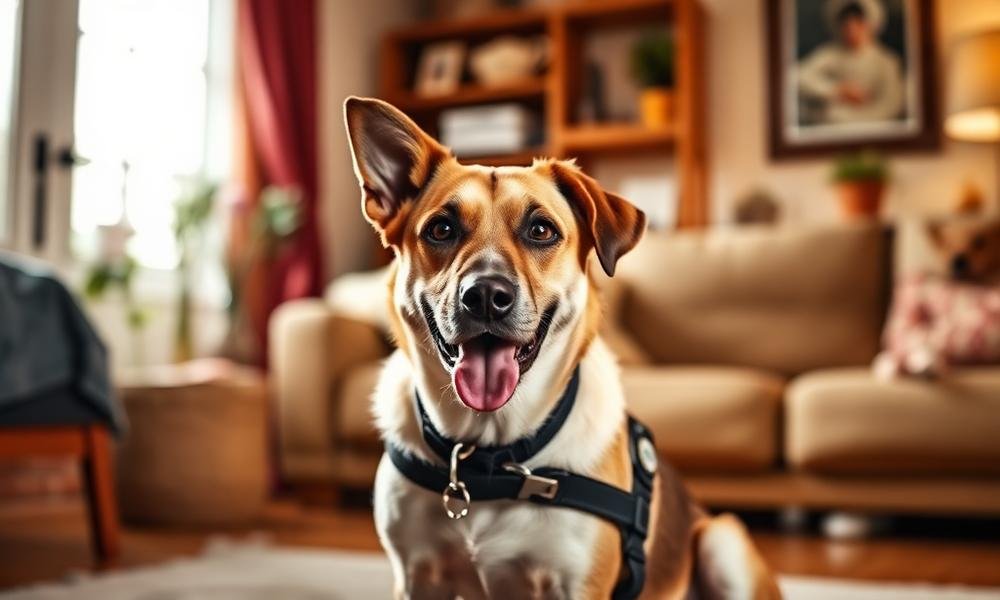
Tasks must directly mitigate a disability. For physical disabilities, common tasks include retrieving dropped items, opening doors, turning on lights, and providing bracing for balance. For psychiatric disabilities, tasks include interrupting self harm behaviors, providing deep pressure therapy during anxiety attacks, and leading the handler to an exit during disorientation.
Service dog training basics require you to break each task into small steps. For example, to teach a dog to retrieve a phone, start with targeting a phone shaped object, then picking it up, then holding it, then delivering it to your hand. Each step should be trained to 90% reliability before adding the next.
Task Training Timeline
Simple tasks like nudging a hand or providing pressure take 2–4 weeks. Complex tasks like opening doors or retrieving specific items take 2–6 months. Alert tasks for medical conditions (e.g., detecting drops in blood sugar) require professional scent training and can take 6–12 months with a specialized trainer.
Pro Tip: Keep a training log with dates, durations, and success rates for each task step. If your dog regresses, review the log to identify which step needs reinforcement. Consistency is more important than speed — rushing task training often leads to unreliable behavior.
How Do You Transition From Home to Real World Environments?
After mastering service dog training basics at home, slowly introduce real world settings. Start with quiet parks at off peak hours, then move to pet friendly stores, then restaurants with outdoor seating. Each new environment should be a separate training session, not a full outing.
Use the 3-3-3 rule: 3 minutes in a new environment for the first visit, 3 sessions before expecting reliability, and 3 weeks before the dog is comfortable. If your dog shows stress signals like lip licking, yawning, or whale eye, reduce the difficulty immediately. Pushing too fast can cause long term setbacks in public access skills.
Handling Distractions
Practice with a helper who drops food, walks past with another dog, or makes loud noises. Reward your dog for ignoring these distractions and maintaining focus. The AKC Canine Good Citizen Urban (CGCU) test is an excellent benchmark — it includes navigating crowds, ignoring food on the ground, and walking through narrow spaces.

How Do You Maintain Training Consistency Over 6–24 Months?
Consistency is the backbone of service dog training basics. Without daily practice, your dog will lose reliability on tasks and public access skills. Schedule two 15-minute training sessions per day — one in the morning and one in the evening — to build muscle memory for both you and your dog.
Use a training calendar to track which skills you practiced, how long each session lasted, and your dog's success rate. If you miss 3 consecutive days, expect a 20–30% drop in reliability. Revisit foundational skills like focus and settle before moving back to advanced tasks.
Preventing Burnout
Dogs can experience mental fatigue from daily training. Incorporate play breaks, sniffing walks, and puzzle toys to keep your dog engaged. Rotate between 3–4 different tasks in a single session to maintain interest. If your dog stops offering behaviors or shows avoidance, take a 24-hour break and resume with easier exercises.
Pro Tip: End every training session on a high note with a task your dog knows well. This builds confidence and keeps your dog eager for the next session. A 5-minute play session after training also reinforces that work is rewarding.
What Legal Rights Do Service Dog Handlers Have?
Understanding your legal rights is essential before taking your dog into public spaces. Under the ADA, service dogs are allowed in all public areas where the general public can go, including restaurants, hospitals, schools, and public transportation. Businesses cannot charge extra fees or require documentation for service dogs.
However, businesses can ask two specific questions: whether the dog is a service animal required for a disability, and what tasks the dog has been trained to perform. They cannot ask about the nature of your disability or demand demonstration of tasks. If your dog is out of control or not housebroken, a business can legally ask you to remove the dog.
Air Travel and Housing
The Air Carrier Access Act allows service dogs to fly in the cabin at no extra cost. You must submit a U.S. Department of Transportation form at least 48 hours before travel. Under the Fair Housing Act, landlords must make reasonable accommodations for service dogs, even in no pet housing. Emotional support animals no longer have the same protections under recent DOT and HUD rule changes.
Pro Tip: Carry a printed card with the ADA service dog rules to hand to business owners who question your dog's presence. Most challenges come from misunderstanding the law, not from hostility. Stay calm, answer the two permitted questions, and move on.
Ready to equip your service dog in training? We carry durable vests, training treats, and distraction tools for every stage of the process.
Browse Dog Training Options →
How Long Does Service Dog Training Take?
Professional service dog programs typically take 12–24 months. Owner trained dogs may take longer because handlers learn the training process alongside the dog. The minimum timeframe for mastering service dog training basics is 6 months of daily work, but most dogs need 12–18 months to become reliably task trained and public-access-ready.
Training duration depends on the dog's age, breed, temperament, and the complexity of required tasks. A dog trained for mobility support (e.g., bracing, retrieving) may train faster than one trained for medical alerts. According to Assistance Dogs International, only about 50% of dogs that start formal service dog programs graduate — temperament issues are the most common reason for washout.
Frequently Asked Questions
Can I train my own service dog?
Yes, the ADA allows owner trained service dogs. You must train the dog to perform tasks that mitigate your disability and maintain public access manners. However, owner training requires significant time, consistency, and knowledge of dog behavior. Many handlers work with a professional trainer for guidance.
What is the difference between a service dog and an emotional support animal?
A service dog is trained to perform specific tasks for a person with a disability. An emotional support animal provides comfort through presence but has no task training. Service dogs have public access rights under the ADA; emotional support animals do not.
How do I know if my dog has the right temperament for service work?
Your dog should be calm, confident, and neutral around other dogs, people, and loud noises. Pass the AKC Canine Good Citizen test. Dogs with fear, aggression, or high reactivity are not suitable. A professional trainer can evaluate your dog's temperament within 2–3 sessions.
What breeds are best for service dog training?
Labrador Retrievers, Golden Retrievers, and German Shepherds are most common due to their trainability and stable temperaments. Poodles, Collies, and some mixed breeds also succeed. Breeds with high prey drive, strong guarding instincts, or independent natures (e.g., Huskies, Terriers) are generally harder to train for service work.
How much does service dog training cost?
Professional service dog programs cost $15,000–$50,000. Owner training costs $500–$5,000 for supplies, classes, and professional consultations. Some organizations provide service dogs at reduced cost or no cost for veterans and people with certain disabilities. Expect to invest 1–2 hours daily in training.
Do service dogs need certification or registration?
No. There is no official certification or registration required by the ADA. Businesses can ask only two questions: whether the dog is a service animal required for a disability, and what tasks it has been trained to perform. Beware of online registries that sell fake certificates — they have no legal standing.
What if my service dog fails public access training?
If your dog cannot remain calm in public, it may not be suitable for service work. Consider retiring the dog as a pet and starting with a new candidate. Some dogs succeed after additional professional training, but temperament issues rarely resolve completely. It is ethical to wash out a dog rather than force public access.
Can a service dog be trained for multiple disabilities?
Yes. A single service dog can learn tasks for both physical and psychiatric disabilities. For example, a dog might retrieve dropped items for a mobility impairment and provide deep pressure therapy for anxiety. Train each task separately to 90% reliability before combining them. The dog must still maintain public access manners.
For authoritative reference on canine health and care standards, the American Kennel Club (AKC) provides breed-specific guidance trusted by veterinary professionals. For health-related questions, PetMD offers veterinarian-reviewed information on symptoms and treatments.