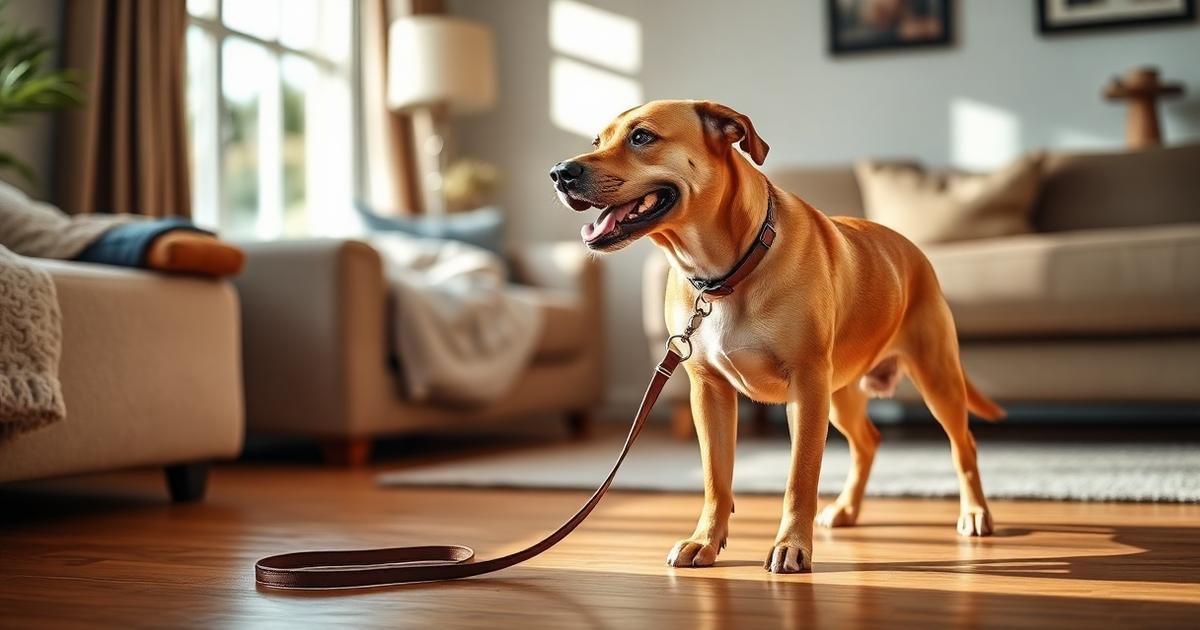
Does your dog lunge, bark, or growl at other dogs or people on walks? You’re not alone, and yes, you can fix this. The trick is changing how your dog *feels* about those triggers — using counter conditioning and desensitization. At the same time, you’ll need management tools (like a good harness or keeping distance) to stop your dog from practicing that reactive behavior. Stick with it daily, and within 2–4 weeks, you’ll start seeing calmer walks. Your dog will learn to check in with you instead of exploding.
How to train a reactive dog on leash: The fastest way to stop leash reactivity is to use the "look at that" (LAT) game combined with a high-value treat. When your dog spots a trigger at a safe distance, mark the behavior with a "yes" and reward before they react. Over 2–3 weeks of daily 10-minute sessions, this builds a conditioned resp
Quick Answer: What Is the Fastest Way to Stop Leash Reactivity?
The fastest way to stop pulling-on-leash-how-to-stop/">pulling-on-leash-how-to-stop/">leash reactivity is to use the "look at that" (LAT) game combined with a high value treat. When your dog spots a trigger at a safe distance, mark the behavior with a "yes" and reward before they react. Over 2–3 weeks of daily 10-minute sessions, this builds a conditioned response where your dog automatically looks to you for a treat when they see a trigger, replacing the reactive behavior.
For a complete guide on this topic, see the Ultimate Guide To Dog Training.
What Exactly Is Leash Reactivity and Why Does It Happen?
Leash reactivity is an over-the top response to a trigger—usually another dog, a person, or a moving object—while your dog is on leash. It manifests as lunging, barking, growling, or snapping, and it stems from fear, frustration, or over-arousal, not dominance or stubbornness.
The leash itself is a major contributor. It restricts your dog's natural flight response, so they feel trapped and default to "fight" instead. Research from the American Kennel Club indicates that many reactive dogs are actually friendly off leash but become anxious when restrained, which is why requires addressing both the emotional state and the physical constraint.
A veterinarian or certified behaviorist can rule out pain based causes—such as hip dysplasia or arthritis—that might trigger defensiveness on walks. Always get a health check before starting a training plan.

What Equipment Do You Need Before Starting Training?
Choosing the Right Harness or Collar
A front clip harness is the safest choice for a reactive dog. It gives you steering control without putting pressure on the trachea, which can worsen anxiety and cause coughing. Avoid retractable leashes entirely—they reduce your control and can amplify a dog's sense of being trapped.
A standard 4- to 6-foot flat leash works best. Long lines (15–30 feet) are useful for practice in open, controlled spaces, but not for street walks. Use a carabiner clip to attach the leash to both the front and back rings of the harness for maximum stability.
Pro Tip: Use a treat pouch that clips to your waist. Having treats instantly accessible at your hip—not in a pocket—reduces fumbling time by 3–5 seconds per reward, which is critical when a trigger appears suddenly.
High Value Treats Are Non-Negotiable
Your dog must value the reward more than the trigger. Use small, soft, smelly treats like boiled chicken, cheese cubes, or freeze dried liver. Kibble rarely works for reactive dogs because it's not exciting enough to compete with the sight of another dog.
Cut treats into pea sized pieces to avoid overfeeding during training sessions. A single session should use no more than 20–30 pieces, which is roughly 30–50 calories depending on the treat type.
How Do You Find Your Dog's Threshold Distance?
The threshold distance is the point where your dog notices a trigger but does not yet react. This is your safe training zone. To find it, take your dog to a low distraction area—like an empty parking lot or a quiet park—and watch for subtle signs of arousal: stiff body, hard stare, ears forward, or a closed mouth.
When you see these signs, you are at threshold. Move back 10–20 feet until your dog relaxes (soft eyes, loose body, open mouth). That relaxed point is your starting distance. Every session must begin here, never closer. If your dog reacts, you were too close—retreat 30–50 feet and try again.
Pro Tip: Use a measuring app or GPS on your phone to mark your threshold distance in feet. Reactive dogs often have a threshold of 50–100 feet initially. Over 2–3 weeks of training, you can reduce that to 10–20 feet.
Practicing at threshold is the foundation of because it prevents your dog from rehearsing the reactive behavior. Each time your dog reacts without intervention, the neural pathway for reactivity strengthens. Threshold work breaks that cycle.
What Is the "Look at That" Game and How Do You Play It?
Getting how to train a reactive dog on leash right is less about perfection and more about staying consistent with a proven approach.
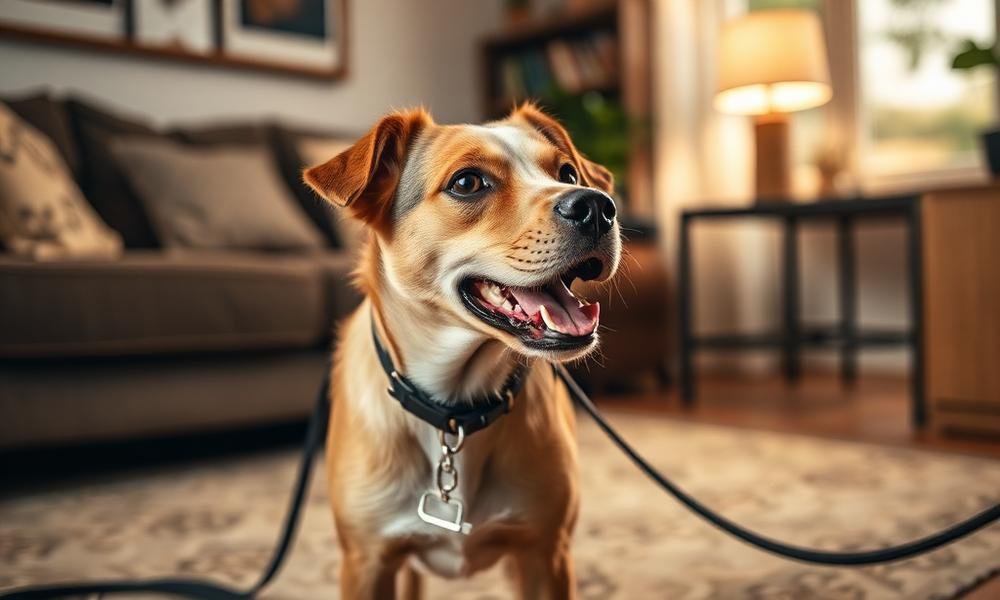
The "Look at That" (LAT) game, developed by behaviorist Leslie McDevitt, is the most effective technique for leash reactivity. It teaches your dog to see a trigger, then voluntarily look back at you for a treat. This replaces the fear response with a conditioned positive association.
Here is the step-by step process:
- Step 1: Stand at your dog's threshold distance with a trigger visible (e.g., a stationary dog 100 feet away).
- Step 2: Wait silently. The moment your dog glances at the trigger, say "yes" and immediately feed a treat from your hand at your dog's nose level.
- Step 3: Repeat 10–15 times. Your dog will start to look at the trigger, then turn to you for the treat. This is the conditioned response.
- Step 4: After 3–5 sessions, add a verbal cue like "look" or "watch me" as your dog turns toward you.
Practice this for 5–10 minutes per session, 2–3 times daily. Within 1–2 weeks, your dog should reliably look to you when they see a trigger at threshold distance. Only then can you begin slowly decreasing the distance by 5–10 feet per session.
Pro Tip: Use a trigger that is stationary and predictable for your first 5–7 sessions. A friend with a calm dog standing still is ideal. Moving triggers add complexity and should only be introduced after your dog is fluent with stationary ones.
The American Veterinary Society of Animal Behavior (AVSAB) endorses counter conditioning and desensitization as the gold standard for treating reactivity. Punishment based methods—like prong collars or shock collars—suppress the behavior without addressing the emotion, often making reactivity worse over time. Stick with positive reinforcement for lasting results.
How Do You Practice the "Engage-Disengage" Game for Moving Triggers?
The engage disengage game is an advanced version of LAT designed specifically for moving triggers like joggers, bicycles, or other dogs walking toward you. It teaches your dog to notice the trigger, then deliberately disengage and check in with you before you even mark the behavior.
Start at your dog's known threshold distance with a moving trigger approaching from 200–300 feet away. The moment your dog notices the trigger but does not react, mark with "yes" and reward. The key difference from LAT is that you wait for your dog to voluntarily look away from the trigger before marking—not just glance at it.
As your dog becomes fluent, gradually decrease the distance by 5–10 feet every 2–3 sessions. If your dog struggles to disengage, increase distance by 20–30 feet and practice there for 3–5 more sessions. This game directly addresses the frustration component of reactivity by teaching your dog that ignoring the trigger is more rewarding than fixating on it.

How Do You Use Management Strategies to Prevent Setbacks?
Management is just as important as training when you are learning . Setbacks happen when your dog rehearses the reactive behavior, which strengthens the neural pathway. Use these strategies to avoid rehearsals entirely:
- Walk during off peak hours: Choose times when few dogs or people are out, such as 6–7 AM or 9–10 PM. This reduces the frequency of trigger encounters by 60–80%.
- Use visual barriers: Walk behind parked cars, hedges, or fences to block your dog's view of triggers. This allows you to practice calm walking without constant trigger exposure.
- Drive to low distraction locations: If your neighborhood is too busy, drive to a quiet industrial park or school parking lot after hours for training sessions. Spend 15–20 minutes training there before attempting neighborhood walks.
- Carry a high value emergency treat: Keep a separate pouch with extra special treats (like hot dog slices or cheese) that you only use during unexpected encounters. This makes the surprise less stressful for your dog.
Management does not replace training—it creates the conditions for training to succeed. Without management, your dog may rehearse reactive behaviors 5–10 times per walk, undoing days of progress in a single outing.
Ready to equip your reactive dog for success? Find the right harness, leash, and treat pouch for your training journey.
Browse Dog Training Options →
How Do You Handle Unexpected Triggers During a Walk?
Even with careful planning, you will encounter surprise triggers. When this happens, do not tighten the leash—this increases your dog's arousal. Instead, perform an emergency U-turn: say "this way" in a cheerful tone, pivot 180 degrees, and jog a few steps away from the trigger. Reward with treats once your dog follows.
If a U turn is impossible—such as when a dog rounds a corner directly toward you—use a treat scatter. Toss a handful of high value treats on the ground in front of your dog's nose. This engages their foraging instinct and buys you 10–15 seconds to create distance. Then move away calmly.
Practice these emergency maneuvers in low distraction settings first. The goal is to make the U turn and scatter automatic for both you and your dog. Rehearse them 5–10 times per week until they become second nature.
Can You Walk a Reactive Dog Without Reactivity Ever Completely Going Away?
For most dogs, leash reactivity is a management condition, not a cure. Even with excellent training, your dog may always have a lower threshold than a non reactive dog. The goal is not a perfectly calm dog—it is a dog who can walk past triggers without lunging or barking.
Many owners see 80–90% improvement within 6–8 weeks of consistent training. However, relapses happen after stressful events (e.g., a vet visit, a scary encounter). When that occurs, return to threshold distance work for 3–5 days before resuming normal walks.
The practical side of how to train a reactive dog on leash comes down to small daily decisions that add up over weeks.
Understanding that is an ongoing process—not a one time fix—sets realistic expectations. Celebrate small wins: a day with only one bark instead of ten, or a walk where your dog chose to look at you instead of lunge. These are genuine progress markers.
Should You Use a Muzzle for Safety During Training?
A properly fitted basket muzzle can be a valuable training tool, not a punishment. It allows your dog to pant, drink, and take treats while preventing bites during accidental encounters. The Muzzle Up Project recommends conditioning your dog to enjoy wearing the muzzle over 1–2 weeks using positive association.
Introduce the muzzle by smearing peanut butter inside it and letting your dog lick it out for 5–10 sessions before ever fastening the straps. Once your dog willingly puts their nose into the muzzle, practice wearing it for 1–2 minutes during calm activities, then gradually increase duration.
Using a muzzle does not mean your dog is dangerous—it means you are a responsible owner who prioritizes safety. Many trainers and behaviorists require a muzzle for reactive dogs during initial assessments, especially if the dog has a bite history.
Frequently Asked Questions
How long does it take to train a reactive dog on leash?
Most dogs show noticeable improvement within 2–4 weeks of daily 10–15 minute sessions. Full behavioral change typically takes 6–12 weeks, depending on the dog's age, history, and the intensity of the reactivity. Consistency is more important than session length.
Can an older dog be trained to stop leash reactivity?
Yes, older dogs can learn new behaviors through counter-conditioning, though it may take 4–8 weeks longer than with a younger dog. Senior dogs may have underlying pain or cognitive decline that affects training, so a veterinary checkup is essential before starting.
What is the difference between leash reactivity and aggression?
Leash reactivity is an emotional response to a trigger—usually fear or frustration—that manifests as loud, dramatic behavior. True aggression involves intent to harm and is often silent and deliberate. A reactive dog may never bite, while an aggressive dog typically will if provoked.
Should I use a prong collar or shock collar for leash reactivity?
No. Punishment based tools suppress the outward behavior without addressing the underlying emotion, often making reactivity worse. The AVSAB and AKC strongly recommend positive reinforcement methods, which have been shown to produce more reliable and lasting results.
How do I train a reactive dog on leash if I live in a crowded city?
Train during off peak hours (early morning or late evening) in low traffic areas. Use visual barriers like parked cars or bushes to block triggers. Practice the "look at that" game from inside your apartment window first, then graduate to quiet alleyways before attempting busy streets.
Can I walk two reactive dogs at the same time?
Walking two reactive dogs together increases arousal and risk. Train each dog individually until both are reliable at threshold distance (usually 6–8 weeks). Then, have a second person handle one dog while you handle the other, walking parallel 20–30 feet apart, gradually decreasing the gap over 2–3 weeks.
What treats work best for training a reactive dog?
High-value, smelly, soft treats work best because they compete with the trigger's intensity. Boiled chicken, string cheese, hot dog slices, and freeze dried liver are top choices. Avoid dry, crunchy treats—they take too long to chew and lose your dog's focus.
When owners focus specifically on how to train a reactive dog on leash, they tend to see more consistent results over time.
Is it possible to completely cure leash reactivity?
Most dogs will always have a lower threshold than non reactive dogs, but with consistent training, you can reduce reactivity by 80–90%. The goal is management and emotional change, not a complete cure. Even well trained reactive dogs may have occasional setbacks during stressful periods.
For authoritative reference on canine health and care standards, the American Kennel Club (AKC) provides breed-specific guidance trusted by veterinary professionals. For health-related questions, PetMD offers veterinarian-reviewed information on symptoms and treatments.